Some links on prayer

I mentioned that I read Anne LaMott’s Help, Thanks, Wow. It’s a quick read about her life of prayer. LaMott writes with humor, honesty, and insight.

The Other Journal has been focusing on prayer, including this interview with Sarah Coakley.  There are two parts, both of them worth reading. She talks about asceticism, silent prayer, and the erotic (among a number of other things). Part I is here. Part II.

A very different take from Cathy Warner, who writes about her life of prayer:

When I was ten and composed my first prayer, I wasn’t trained or qualified. I didn’t know the right words. Once I joined a church, I tried to replace my primitive prayer with a better one. I thought if I invoked the precise and proper words, suffering would pass me by. I was wrong.

From Everyday Liturgy, five spiritual practices to cultivate in 2013.

Ann Hood writes poignantly about her search for a church with open doors in which to pray: A Prayer at Christmas – NYTimes.com. It’s one of those things I hate myself, that we can’t keep Grace open to the public as a place of prayer. Occasionally I’ll encounter someone who asks if they might come in to pray. I always invite them in to the church.

The Appeal of Psalm 139

An appreciation of Psalm 139 in the translation of the Authorized Version (KJV):

Psalm 139 gets my vote for being the most beautiful of the psalms in the King James version. The other day I happened to read it in French and it left me cold—it conjured up surveillance—whereas the high-low diction of the King James translators sings and is intimate, because you would only sing this way to a God you loved: “If I ascend up into heaven, thou art there: if I make my bed in hell, behold, thou art there. If I take the wings of the morning, and dwell in the uttermost parts of the sea, even there thy hand shall lead me.” It’s like an advertisement for the English language.

Paris Review – Psalm 139, Lorin Stein.

Where is the Church in Downton Abbey?

I asked this very question in a brief blogpost last year. There were several moments of pious devotion and an obligatory teatime visit of the Vicar to the Dowager Countess, but in last night’s episode, the careful omission of anything overtly religious was especially apparent. There was a scene of the wedding rehearsal, with the Archbishop (unidentified) berating the vicar’s handling of the rehearsal. And we saw the walk down the aisle at the wedding, the couple approach the altar, and then a cut. Not one word of the marriage service was uttered, not a single prayer.

On this side of the pond, at least judging by my twitter feed, Downton Abbey is a big hit with Episcopalians (although there is also considerable snark from many of the usual suspects). It appeals to our anglophilia which may be why some of us became Episcopalian in the first place but I think we ought to recognize how marginalized the institutional church and personal faith are in the overall series, and how that reflects twenty-first century sensibilities and probably distorts historical reality. The absence of religion is especially curious considering its creator Julian Fellowes’ own Catholicism, explored in a podcast featuring James Martin, SJ and Tim Reidy of America Magazine.

From Christianity Today: Why is God still absent from Downton Abbey?

So what is baptism, anyway? Lectionary Reflections for January 13, 2013

This week’s readings (The Baptism of Our Lord) are here.

The readings for the first Sunday after the Epiphany always focus on Jesus’ baptism but in year C, the lectionary raises all sorts of questions for a close reader of the texts. The brief selection from Acts 8 seems to suggest that baptism with water is not adequate (a reading reinforced by the Pentecostal tradition that asserts the importance of baptism with the Holy Spirit). The gospel reading only tells part of the story and leaves out the most interesting details in Luke’s account of Jesus’ baptism. Taken together, these two readings should encourage us to ask about the meaning of baptism, both for Luke (the author of both the gospel and Acts) and in the twenty-first century.

Context is always important for understanding the text, so to extract the brief lection from Acts 8 is confusing and misleading. The chapter begins with Philip fleeing Jerusalem for Samaria, where he preaches the gospel and baptizes a large number of people. The twelve heard about this success and sent a couple of representatives to Samaria to check it out. One particular person is mentioned, the magician Simon, who is also baptized. After Peter and John lay hands on the newly baptized and they receive the Holy Spirit, Simon offers them money to do the same for him (hence the term simony which refers to the sin of purchasing church offices). There’s a great deal that’s curious in this brief episode but perhaps most important in the context of the lectionary regards the significance of the Holy Spirit in all of this. Pentecostal interpretation notwithstanding,  “signs and miracles” were taking place in Samaria before the arrival of the apostles (and the Holy Spirit).

The gospel reading only deepens the mystery surrounding baptism for in Luke’s account, we don’t actually see the baptism taking place. There is no mention of John baptizing Jesus and the lectionary omits the verses that suggest John was already in prison when Jesus was baptized. Early in chapter 3, Luke writes that John proclaimed a baptism for the forgiveness of sins, but Luke records no conversation between John and Jesus that would help a reader understand why Jesus was baptized.

The readings invite questions about baptism. No doubt, many people have a different set of questions about the sacrament of baptism than those raised by the readings. It has been a matter of deep division within Christianity over the centuries and its meaning in our current cultural context is being debated as well. The Episcopal Church is debating the relationship between baptism and the Eucharist, for example (a conversation I’ve followed at least sporadically here).

As David Lohse points out in his column this week, sermons about the meaning of the sacrament might be especially appropriate now.


The Wonder of Journeys: A Sermon for the Feast of the Epiphany, 2013

Epiphany, 2013


One of the things I’ve come to regret over the years is that I never took an Astronomy class in college. What I know about the stars and constellations is remarkably little. Oh, I can pick out the Big Dipper, Orion’s belt, and on a good night, even Cassiopea perhaps, but I barely take notice of the moon or stars and if I know that a planet appears in the skies some night, it’s only because I happened upon that information in the course of the day. It’s really quite remarkable, in a way, that the whole of the universe, everything beyond my immediate plane of existence, remains mysterious and utterly unkown. I do have an app on my iphone that plots the skies for me given my current location. The trouble is, I rarely remember that I have it, and when I do, I’m usually somewhere where the light pollution makes seeing anything above us impossible, or I’ve got no reception so it can’t find my location. Continue reading

Margery Kempe 1995-2013

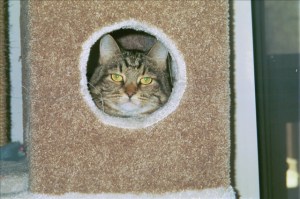
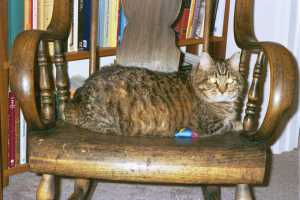
We came home last night after a wonderful dinner with friends to find Margery had died. She was in her bed in front of the gas stove where she had spent much of her time over the last couple of months. She seemed to have had a peaceful end after a very difficult few days. As I mentioned in a previous post, Margery was a wonderful and feisty cat, very affectionate who loved life and persevered through a great deal.

A few more pictures of her:

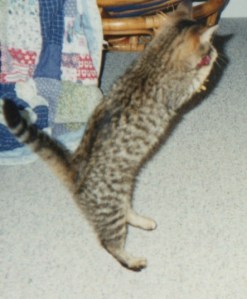
as a kitten (she spent over a month in isolation in a spare bedroom after coming to us for fear that she might infect Maggie Pie). We would go in and spend time with her and she loved to play as most kittens do:

margeryplayingAfter she emerged permanently from her isolation chamber, she shared living quarters with us and for nearly eight years with the “magnificent” Maggie Pie. The two never really got along. This picture sums up their relationship:

20130102142416_00001

But my favorite photo of Margery may be this one. It’s probably from her second Christmas with us:

20130102142302_00001

And special thanks to the vets that cared for her over the years, especially the staff at Lakeview Veterinary Clinic who accompanied us on her final journey.

Let light perpetual shine upon her and may she be warm and have lots of good things to eat and embraced by love.

My year in blogging …

Total number of pageviews: 32000; busiest day: February 6

The most popular posts on my site in 2012

Thanks to all who visited, read, commented, and gave feedback in other ways.

Happy New Year!


Anne LaMott on the death of her beloved cat

As we prepare for Margery’s death, some words from Anne Lamott (from Help, Thanks, Wow)

Now it turns out that my cat is going to die later today. She is struggling to breathe. I had hoped and prayed that she would slip off in the night and that I would not have to have the bet come by to put her down. I said, Help. Also, I gave her a lot of morphine, what had to have been an overdose, which she just slept off. All I wanted was for her not to die miserable and afraid. That’s all.

It is nighttime now, and Jeanie passed an hour ago, miserable and afraid.

When the vet came, we tried to gently get her out from under the futon, and she went crazy, and the next ten minutes were so awful that I won’t describe them. Suffice it to say that she did not go gently into that good night. It broke my heart. But she had been suffering, and is suffering no more. She had an amazing run of love with my family. She was a proud little union cat, and also a model of queenly disdain with a bit of grudging affection for most people, and pure adoration for me.

Was my prayer answered? Yes, although I didn’t get what I’d hoped and prayed for, what I’d selected from the menu. Am I sick with anxiety, that I did the wrong thing? Of course. Sad? Heartbroken. But Jeanie hit the lottery when she got me as her person for thirteen years, and the bad death was only ten minutes. So let me get back to you on this.

Certainly the same could be said of Margery. Had we not noticed her that afternoon in Sewanee, or had we accepted the first vet’s opinion, Margery would have died as a kitten. She’s had a good life. She’s been loved and loved us and she’s endured all of the other cats we’ve brought into her life. She’s brought us joy and she’s enjoyed shrimp and calamari, and all manner of other things, including a nap on a sunny day on a screened-in porch in Madison.

Renovating and Rethinking Sacred Space

An article in today’s New York Times entitled “Building Congregations around Art Galleries and Cafes as Spirituality Wanes” explores the latest innovations in church planting among Evangelicals. Several things to note.

1) that the number of new evangelical churches has gone up every year since 2006 (despite the fact that attendance at services is on the decline

2) a quotation from Warren Bird of the Leadership Network:

For new leaders coming out of seminary, “the cool thing is church planting,” Mr. Bird said. “The uncool thing is to go into the established church. Why that has taken over may speak to the entrepreneurialism and innovation that today’s generation represents.”

3. An interesting detail in the description of the National Community Church in Washington. It has 3000 members and yearly turnover of 40%.

Readers of this blog know that I am very interested in some of the new forms that are emerging in Christianity, in outreach to young adults and millennials, and in the role of sacred space in mission and ministry. One of the important things about sacred space is that it roots us in the tradition and connects us with the divine. There’s a sense of permanence there that runs counter to the ideas expressed in all three of the points I numbered above.

The articles below offer several different approaches to sacred space; the renovation of space to fit in with current liturgical principles, the creation of new sacred space, and appreciation of sacred space that has been around a very long time.

An Episcopal Church in Allentown, PA won an award from Faith & Form, the quarterly journal of the Interfaith Forum on Religion, Art and Architecture (IFRAA), part of The American Institute of Architects, for his leadership of the award-winning liturgical renovation of Grace Church in Allentown, PA. IFRAA will bestow the 2012 Religious Art & Architecture award next June in Denver, Colorado.

Designed by its Rector Patrick Malloy who is now Dean of General Theological Seminary, it is intended to reflect the liturgical principles of the 1979 Book of Common Prayer. In classes on worship and architecture, Dean Malloy:

invites students to explore the intersection of architecture, art, and liturgy, and how they meet to shape the experience of sacred space. “I wished to provide a context in which students could consider how space and the liturgies we celebrate in those spaces interact. How might liturgical spaces be designed to inspire a community’s ways of celebrating? Those who plan liturgy, too, must conceive of the liturgy spatially: how it will inhabit the space.”

There’s an article on the church’s renovation available from the Diocese of Bethlehem. And more about the awards, including information on all the winners, is available here.

On a very different note, Notre Dame (Paris) is celebrating its 850th anniversary this year

Design for the new Roman Catholic Cathedral in Port-au-Prince, Haiti.

Kenan Malik writes about St. Etheldreda Church, perhaps the oldest Catholic Church in England. As he says, “An ecclesiastical gem soaked in blood and history.”

Cat-Blogging: Margery Kempe

Margery Kempe came to us in the fall of 1995. It was Parents’ Weekend at Sewanee and we suspected that she was dropped off by people who had come up to the Mountain for the weekend. We found her running from the general direction of St. Luke’s Chapel towards All Saints’ Chapel, crying with all of her might (Hence the name Margery Kempe). She was an itty-bitty little thing. When we took her to the vet for the first time to have her checked out, he told us she tested positive for Feline Leukemia and needed to be put down. We disagreed.

Another vet, vitamins and interferon, plus a couple of months of isolation away from our Maggie Pie, Margery was retested and came up negative. She was a feisty thing. She had a dear friend in Sewanee for a couple of years, Tigger, who would come and visit every day after his girls went off to school. And we’ll never forget the summer Reginald Fuller and his wife lived next door, and when a dead cat appeared on the street below us, Mrs. Fuller worried that it was Margery, or the “little fat one” as she called her. In Sewanee, our cleaners named her “Large Marge.” Although she was small-bodied, she ate her fill.

When we moved to South Carolina, Corrie wanted to get her a new playmate to replace Tigger. That explains Merton but they never really got on. Perhaps the most poignant moment ever for me and Margery came upon Maggie Pie’s death. For the last couple of years of her life, Maggie always slept up next to my head. It was the spot where she felt protected from Merton’s onslaughts. Margery never slept in the bed. She had grown accustomed to sleeping on her own, probably because of her early months in isolation.

Maggie’s last night, I knew she something was wrong. She couldn’t get comfortable next to me and in the morning, we took her to the vet and he discovered a huge tumor in her lungs. That night, for the first time, Margery came in the bed and settled down next to my head.

A couple of photos from Margery in her prime:

1(3) copyMargery copy

As I wrote this a couple of nights ago, Margery was sleeping on my lap. She barely moved her limbs in an hour. Her breath at times seemed forced; at other times it came easily. She’s on pain medication, blood pressure medication, subcutaneous fluids. But she’s still eating and especially enjoyed bites of shrimp cocktail on Christmas Eve.

photo