An embarrassment of riches

There are times when the lectionary seems not to provide anything on which to preach; none of the readings have any meat, or seem to speak to the current situation. Other times, I can imagine numerous sermons, all of them quite different, emerging from the readings. Sometimes, there are profound connections among the texts. The latter was true in the Book of Common Prayer lectionary, which selected texts from the Hebrew Bible based on their connection with the Gospel.

The lessons for the Third Sunday after Epiphany in Year C offer an embarrassment of riches. Here are the texts. The text from Nehemia tells the story of Ezra reading the book of the Law to the assembled congregation in Jerusalem. It is set after the exile, and most scholars see this as evidence that the Torah (the Pentateuch) was compiled in exile in Babylon and brought back to Jerusalem after the exile ended.

The lesson from I Corinthians continues Paul’s discussion from chapter 12 of the body of Christ and that marvelous imagery of “we are all members of one body.” It’s important to note that he doesn’t assert that Jesus Christ is the head and we are the members. Rather, we are all members of the same body, none of us having priority. But he goes further. When discussing order in community, Paul asserts that it is gifts of the spirit that need to be ordered, not offices in the church. The editors leave out the end of verse 31: “but let me show you a better way.” That is Paul’s transition to chapter 13, in which he extols love as the greatest of all gifts, binding the community together across its diversity of gifts.

The gospel is Luke’s version of the beginning of Jesus’ ministry. I know that will be the focus of my sermon, but the question is how, and if , I will be able to weave the other texts into this. We’ll see. Check back on Sunday.

These are marvelous texts for the beginning of a new year, and the (relative) beginning of a new ministry. They challenge us to think about our mission, our call, and our responsibility.

You gotta give ’em credit for creativity

There’s a report out that a Michigan company has been producing rifle scopes with verses from the New Testament etched on them. Talking Points Memo discusses it here.

The company is not shy about its belief system. It confirmed to ABC that its scopes have the Biblical codes. Trijicon’s Web site even says under a section titled “Values” that, “We believe that America is great when its people are good. This goodness has been based on biblical standards throughout our history and we will strive to follow those morals.”

I suppose I will never cease to be surprised by the outrages perpetrated by the Religious Right. The verses are tiny, probably illegible, but I’m sure that among them are not Jesus’ sayings from Matthew 5: “Love your enemies…” and “If anyone strikes you on your right cheek, turn the other also.” I would be thrilled if the scopes were produced with those verse printed large enough so the soldier would see them while sighting the gun.

Among the ironies, apparently the scopes have been issued to soldiers in the Iraqi army as well.

The Wedding at Cana; Epiphany 2, Year C

That’s a whole lot of wine

Second Sunday of Epiphany

January 17, 2010

Grace Episcopal Church

This morning our hearts are of full of sadness and concern for the people of Haiti. We have seen the images on TV, read the accounts in the paper. Some of our members of Grace have been to Port-au-Prince and Jeanette, which is the location for our diocese’s Haiti Project. We have hosted Haitians in our homes as we have been hosted in theirs. Some count Haitians among their friends; some are almost like family members. Those of us who have been there are full of memories, wondering what it’s like now. But all of us, whether or not we are personally affected through friendship or travel, have seen the pictures and have some sense of the devastation. We feel helpless in the face of this destruction; the dollars we give seem a drop in the bucket compared to the vastness of the tragedy.

And inevitably, our minds turn to questions of why. Why now? Why Haiti? As human beings we want suffering of this magnitude to make sense, we want to try to fit into categories and systems we might understand. We want to manage it, intellectually, emotionally, spiritually.

But this isn’t the first time for such horrendous tragedy. There was of course 9-11 which now seems like a distant memory; there was the tsunami in Indonesia and South Asia in 2004; there was hurricane Katrina in 2005. Each of them seemed more horrific than the last. Each one brought misery as well as miraculous human efforts. Each one brought questions of why.

We want to know what it all means. We want to put it in a theological framework that we can make sense of; we want to say it was God’s punishment, or God’s will; or perhaps we want to say suffering of this magnitude proves God doesn’t exist. These are hard questions and demand coherent answers, but it may be the answers don’t come.

We are in the season of Epiphany, that time when we celebrate the presence of God among us, the presence of God’s glory. It may be hard for us to think about God’s glory; indeed it may be difficult for us even to think about the presence of God in a world that experiences such tragedy and human misery. Yet our Christian faith lives in the paradox between what is and what will be; what we see with our eyes and what we know by faith. Epiphany is a time to reflect not only on the reality of God’s glory and God’s presence in the world, but also on that paradox. There is no better place to explore that paradox than in today’s gospel reading.

OK. Let’s do the math. 6 jars for purification, each holding between 20-30 gallons of water. That’s between 120 and 180 gallons of water. That’s how much wine Jesus made. And in case you can’t get a clear sense of just how much wine that is, let’s do some more math. A bottle of wine is 750 milliliters; that’s roughly five bottles of wine in a gallon. So we’re talking between 600 and 900 bottles of wine, between 50 and 75 cases. That’s a lot of wine. That must have been quite a party. Now remember, Jesus made the wine because they had run out. In other words, like any good party, the wine had been f lowing for quite some time, and either the guests were drank more than was expected or the hosts had not planned very well.

600 to 900 bottles of wine. Given that the wine had been flowing, assuming the guests were a little tipsy already, what was Jesus thinking? After all, how much wine does it take for your average person to get, well, pretty drunk? That must have been quite a party!

Before we explore the meaning of all this, there’s a little more math in the story that I would like to talk about. John 2 begins, “On the third day …” Now when you hear that phrase, what pops into your mind? Of course, the resurrection. And I have no doubt that the gospel writer is making an allusion to the resurrection. But there’s more to it than that. If we go back to Chapter 1, we see something very interesting. The gospel of John begins “In the beginning was the Word” so quite literally, it begins at creation. But very quickly it moves down to the present day of Jesus. After the gospel begins describing the ministry of John the Baptizer, three times it begins an episode with the phrase “the next day.” So if you add those three, actually four, days to the three days mentioned in John 2:1, you get seven days—seven days from “In the beginning was the word,” to the wedding at Cana.

In other words, for the Gospel of John everything converges on this point, on a wedding, in Cana of Galilee—it is the point to which all creation has been moving, the moment at which the disciples, and we, see the glory of God. It is also, to hearken back to Genesis, the completion, the fulfillment of creation. On the seventh day, God finished the work that he had done… God blessed the seventh day and hallowed it. On the third day, there was a wedding at Cana.

All of this—creation, redemption, resurrection, all of it converges on this point, on this story. But to note that is only to deepen the mystery. Why wine? Why so much wine? How does that reveal Christ’s glory? As we search for an answer to that question, our first impulse, temptation, really, is to place the emphasis on the power involved in turning water into wine. But that is not what the story emphasizes. The change takes place off stage. Jesus is expressly not involved in the miracle. He simply tells the servants to put water in the jars, and to take some for the steward to taste. There is no magic involved, no Hollywood special effects.

So the important part of the story is not that Jesus turned water into wine. The important part of the story is the amount of wine, the occasion itself, a wedding party. And if we think about the gospel writer’s chronological references, it all becomes much clearer. A wedding banquet set “on the third day” or “on the seventh day.” This is no simple miracle. In this story we learn about Jesus Christ, and we learn about what it means ultimately to follow Christ. It is a foretaste of that eternal Sabbath, the messianic banquet of which the Jews of Jesus’ day hoped, and which Jesus proclaimed in his own language as the Kingdom of God.

Our meals participate in and provide a foretaste of that messianic banquet. The Eucharistic celebration, in which we partake of bread and wine bring us into the presence of Christ and promise of that great feast to which all people are invited and in which we will all share. But it’s not just the Eucharist. One of our great obligations as the body of Christ is to offer hospitality, to welcome others in, and to offer them food and drink. The gospels agree that a major part of Jesus’ ministry took place at meals. But he didn’t just preach or teach at them; he used them to demonstrate the inclusiveness of his message. He welcomed everybody to the table, and he was constantly criticized for doing so, for eating with tax collectors and sinners.

There’s a sense of that in the story of the wedding at Cana. Jesus is a guest, what business it of his or of his mother to make a beer run? Yet here he acts as host, ensuring that there will be plenty of wine to go around, that a good time will be had by all. Cana reminds us that we are not the hosts here; Jesus is; Jesus has sent out the invitations, but Jesus is also throwing the party. And like Cana, we need to remember that we aren’t in control of what happens here, Jesus is. As we come to the table, we open ourselves to the possibility that we might be transformed by our encounter with Christ, just as the water was turned into wine.

Ordinary water, ordinary jars, a run-of-the-mill wedding celebration. In the middle of these Jesus turns everything upside-down. Can you imagine what the servants, or the steward might have thought when they saw that the water had been turned into wine? Suddenly, the ordinary has become spectacular. Jesus turned water into wine, and revealed his glory.

That surprise, that unexpected, transformation of the mundane is at the heart of Epiphany. In John 1, the gospel writer tells us that the Word became flesh and lived among us—now we see, as the disciples did, we see the glory of his presence. Jesus was an ordinary human being, like us, but he was also God. The water was transformed into wine. Epiphany reminds us, demands of us, that we be ready to encounter the glory of Christ in the world around us.

Epiphany also demands that we help others see that glory as well. In the Gospel of John, Jesus repeatedly offers his listeners a way into a fuller life; often it is called abundant life. We usually think that he is referring to eternity, to life after death. But the miracle at Cana shows us that the full life Jesus offers us is here around us; in the enjoyment of the creation God has given us, in the celebration of life’s transitions, in a good party.

Just as ordinary water in ordinary jars become extraordinary wine, our presence here, our faith proclaims the hope, the danger, that we might be transformed into something quite new. When we encounter Christ, whether it be at the table here, or in the face of another person, we run the risk that everything will change. We might not like that. Just as we are made a little bit uncomfortable by the math of the wedding at Cana, there’s nothing moderate, or respectable, or seemly about the amount of wine at Cana, we can’t control what might happen to ourselves, to our church, or to the world, when we open ourselves to encountering Christ. All bets are off. So let’s party on!
More on God and Haiti

It’s inevitable that questions of theodicy arise when natural disasters occur. The problem of suffering may be one of the oldest and most intractable problems in all of human thought. It certainly is a concern in Christian theology (and all monotheistic religions; polytheism tends to come up with better answers to the problem). The Book of Job and Ecclesiastes both struggle with suffering, although in different ways.

Theological pronouncements on why this or that happened are inevitable. Seldom are they as crass as that of Pat Robertson’s, but to be satisfied with “It’s God’s will” is no better. Philosophers distinguish between natural evil, such as earthquakes, and moral evil, that brought on by human activity or human will. We can explain an earthquake scientifically; what we can’t explain is why now, and why such devastation. Yet the human spirit wants to make sense of such events, to claim that life and natural events have meaning, especially in the face of what seems like meaninglessness.

I’m intrigued by the way people use such tragedies, to reinforce their own religious or political ideas, their own world views. It’s as if the desire to make meaning becomes even stronger at times like this.

But I’m also beginning to become rather annoyed with the inevitable “Where’s God in all this?” that comes from more progressive religious voices. They too want such events to have meaning, or at least, to be teachable moments. I’m just not sure such answers are more satisfactory in the end than the simple, “It’s God’s will.” Sometimes I think the least productive thing we can do is try to make sense of natural disasters like Haiti. Sometimes, the answer might be, like Candide’s was “let’s cultivate our own garden;” or in this case, let’s raise some money for Haiti relief.

Downtown Madison

One of the first things I did on arriving in Madison was to join Downtown Madison, Inc. Grace Church is the only church on Capitol Square, and as such has higher visibility than any other church in Madison. Because we are home to the Drop-In Shelter, we are also in the center of conversations surrounding homelessness and quality of life issues downtown. So I joined, in part to make our presence more than a matter of stone, mortar, and stained glass, but also because I believe that we have an important voice to bring to the conversation about the future of downtown Madison.

We also live downtown, in the Mansion Hill neighborhood, and are members of Capitol Neighborhoods.

I attended my first DMI Quality of Life committee meeting today and realized how important my place is at the table. Of course there was discussion about the Edgewater development. If you’re not from Madison, don’t bother trying to understand it. It’s a project that wants plan to redevelop a hotel on Lake Mendota that was originally built decades ago and expanded in the 1960s. Other than an office building monstrosity next door, it is surrounded by single family houses and student apartments. It is an enormous controversy.

Later in the discussion this morning, the topic turned to soliciting membership from among the downtown condo associations and residents. That’s where the disconnect hit me. Here’s an organization, DMI, that basically exists to promote the downtown. Someone in the meeting said that we (DMI) is are perceived to be the “developers” organization, and it seemed to be an open question whether soliciting membership from downtown residents was useful. I’ve only lived in Madison for five months, but my experience is that the loudest boosters for downtown are people who live here, and that more than anyone else involved in the conversation, they are concerned about quality of life issues.

Sometimes, I just don’t get it.

The Earthquake in Haiti

Others are keeping much closer track than I. I’ve posted on Grace’s home page links to Episcopal news sites, ERD, and our diocese’s Haiti project. Bishop Miller’s appeal is here.

Natural disasters bring out the best and worst in Christians. The best is the immediate response to help; the worst is the inevitable assertion that the earthquake is God’s will, or even worse, statements like that of Pat Robertson today.

Of course, it’s the same Pat Robertson who thanked God after praying that Virginia Beach might be spared a hurricane and not caring that the hurricane instead hit North Carolina.

Hilary of Poitiers, 367

Hilary was bishop of Poitiers and an important defender of Nicene trinitarianism. Conflict with Emperor Constantius led to his exile in Phrygia. He authored hymns, one of which appears in The Hymnal 1982. His most important theological was probably On the Trinity. Theologically, this was overshadowed by Augustine’s On the Trinity of the early fifth century.

But it is interesting in itself. He begins with himself, with his spiritual autobiography, but also with theological anthropology, just as Augustine would later do in his own trinitarian reflections.

7. Therefore, although my soul drew joy from the apprehension of this august and unfathomable Mind, because it could worship as its own Father and Creator so limitless an Infinity, yet with a still more eager desire it sought to know the true aspect of its infinite and eternal Lord, that it might be able to believe that that immeasurable Deity was apparelled in splendour befitting the beauty of His wisdom. Then, while the devout soul was baffled and astray through its own feebleness, it caught from the prophet’s voice this scale of comparison for God, admirably expressed, By the greatness of His works and the beauty of the things that He has made the Creator of worlds is rightly discerned. Wisdom 13:5 The Creator of great things is supreme in greatness, of beautiful things in beauty. Since the work transcends our thoughts, all thought must be transcended by theMaker. Thus heaven and air and earth and seas are fair: fair also the whole universe, as the Greeks agree, who from its beautiful ordering call it κόσμος, that is, order. But if our thought can estimate this beauty of the universe by a natural instinct— an instinct such as we see in certain birds and beasts whose voice, though it fall below the level of our understanding, yet has a sense clear to them though they cannot utter it, and in which, since all speech is the expression of some thought, therelies a meaning patent to themselves— must not the Lord of this universal beauty be recognised as Himself most beautiful amid all the beauty that surrounds Him? For though the splendour of His eternal glory overtax our mind’s best powers, it cannot fail to see that He is beautiful. We must in truth confess that God is most beautiful, and that with a beauty which, though it transcend our comprehension, forces itself upon our perception.

8. Thus my mind, full of these results which by its own reflection and the teaching of Scripture it had attained, rested with assurance, as on some peaceful watchtower, upon that glorious conclusion, recognising that its true nature made it capable of one homage to its Creator, and of none other, whether greater or less; the homage namely of conviction that His is a greatness too vast for our comprehension but not for our faith. For a reasonable faith is akin to reason and accepts its aid, even though that same reason cannot cope with the vastness of eternal Omnipotence.

9. Beneath all these thoughts lay an instinctive hope, which strengthened my assertion of the faith, in some perfect blessedness hereafter to be earned by devout thoughts concerning God and upright life; the reward, as it were, that awaits the triumphant warrior. For true faith in God would pass unrewarded, if the soul be destroyed by death, and quenched in the extinction of bodily life. Even unaided reason pleaded that it was unworthy of God to usher man into an existence which has some share of His thought and wisdom, only to await the sentence of life withdrawn and of eternal death; to create him out of nothing to take his place in the World, only that when he has taken it he may perish. For, on the only rational theory of creation, its purpose was that things non-existent should come into being, not that things existing should cease to be. (from New Advent)

What fascinates me is how he speaks of his “soul” and “mind” as independent things, certainly independent of the “I” speaking, and also of his body, as weighing down the soul’s efforts to attain to the mind of God. Perhaps I’ll read more, if I have time.


Aelred of Rievaulx

Today, January 12, is the commemoration of Aelred of Rievaulx in the liturgical calendar. Aelred was abbot of the Cistercian Abbey of Rievaulx in Yorkshire, England and part of that twelfth-century flowering of Cistercian spirituality. Bernard of Clairvaux overshadows all of the other Cistercian authors of the period and indeed many of their writings seem derivative or pale imitations of his. But one might think of it another way. Bernard was the genius of course, but others like Aelred were so imbued with the same spiritual perspective that when they wrote about it their experience and about the spiritual, they were bound to use language and imagery that echoes Bernard.

In fact Bernard urged Aelred to write his most popular work (at least in his own day), The Mirror of Charity.

I read the following from another of his works Spiritual Friendship this morning:

How right and proper it then becomes to grieve for one another, to toil for one another, to bear each other’s burdens, when each finds his pleasure in neglecting himself in favour of his friend, in preferring the other’s will to his own, in putting his friend’s needs first, in setting himself in the way of whatever threatens. How delightful it is meanwhile to talk together, to confide one’s aspirations, to try and ponder and weigh, and arrive at the same conclusions! And on top of all this, reciprocal prayer, which gains in efficacy with the depth of the affection that inspires it, accompanied by the tears precipitated by anxiety, released by emotion or called forth by grief. And while one is entreating Christ in one’s friend’s favour and seeking to be heard, one is stretching out towards Cjhrist himself in love and longing, and comes the moment when suddenly one’s affection passes from one object to another without one’s being aware; and as though one were experiencing at close quarters the sweetness of Christ in person, one begins to taste for oneself the delights of his presence. So it is that we ascend from that love, already holy, with which we embrace our friend, to the love with which we embrace Christ, thus savouring joyfully and freely the fruit of spiritual friendship; whose plenitude we look for in the future, when the mutual anxieties that beset us will have been wiped out, and the difficulties that we now must bear for one another’s sake have been dispelled, when death’s sting is no more and death itself destroyed–that sting whose wearisome pricks compel us so frequently to weep for one another–when security at last is ours. Then shall we enjoy that sovereign good for all eternity, then will the friendship to which here we can admit but few be poured out upon all, and thence back into God who shall be all in all.

While there is a great deal of Bernard in this text–I think especially of the use of very physical imagery like “taste” and “embrace” to describe spiritual experience, this passage at least is also highly evocative of Augustine. He may be describing his own experience of spiritual friendship, but I also could read this as a commentary on Confessions Book IX in which Augustine describes his relationship with his mother, and especially their shared experience at Ostia and her subsequent death.

William Laud

The January calendar of Lesser Feasts and Fasts (no, I’m not going to address Holy Men and Holy Women) has one of my least favorite commemorations, that of William Laud, Archbishop of Canterbury. Fortunately for my Protestant sympathies there is still no commemoration of King Charles I.

Even though my liturgical sensibilities tend toward the Angl0-Catholic, as I said in a recent post, I’m always rooting for the Protestants in the English Reformation. Certainly that’s true when we get to the seventeenth century (and let’s be real, the English Reformation didn’t end until the Restoration in 1660). But Laud is no hero of mine. Even if his liturgical sympathies corresponded to mine, his political ones did not. And besides that, he lacked political sense. His attempt to impose a prayer book on the Scottish church was bone-headed, and his whole-hearted support for Charles I was all about putting your money on the wrong horse. Charles may have been deeply religious and of authentic faith, but scholars agree that he was not a very good ruler, apparently not terribly intelligent.

True, the Presbyterians and Puritans were pressing their point, but surely some compromise short of revolution was possible.

As I write this, I wonder about the relevance of the seventeenth century experience for contemporary Anglicanism. It may be that we have an Archbishop of Canterbury and Primates who are urging centralization when there are powerful forces moving the other direction.

For more information on Laud, the place to begin is Affirming Laudianism. Hattip to David Sibley.

Baptism of Our Lord

Baptism of our Lord

January 10, 2010

Some of you know that I grew up Mennonite. It’s not something I talk about a lot, if only because I’ve gotten tired of telling the story over the years. For many of you, the term “Mennonite” conjures up people who dress in funny clothes, drive around with horse and buggies, or bring choirs to sing at the Dane County Farmer’s Market. Well, all of those things are true, I suppose, but that doesn’t at all describe my upbringing. The only funny clothes I wore growing up were the clothes we all wore in the 70s and I’ve never driven a horse and buggy. The Mennonite community in which I was raised had abandoned most of its peculiar dress and ways in the first half of the twentieth century and now if you were to visit my mother’s church, the people would look very much like typical Midwesterners.

That is not to say there are not, and were not, oddities about the Mennonite Church and over time, I’m sure I will have more to say about them and Corrie would be happy to share with you her take on them. My journey from the Mennonite Church of my childhood to the Episcopal priesthood was a long and winding road filled with wrong turns, the occasional dead-end, and a few visits to the ditch.

One of the roadblocks for me was infant baptism. The roots of the Mennonite Church lie in the Protestant Reformation of the sixteenth century and with a group of people who rejected infant baptism, arguing that only baptism of adults, made after a mature confession of faith, was valid. What I find interesting in my own journey is that while I came to accept the theological arguments in defense of infant baptism relatively quickly, imagining myself baptizing a baby took a very long time. My spiritual forebears had given their lives because of their commitment to adult believer’s baptism, and if you look at the 39 Articles in the back of the Book of Common Prayer, you can read the denunciation there of the practice of adult baptism.

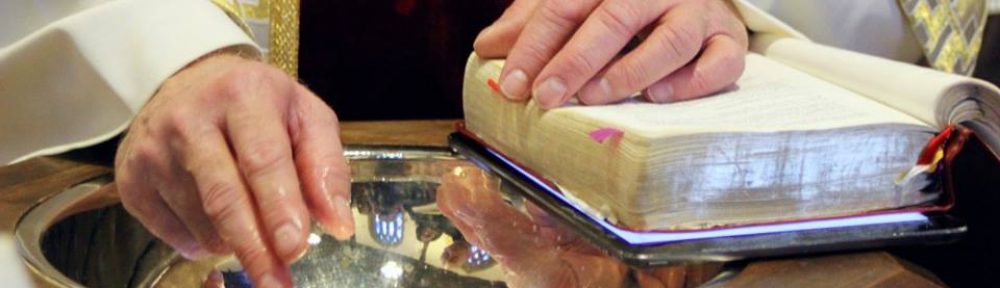
I say all that because today we are baptizing both children and an adult. We don’t often do that in the Episcopal Church, but I suspect that as our culture changes and becomes more secular, we will be doing more and more of it. Jewel Rose will be taking the big step in a few minutes, and with her will be Cade and Phoebe Seep. I will ask all of them if they want to be baptized; during our run-through yesterday, all three of them answered that question for themselves, and I hope they will today, too. But the next set of questions, Jewel will answer for herself, while Cade and Phoebe’s parents and godparents will respond on their behalf.

It is traditional that we baptize on this day, the First Sunday after the Epiphany, because it is on this day, each year, that we celebrate the Baptism of our Lord, Jesus’ baptism by John the Baptizer in the River Jordan. It may seem somewhat strange that we do this now, when we have just celebrated Jesus’ birth a little over two weeks ago, Jesus’ baptism marks the beginning of his public ministry, and except for Luke’s mention of Jesus’ visit to the temple when he was twelve, the gospels are completely silent about Jesus’ childhood.

We heard Luke’s version of Jesus’ baptism as the gospel today, and well, having taught Bible all those years, I can’t resist pointing out the most interesting piece of Luke’s story. Unfortunately, the lectionary editors left the most interesting part of the story out. You will notice that several verses of chapter 3 were left out of the gospel reading. The reason they were left out was because in them, Luke tells the story of John’s arrest by Herod. In other words, in the Gospel of Luke, John the Baptist is arrested before Luke mentions Jesus’ baptism. Now there are good reasons for this. It’s not that Luke doesn’t know that John baptized Jesus; rather it’s because he wants to de-emphasize John. The question I always used to ask my students when they were confused about this was, “Who has more power, the person doing the baptizing, or the one who is baptized?” Of course, in the case of a toddler, the answer to that question may not be obvious.

So we don’t really see John baptizing Jesus in Luke’s gospel. Instead the focus is on something else—the expectations of the crowd, and the question concerning John. We will see this again in the coming weeks, the question of who John was, and whether he was the Messiah, the one people were waiting and hoping for.

It is a question that was asked in the first two chapters of Luke, and it is a question we will hear again as we read through Luke’s gospel this year. But it’s always a matter of just what one expects, and whether one’s expectations are realistic or warranted. In this case, the answer is not quite obvious.

The problem was not just the question of the relationship between Jesus and John the Baptizer, the problem was also about the meaning of the baptism itself. The gospels agree that John’s baptism was a baptism for the forgiveness of sins, and everyone knows that Jesus was without sin, therefore, why did he need to be baptized? That’s the question the gospel writers struggled with, and part of the reason Luke writes the way he does is to downplay the significance of Jesus’ baptism, for his own self-understanding and for his ministry. The lesson from Acts underscores Luke’s interpretation that John’s baptism was ultimately inadequate.

The crowd was filled with expectation and wondering. Baptism is an important celebration in the life of the church. It is an opportunity for us to welcome new members and to remind ourselves of our baptisms and what we committed ourselves to at that point. In fact, it’s helpful for us to watch an adult being baptized. Too often, the questions that are asked during the service, and the vows we make are treated lightly, as if they really don’t mean what they say.

The baptismal covenant lays out our responsibilities as members of the body of Christ. They are what is expected of everyone who takes that step: to continue in the apostles’ teaching and fellowship, the breaking of bread and the prayers; to persevere in resisting evil; to proclaim by word and example the good news; to seek and serve Christ in all persons, and to strive for justice and peace, and respect the dignity of every human person.

Those are enormous responsibilities and tasks, and how each of us fulfills them is between us and God. But membership is not about occasionally attending services. Membership is about committing oneself to the body of Christ, using one’s gifts, talents, and resources to build up the community and to reach out to others. We’ve included in the service bulletin one way for you to do that. While many of you already participate in our worship service by serving as acolytes, readers, and the like, we are always in need of others. I encourage you to think about how you might help out with services, fill out the form, and put it in the offering plate. Of course, there are many other ways you can volunteer. The shelter meal which has been organized by Sarah and Sparky Watts for several years, can always use additional volunteers, for example, as can the food pantry.

The prayer book actually views adult baptism as the norm, not the exception as is our practice. That’s a good thing, because the vows that Jewel makes today are vows that we all make together. As we make them, let us make them, not only with our lips, but with our lives, promising to do all that we can, body and soul, to strengthen the body of Christ and serve God’s kingdom.