Media’s unequal treatment of conflict among Episcopalians and Lutherans?

Everyone knows the conflict over sexuality within the Episcopal Church has been a media favorite at least since General Convention 2003. Last year the ELCA (the largest Lutheran denomination in the country) voted to all partnered gays and lesbians to serve as clergy. It seemed to me at the time that for all the media coverage of our conflict, there was relatively little coverage of the parallel debate among Lutherans. I assumed it was because there was simply less controversy and fewer dissidents among the Lutherans. I may be wrong. Here’s an interesting take on the different treatment of the two denominations.

What’s most interesting to me is that in the comments following this article, various Episcopalians, and former ones, air their grievances and revisit the controversy. I’m wondering whether the difference in media coverage is in part due to the vitriol that passes back and forth between the two sides. Perhaps Lutherans are just too polite to lock horns in public as Episcopalians are wont to do.

Proper 17, Year C

I don’t know how much attention you pay to what’s going on in the news these days. I suppose some familiarity is unavoidable, for we are bombarded on the internet and on TV with the shrill voices of those who seem to be advocating a radical break from American values of religious tolerance and openness to immigrants. There’s the terrible outcry over the Islamic community center that has been proposed for a location a few blocks away from Ground Zero. There’s also the demand from apparently many on the right for an end to the promise of birth-right citizenship enshrined in the 14th Amendment to the constitution. The list could go on right to the attacks on President Obama’s citizenship and his Christian faith.

Continue reading →

The Feast of Augustine

Today is the Feast of Augustine of Hippo, who died on this date in 430.  Perhaps the most influential theologian in Western Christianity, his legacy is much debated and often decried. He is regarded as the inventor of the notion of original sin, and especially that original sin passes to us through our parents’ sexual act. He does have a robust notion of original sin, that human beings are fallen creatures, turned inward on ourselves and away from our proper end, which is the enjoyment of God. But his understanding of original sin undergoes considerable development throughout the course of his lengthy career and in response to increasingly acrimonious controversies with the Pelagians.

Contemporary Christians and many contemporary theologians have reduced him to something of a caricature–a bitter old man who struggled throughout his life with his sexuality. There is some truth in that caricature, but only some. Augustine wrote millions of words, many of them in the heat of conflict, but many others as he struggled to understand himself, his God, and the world in which he lived. His late treatise On the Trinity is one of the great masterpieces of Christian theology–ridiculously difficult to make sense of, but enormously rewarding. For all of his negative understanding of humanity, and of the gulf between us and God, central to his argument in On the Trinity is that we are created in the image of God, that the image of God in us is an image of the Trinity, and that we can, with our own reason and love, begin to understand the Trinity through our own mental faculties.

Augustine was also a theologian of love. The sexual desire that he sought to suppress and eventually came to control was for him only a physical manifestation of a deeper desire, or love that should always be directed toward God. There are moving passages throughout his work that express his experience of God–the love he had for God, and the love of God that he experienced. Confessions, which is often described as a spiritual autobiography, is much more than that. It is a dialogue between Augustine and God, as Augustine reads and writes his experience with God, and comes through that writing to a deeper understanding of God. While most readers give up after Book IX, which is the end of his story, there are three more books that are something of a riff on Genesis 1, showing Augustine at his most creative theologically and exegetically, and full of deep meditation on the nature of the world, himself, and God.

A famous quotation, from Pusey’s translation of Confessions, I believe of a passage from Book XII:

“Late have I loved you, beauty so old and so new; late have I loved you.  And see, you were within and I was in the external world and sought you there, and in my unlovely state I plunged into those lovely created things which you made.  You were with me; and I was not with you.  The lovely things kept me far from you, though if they did not have their existence in you, they had no existence at all.  You called and cried out loud and shattered my deafness.  You were radiant and resplendent, you put to flight my blindness.  You were fragrant, and I drew in my breath and now pant after you.  I tasted you, and I feel but hunger and thirst for you.  You touched me, and I am set on fire to attain the peace which is yours.” xxvii. 38

The Resurgence of Calvinism

The Episcopal Cafe points to a lengthy article in the Christian Science Monitor that discusses the increasing appeal of Calvinism among some contemporary Christians. The article appeared some months ago and focuses on the appeal of certain Calvinist tenets for contemporary Americans seeking deeper religious experience and formation.

I first encountered this phenomenon some years ago when I was living and teaching in upstate South Carolina. One of the local papers did an article on the controversy between 5 point (TULIP) and 7 point Calvinists that was leading to division within denominations, especially among Baptists. The CSM article claims that as many as 1/3 of recent Southern Baptist seminary grads identify themselves as Calvinist.

The article also observes that this development, however strong it may be, goes against two other powerful strands in contemporary American religion. One is the “prosperity Gospel” of many Evangelicals. The other is the flattening out of religious difference and the fact that according to the Barna survey, only 9% of Americans hold to what the survey calls a “biblical worldview.”

What interests me most is the reference to this article at this late date on the Episcopal Cafe, and to the comment thread that has ensued. It was correctly observed that despite the presence of Martin Luther in Holy Women, Holy Men there is no commemoration for Jean Calvin, even though Calvin exerted a much greater influence on the development of the Protestant Reformation in England.

Most of the comments decry Calvin’s influence in Anglicanism and in larger Christianity. I’m no Calvinist, by any means, and I don’t find his theology particularly compelling, either in its take on Christianity or as an intellectual exercise. Still, he was a brilliant theologian, and it is fascinating to follow his logic to its conclusions.  And I should think that if we commemorate all those other folk in our church calendar, there ought to be room for him.

Will American values and the US constitution prevail?

President Obama spoke out against the opposition to the Cordoba House last night.

Andrew Sullivan points to a comment by Cardinal Sean O’Malley, Archbishop of Boston:

“During the interview she also asked me about the plan to build a mosque in New York, very close to Ground Zero. I told her it is a sign of the value we have for freedom in this country, and for religious freedom in particular. We certainly do not want to support groups that promote terrorism, but there are many American citizens who are Muslim, and they have a right to practice their faith. Having a mosque near the site of the attack can be a very important symbol of how much we value religious freedom in this country.

I compared the situation to a historical situation in Ireland: During the Easter Revolution the Irish were very careful to protect the rights of the Protestants in the Free State. They did not take back their cathedral or close their churches. Instead, they wanted people to see they believed in freedom of religion.”

Even Fox News seems to be on board.

Update on clergy burnout

I’m on vacation, so it shouldn’t be an issue. On the other hand, we’re moving, so it’s not much of a vacation. But the materials on clergy burnout I posted earlier continue to reverberate in the blogosphere. There have been a couple of interesting essays. One appeared on Huffington Post written by Anne Dilenschneider. She argues:

When examined more deeply, it turns out that the current emphasis on clergy effectiveness is due to a change in the role of pastors that occurred in the 1920s concomitant with the development of the assembly line and the adoption of the production efficiency methodology of Taylorism in corporate America. At that time, as Richard Niebuhr observed, clergy became “pastoral directors” who focused on the administrative tasks of managing and maintaining churches for the benefit of the denomination. And, as retired United Methodist bishop Richard Wilke has noted, by the 1960s, pastors were being evaluated on their “competency, acquired skills, and professional status.”

To put it succinctly, the pastorate went from being cura animarum (care of souls) to management. Now, I suppose there may be some truth in that argument. Still, what immediately comes to mind are those early modern parish priests and pastors, across Europe, who were in constant conflict with their parishes over finances, responsibilities and duties, and who wrote repeatedly about parishioners who wanted only to be baptized, married, and buried. Talk about burnout–especially when there was no possibility of advancement, and when the arm of the state tried to see to it that you forced attendance at services and catechism classes.

Carol Howard Merritt has a much more nuanced take on the issue. Pointing out that 50% of clergy leave the ministry after their first few years, she highlights all of the stresses on pastors, including expectations, finances, poor preparation, and for mainline denominations, the phenomenon of ongoing decline in membership.

I will be attending a CREDO conference this fall, which is a program of the Episcopal Church’s Church Pension Fund, to help clergy assess their physical, spiritual, and vocational well-being. Herb Gunn of CREDO offered this response to the article and op-ed in the Times:

This research points to an interesting conclusion—that differs slightly from the research Vitello noted. The only major lifestyle factor for which Episcopal clergy are at greater risk than the larger population is stress. Yet remarkably, work-related stress, which frequently leads the general population to employment dissatisfaction, job loss, or job change, exists alongside notably lower turnover intent for Episcopal clergy. Compared to the general population, Episcopal clergy report significant levels of well-being, self-efficacy, and finding meaning in one’s work.

You can read his letter here.

Weddings and Funerals

Andrew Brown blogs about weddings and funerals, taking off from Giles Fraser’s thought for the day on the BBC on August 4 (go to the 1:48 mark). Frasier argues that weddings are all about the couple. Fraser observes that “most clergy prefer taking weddings to funerals.”

Frasier observes that weddings are supposed to be about the couple putting themselves in the hand of someone else; that’s why it’s a sacrament, but instead they become examples of self-promotion, about being “princess for a day.”

I’ve heard from some other clergy that they much prefer doing funerals to doing weddings, and I’ve often puzzled over it. In part, I suspect that sentiment derives from the level of control one has over the events. It’s much easier to stage-manage a funeral than a wedding. I also suspect that it’s about the clergy role in each. Presiding at funerals is rewarding, the congregation, the mourners need those words of comfort and hope. They need help with their grief.

Weddings, on the other hand, are rather different. Clergy are a necessary prop, part of the venue and decoration, if you will. The day is about and for others. I think it’s partly an ego thing. But I’ve also learned that weddings can be an opportunity to help people reflect on their relationship with each other and with God, and in that sense can be quite meaningful, in spite of everything else going on. But then, when I do a wedding, we do it by the prayer book, and I tell everyone, including the wedding coordinator and photographer, that I’m in control of everything that happens once the wedding party enters the nave (I tell funeral directors much the same thing. (h/t Andrew Sullivan)

Clergy Burnout

I shared on facebook, but didn’t blog about this week’s article in the New York Times regarding clergy burnout. I didn’t comment on it in my blog, because it all seemed rather obvious and to be expected. Being the pastor of a congregation is difficult. I find it hard to set the necessary boundaries; there are few weeks when I don’t set foot on church property all seven days. But I live three blocks away, and most downtown destinations require walking past the church, so it’s easy to drop in to pick something up or check on something when I’m on my way to do something else.

But today’s Op-Ed in the Times seemed over the top, blaming parishioners’ expectations for witty and short sermons for clergy burnout. I’m sure the author is a fine man and a good pastor, but perhaps it’s time for him to move on. The author complains about  contemporary consumeristic religion, but most of his examples of conflict with clergy are time-honored. One can find similar concerns expressed by St. John Chrysostom in the fourth century, any number of medieval preachers, or even Jean Calvin in sixteenth-century Geneva.

What seems apparent is that the author doesn’t understand that the role of pastor and indeed the pastor’s message, whether that be in preaching or in pastoral care, needs to be worked out in conversation with those among whom one ministers. It’s only by listening carefully and prayerfully, that one can discern how to minister.

A Sermon for Proper 14, Year C

August 8, 2010

There’s a temptation when hearing or reading gospel passages like the one we just heard, to do one of two things. Either we begin to feel guilty for not responding to Jesus’ clear command to give away our possessions and share them with the poor. Or, because the demand is so radical, we dismiss Jesus’ words as irrelevant to our lives and our world. As I said last week, we are working through a section of the gospel of Luke in which Jesus and his disciples are on the way to Jerusalem, and Jesus is teaching them about discipleship. Last week, we heard the parable of the rich fool; today we hear more words from Jesus about wealth.

Jesus tells his disciples: “Sell your possessions, give alms. Make purses for yourselves that do not wear out, an unfailing treasure in heaven, where no thief comes near and no moth destroys. For where your treasure is, there your heart will be also.”

We are facing two enormous gaps today. One is the gap between our selves and the poor of this world. The other is the gap between our lives, our priorities, and the priorities of the gospel and of the biblical texts we read. The Gospel and Isaiah seem to be speaking to another world, another people, even though we acknowledge their authority by reciting “The word of the Lord.” The Gospel of the Lord.” But none of us live according to these priorities.

In the lesson from Isaiah, the prophet reminds us of where our priorities should lie, in helping the oppressed and widow. He says not that worship is unimportant, but rather, that if all we care about is worship, we are not ordering our lives properly. Here, too, the words seem to hit the mark. We are worshiping in this beautiful space, listening to beautiful music, I’m wearing beautiful vestments, but a few feet away from us are homeless people sitting on benches on Carroll Street, or searching for food.

Today’s lessons, all of them, challenge us to our core. They compel us to examine our faith and question our priorities. They confront us with the mysteries of who we are and what it means to be in relationship with God, and with the Incarnate Word, Jesus Christ.

The lesson from the Hebrews includes those beautiful words, “Faith is the assurance of things hoped for, the conviction of things not seen.” We hear these words and assume they mean that we should hang our brain up at the door when we walk into church. We think they meant that faith is blind, that it is absurd, that it is the opposite of reason, or of science, or even of questioning and doubt. But in fact, that assumption is based not only on a faulty dichotomy between faith and reason, but also on an inadequate translation of the words of Hebrews. What the NRSV translates “Faith is the assurance of things hoped for, the conviction of things not seen” doesn’t convey what the author is trying to express. First, the word translated as assurance here is elsewhere translated as being. The best translation might be “faith is the reality of things hoped for.”

Likewise, the word translated as conviction in “conviction of things not seen” ought better read “proof.” What the author seems to be saying is not that faith ought to be contrasted with empirical evidence, but rather that it is part of a process that faith moves toward understanding, realizing that which is now beyond demonstration. “Faith seeking understanding” to use a phrase made famous by St. Anselm.

The author gives us then the example of Abraham. By faith Abraham obeyed when he was called to set out for a place that he was to receive; not knowing where he was going; by faith he stayed in the land he had been promised, as in a foreign land, living in tents. By faith he received power of procreation even though he was too old and Sarah was barren.” Then we are left with that majestic vision: All of these died in faith without having received the promises, but from a distance they saw and greeted them. They confessed that they were strangers and foreigners on the earth, … But as it is, they desire a better country, that is a heavenly one.”

This language and imagery may itself seem strange to us. It relies on an understanding that assumes the true reality is the one that lies beyond us, beyond our senses, in the spiritual realm. While we may pay lip service to this view, by and large we live by another standard—what we perceive with our senses, what we can touch, and taste, and smell, is more real, than anything in our mind.

Don’t worry, I am not going to digress into metaphysical speculation. This is neither the time nor the place for that. But I think if we take that idea from Hebrews, that our true home, our reality is that for which we yearn through our faith in Jesus Christ, we can help make sense of what our faith is calling us to. When we hear in the gospel Jesus telling his disciples to “be dressed for action and have your lamps lit” he is telling them, and us, where our priorities need to lie.

To have Abraham’s faith does not mean following blindly, unwillingly into the unknown. Having Abraham’s faith means resting in the confidence that God is with you, that God has called you. It means being willing to be transformed, being ready for change. It means over the course of a life’s journey, to shape one’s priorities more and more into the priorities of the gospel. Later today, as I baptize Grace and anoint her with chrism, I will say, “You are sealed with the Holy Spirit in baptism and marked as Christ’s own forever.” Those words are a powerful assurance that Jesus Christ has incorporated us into his body, and should be a reminder that whatever befalls, we belong to him.

Jesus tells his disciples “Do not be afraid little flock, for it is your father’s good pleasure to give you the kingdom. To live by the priorities of the Kingdom of God means to allow the words of Jesus to become our beacon and guide, to let them set our priorities. To live that way is to live like Abraham, responding to God’s call, and taking hold of God’s promises. No, we might not see the kingdom of God reign on earth, but like Abraham, we might see glimpses, as we reach out in love to the world.

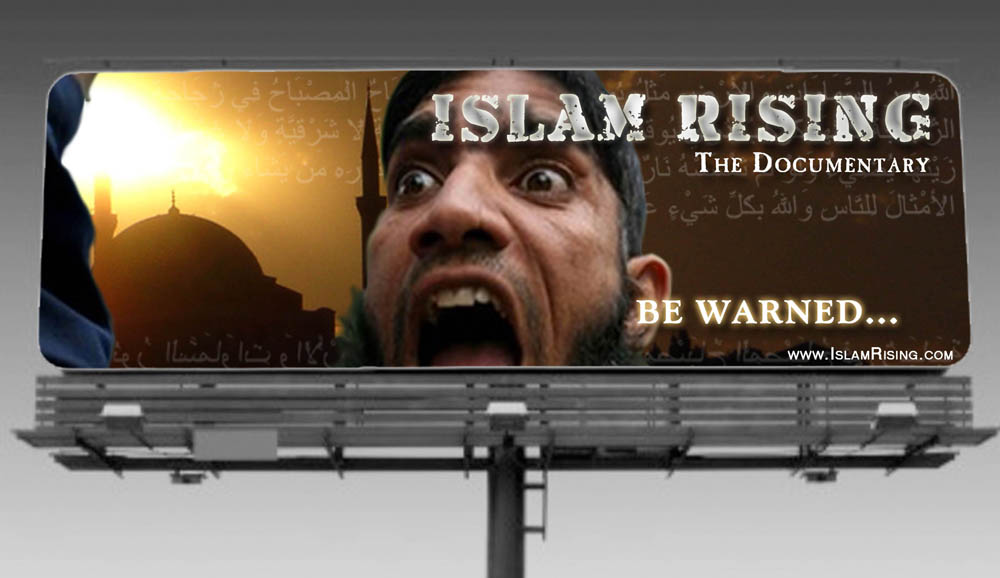
More on opposition to mosques

Laurie Goodstein has an article in today’s NY Times that details the growing opposition to mosques throughout the country. She points out that where previous campaigns in local communities to prevent construction of mosques focused on issues like traffic and parking, now the efforts argue that mosques are breeding grounds for Islamic extremism. Their tactics now include speeches and presentations from former Muslims.

In fact, studies show just the opposite.

As she writes:

A two-year study by a group of academics on American Muslims and terrorism concluded that contemporary mosques are actually a deterrent to the spread of militant Islam and terrorism. The study was conducted by professors with Duke’s Sanford School of Public Policy and the University of North Carolina. It disclosed that many mosque leaders had put significant effort into countering extremism by building youth programs, sponsoring antiviolence forums and scrutinizing teachers and texts.

A former student directed me to this website after seeing billboards like this on the highway: