
Babies, Tents, and the Incarnation: A Sermon for Christmas Day, 2014

“In the beginning was the Word and the Word was with God and the Word was God.” These majestic words, the beginning of John’s gospel capture the profundity and the mystery of our faith. For two thousand years, Christians have read these verses, wrestled with them, pondered their meaning. We do that today as we celebrate the miracle of God becoming flesh and living among us.

One of my great joys as a priest is to visit parents of newborn babies in the hospital. Each time I enter the room, I am overwhelmed with the joy, excitement, and love that a new mother and father have for their child. There is also awe and wonder, and usually, especially when it’s a first child, looks of amazement and bewilderment. As I sat with one couple recently, we talked about the life this baby would have, what he would see and experience, who he would become.

I’m awed by the responsibility parents take on. I’m also awed by the vulnerability, weakness, and dependence of newborns. This year, as I’ve reflected on Christmas and thought about what it means that God became flesh in a manger, in a stable, in Bethlehem, I have pondered the mystery that God comes to us, that God became human by being born as a baby, vulnerable, weak, utterly dependent on others for life.

For all the mystery and wonder about the first verses of John’s gospel, “In the beginning was the Word, and the Word was with God, and the Word was God” I think that in some ways, it’s easier for us to get our heads around what John is trying to say here than it is for us to comprehend the fact that God became incarnate in a baby in Bethlehem.

Even if it may be difficult to believe that God created the universe and that the Word was present at creation, such notions at least conform to the idea of God that we have. If there is a God, certainly God created the universe. That’s the sort of thing philosophers debate and a notion that is worthy of an adequate concept of God. But for such a God, as the philosophers argue, all-knowing, all-present, all-powerful, for a God like that to be born as a baby, that just doesn’t make a whole lot of sense.

Immediately, all sorts of questions come up that curious people might wonder. If God is all those things, all powerful, all-knowing, what was God like as a baby? How could a weak, vulnerable infant contain a being of infinite possibility and infinite nature? How do we make sense of these two ways of understanding the way in which God became incarnate—the story Luke tells of Mary and Joseph, of a manger and stable, of shepherds and the story, or poetry of John: In the beginning was the word and the word was with God and the word was God.

Well, John himself makes the connection a few verses into the gospel: “And the Word became flesh and lived among us.” More literally, “the Word became flesh and tabernacled (or tented) among us.”

That’s such an evocative image both for our present context and for the biblical story. Tents are something we’re familiar with. They provide shelter, yes, but they are also relatively insubstantial. They might protect us from rain, but they aren’t much use in a heavy storm with strong winds and few of us would want to have to live through a Wisconsin winter with only a tent for shelter. The image of the tent seems to capture something of the frailty of human nature.

But in the biblical context, the idea of tent or tabernacle takes on even greater significance. For it was in a tabernacle, a tent, that God was present with the Hebrews as they wandered in the desert for forty years. And in the tabernacle, God revealed God’s glory to the Israelites.

John uses that imagery as he seeks to help us understand the nature of God in Christ. For, he says, “we have seen his glory, … full of grace and truth.” Just as God revealed God’s glory to the Israelites in a tabernacle made from the skins of animals, so we see God’s glory in the frail flesh of a new-born baby.

That is the mystery of our faith, that we encounter God in a newborn baby born in Bethlehem. St. Paul articulates this fundamental paradox in the phrase: “power made perfect in weakness” because of course it is not just that we see God in the manger in Bethlehem. We also see God dying on the cross.

In John’s gospel, the paradox of the incarnation is also the paradox of the cross. John loves to use that word “glory” or “glorification” when speaking of the cross. Like Paul, John is telling us that in these moments of weakness, we see God’s majesty and power.

Manger, cross; God’s weakness, God’s vulnerability; God’s power. That is the mystery of the incarnation. That is the mystery and the bedrock of our faith. We may not understand, we may not comprehend it, but we can see it and experience it with our very eyes. We have the reality of the incarnation before us in the God who became flesh and tented among us, the God who died on the cross and was raised again.

But we have the reality of that incarnation before us in many ways. We see it, we taste it in the bread and wine of the eucharist, when we receive the body and blood of Christ. We see it in the very imperfect Church, both our local community, and the worldwide communion, bodies filled with flaws and imperfections, but also, mysteriously, the body of Christ. And finally, we may see it in ourselves, imperfect human beings though we are, but by the grace of God filled with the presence of Christ. May this Christmas rekindle in all of us the knowledge of Christ’s presence, of Christ’s glory, in ourselves, in our church and community, and in all the world. May we experience the reality of the incarnation for ourselves, and share it with the world!


Mary–Perplexed, Pondering, Prophetic: A Sermon for Advent 4, Year A

What comes to mind for you when you think of Mary, the mother of Jesus Christ? Do you think of a painting of her, perhaps a masterpiece from the Renaissance depicting her as a young woman, clothed in a beautiful blue dress, sitting demurely as the angel announces to her, “Hail Mary, full of grace!” Do you think of her at the foot of the cross, or holding the dead body of her son? Do you think of the theological and doctrinal debates surrounding her virginity or immaculate conception? Continue reading

Pointing to Christ: A Sermon for Advent 3, Year B

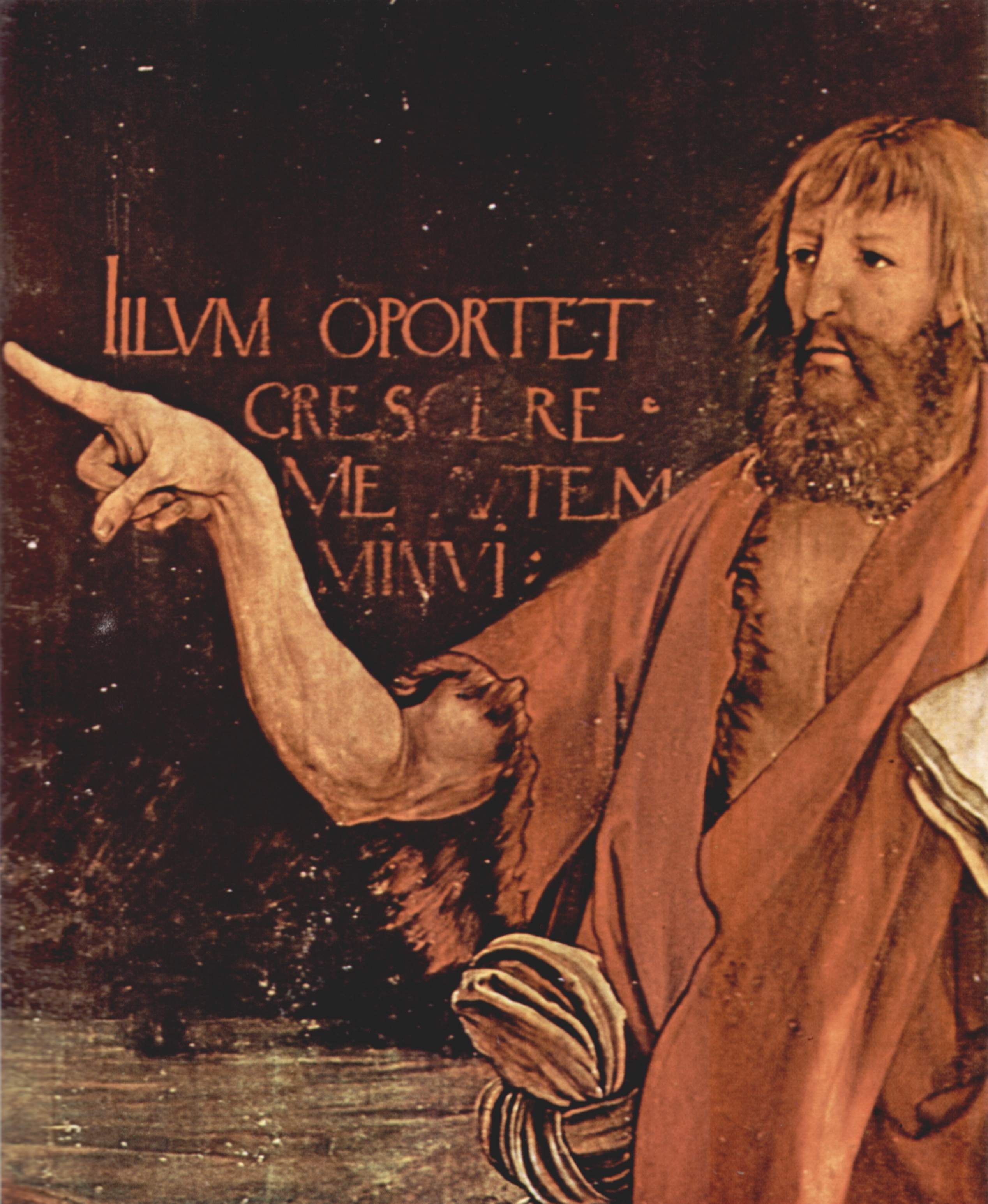
Mathis_Gothart_Grünewald_024The cover art on today’s service bulletin is a detail from one of the great works of art-Matthias Gruenewald’s Isenheim altarpiece. Created for a hospital and designed so that the patients could see the altarpiece from their beds, the center panel of the altarpiece depicts the crucifixion. Standing beneath the cross is the image of John the Baptist, with the lamb of God, a small lamb carrying a cross, by his side. Gruenewald was a master of perspective and artistic technique, so what stands out to me in this image is John’s index finger, pointing at the crucified Christ, which is all out of proportion with his hand. Continue reading

What shall we cry? A Sermon for Advent 2, Year B

Whenever I read today’s reading from Isaiah 11:1-11, I find myself reading it in the cadences of Handel’s Messiah, the beautiful Tenor aria that begins that oratorio. I have no idea how many times I have heard that music; it was an annual accompaniment to Christmas throughout my childhood and youth. Although it’s been years since I’ve attended or sung in a performance of it, the music remains in my memory.

I’m fascinated by the different ways in which we encounter and interpret scripture. Take Messiah, for example. If you’re familiar with it, it’s very hard not to hear it when you read, or listen to, the scriptures that Handel set to music. There’s a sense in which the music has shaped our experience and interpretation of the texts. By the way, that’s one of the wonderful things about the Lessons and Carols service we’ll have at 10:00—our experience of scripture is enhanced and deepened by the music. Continue reading

Looking for Signs of Christ’s Coming in Ferguson and Madison: A sermon for Advent 1, Year B

Almost a year ago, The Rev. Alex Gee, jr. wrote an op-ed piece in the Madison State Journal in which he described his experience as an African American male in Madison, and called on our community to address head-on the issues of racism, inequality, and injustice in our midst. Since then, there have been a series of meetings, a great deal of press coverage, and new energy in the African American community to speak out on the issues that divide us. Continue reading

Christ the King and our comfortable assumptions: A Sermon for Christ the King, 2014

Today is the last Sunday of the liturgical year, and for many years it has been known as Christ the King. More recently, the politically correct liturgical police have renamed it “The Reign of Christ” because the imagery and idea of Christ the King has become increasingly problematic in the twentieth and twenty-first centuries. It offends our notions of democracy and egalitarianism; it smacks of violence and militarism; it seems to encourage gender stereotypes. For all of those reasons, and for others, including the image of a crowned Jesus robed in splendor, seated on a throne, judging between the good and evil; for all of these reasons I find the commemoration of Christ the King problematic. Continue reading

How’s that “read, mark, learn, inwardly digest” thingie going? A sermon for Proper 28, Year A

This Sunday’s collect, the collect for Proper 28, is one of my favorites:

Blessed Lord, who caused all holy Scriptures to be written for our learning: Grant us so to hear them, read, mark, learn, and inwardly digest them, that we may embrace and ever hold fast the blessed hope of everlasting life, which you have given us in our Savior Jesus Christ; who lives and reigns with you and the Holy Spirit, one God, for ever and ever. Amen.

Continue reading

The Parable of the 10 Drowsy Virgins: A Sermon for Proper 27, Year A

I hate waiting. I especially hate for appointments that are delayed. In fact, there was a time in my life when I scheduled doctor’s and other appointments for the first thing in the morning so that if I had to wait, I knew it was the doctor’s fault for not getting to the office on time. Doctors’ waiting rooms are especially annoying because the reading material available is usually year-old copies of magazines I would otherwise not read. Cellphones and the internet have made things somewhat easier still but if an appointment is delayed, I still find my anxiety rising. Waiting can be fun, even exciting, if the thing we’re waiting for is a joyous event. Think of children looking forward to Christmas. But waiting can also be a burden as we face a looming challenge of one sort or another. Continue reading

Blessed Saints, Blessed by the Saints: A Sermon for All Saints’ Sunday, 2014

There’s something about our commemoration of All the Saints each year that appeals to historical sensibilities. Each year, as I reflect on the day and prepare my sermon, I find myself drawn to the stories of Christians who lived in the past. Usually my focus is not on the famous saints, the ones we remember in our calendar of commemorations, but on ordinary men and women who lived out lives of faithfulness in obscurity. Continue reading

Buried by God, Loved by God; Loving God and Neighbor: A Sermon for Proper 25, Year A

This past week a parishioner sent me an email in which he asked about the relationship between Moses and God. He noted that in the reading from Exodus for last Sunday, Moses and God seemed to be on intimate, even casual terms. They talked together as two friends might talk. Moses asked to see God’s glory and God responded by saying that direct sight of God’s glory would kill him, so God instructed Moses to hide behind a rock as God passed by him, and Moses would be able to see God’s backside. It’s a wonderful story, told in earthy imagery that doesn’t quite seem to fit the majesty of God and doesn’t seem appropriate for the serious matters of the law and Israel’s sinfulness that had previously focused their attention. Continue reading