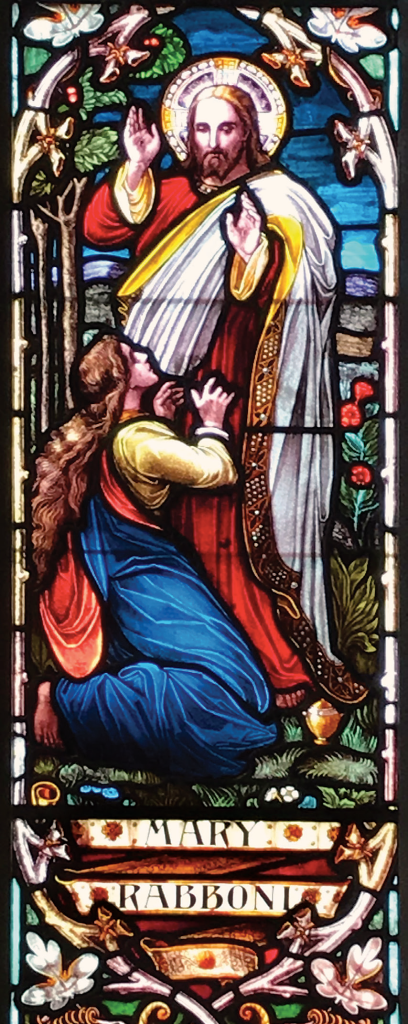
Our journey into the heart of God: A Sermon for Palm Sunday, 2018

“Love so amazing, so divine, demands our souls, our lives, our all.”

Palm Sunday is a rich, powerful, conflicted day in the life of the church. We begin with hosannas, palms, and praise, and end with silence and the cross. Each year, our hearts churn with emotion as we hear again the story of the last week of Jesus’ life and begin the journey that will pass through Maundy Thursday, lead to Good Friday, and the silence of Holy Saturday. We enter into the drama, participate as we wave our branches and shout, “Hosanna!” and a few minutes later, shout, just as loudly, “Crucify him.”

There is so much here, so much on which to reflect. And really, what might be best for us would be to be silent, to sit with our emotions, with the images that run through our minds, to sit with our memories, our faith, and our doubt, and not worry about words.

But among all those images, in the stories from Mark’s gospel that we heard, I want to draw your attention to one theme, one set of characters, one aspect of the drama, that might help us orient ourselves to this story and to the days that follow this one.

One of the dominant themes that runs through the Gospel of Mark, from its very beginning is that Jesus’ disciples are uncertain of who he is, unclear on what he is about, and misunderstand Jesus’ intentions and message. This portrayal intensifies as the gospel progresses, and in the passion narrative, we see a group of disciples who are fearful, forgetful, and abandon Jesus. He dies alone, on the cross, the cry of despair on his lips, “My God, my God, why have you forsaken me?” At the end, Jesus wonders whether he has been abandoned by God, as well as by his friends.

Even as this is Mark’s dominant theme, he writes into his gospel another theme, or contrasts the behavior of Jesus’ male disciples with another group of individuals, the group of women. So, at the beginning of today’s reading, we heard not only of Judas’ betrayal of Jesus, but of the wonderful story of the woman who anointed Jesus. Her behavior, and Jesus’ praise of her—“she has anointed my body beforehand for burial”—is Jesus’ acknowledgment that even if he is betrayed by Judas and the other male disciples don’t understand what is going to happen, this woman, this disciple does, and as he commends her he says, in one of those ironic twists Mark loves, “Truly I tell you, wherever the good news is proclaimed in the whole world, what she has done will be told in remembrance of her”—ironic, because the story is indeed told of her wherever the gospel is proclaimed, we don’t know her name.

So to at the end of today’s reading, Mark depicts Jesus’ death, the confession of the centurion, and then, “There were also women looking on from a distance; among them were Mary Magdalene, and Mary the mother of James the younger and of Joses, and Salome. These used to follow him and provided for him when he was in Galilee; and there were many other women who had come up with him to Jerusalem.”

There they were, watching silently, fearfully, full of grief. There they were standing afar off as their hopes and dreams were dashed, their teacher, killed. There they were as they watched his execution, his death, and watched as others they knew took his body down and buried it. Was it then that they made plans to come to the tomb after the Sabbath, to anoint his body with spices? To touch him once again, to perform the familiar and ancient rituals of burial?

As followers of Jesus, as seekers, the curious, Holy Week presents us with intense emotions, profound questions. It is a story that many of us know, and as we reenact it in the liturgy of Palm Sunday, Maundy Thursday, and Good Friday, we do more than go through motions, or play a part. We enter into the ancient story, and become characters in it ourselves. It is a story that asks us where we stand, what will we do?

And all of those characters, Judas the Betrayer, Peter the Denier, the disciples who fell asleep while Jesus prayed, the disciples who fled in fear from the scene and abandoned Jesus. We are at times, all of those characters. We have each at one time or another, acted like one of them, or of the others—the crowd who shouted “Crucify him” or the soldiers who executed him, or the bystanders who mocked.

Holy Week confronts us with profound questions, but none may be more pressing, more difficult, than the one that asks, “Where do you stand? Or “Are you walking with Jesus on his journey?” Are you staying with him, bearing witness?

Even as our very human emotions, our busy, complicated lives, our divided allegiances, encourage us or tempt us to flee, or keep silent, or deny, or betray, or simply to ignore, Mark is challenging us, as he always does, to go deeper, to plumb the depths of our own lives and experiences, and as we do that, to look for, to seek Jesus.

When we do that, when we dare to allow Mark’s story, the story of Jesus to enter deeply into our lives and world, we are confronted, not only with ourselves, but with the mystery of salvation, the mystery of Jesus, the mystery of love and sacrifice.

Earlier in the gospel, as Jesus began his journey to Jerusalem, after he made his first prediction of what would happen when he got there, he told his disciples, “If you want to become my followers, take up your cross and follow me.”

When we do that, we enter into Jesus’ journey, going with him into the heart of God, where we will find love. It is not an easy journey, because as Mark insists, the journey to God, into God, is a journey into the suffering, oppression, and injustice of the world, where God is working transformation. It is there that we see God, there we find God, there we know and are loved by God.

Following Jesus to the cross, standing near the cross, we encounter God in Christ. We encounter the miracle of transformation as Mark tells us, even his executioner knew and saw, that truly “This man is the Son of God.” May this experience and transformation be yours this Holy Week, may this experience and transformation be everyone’s in the midst of our broken, suffering, unjust world.

Can we see Jesus? Do we see Jesus? A Sermon for the Fifth Sunday in Lent, 2018

We are at a turning point. Lent is drawing to a close; those of you who have been following Lent Madness are watching as the tension builds and the saintly competition comes to an end. If you’ve given up something for the season, you are probably counting the days to Easter and the end of your fast. Here in the office at Grace, we are preparing for Holy Week as you can tell from the notices in the service bulletin.

As we were reciting and chanting the verses from Psalm 51 this morning, I was reminded that we had said this same psalm on Ash Wednesday, after the imposition of the ashes. Then, I and you were hoping for a Holy Lent, a time when we might deepen our relationship with God in Christ, experience repentance and forgiveness of our sins and grow spiritually. Now, as Lent draws to a close, those verses remind me of all the ways my actions and discipline in Lent have fallen short of what I had hoped for, another missed opportunity. I am grateful again, and continuously, for God’s mercy and grace. Continue reading

This is how God loves the world: A Sermon for the Fourth Sunday in Lent, 2018

Is there any verse of scripture more familiar in our culture than John 3:16? It may be that for many in our culture it is the only verse they know, or at least, the only verse they know the reference for. “For God so loved the world that he gave his only begotten son, that whosoever believeth in him, shall not perish, but have everlasting life.” Over the years, we’ve seen it displayed at athletic events; on bumper stickers or decals on cars, emblazoned on all matter of Christian kitsch.

For that very reason, many of us find its ubiquity and overuse problematic or even offensive. It’s as likely to divide or put people off as it is to attract people to Christianity, for not only does it seem to reduce the truth and beauty of Christianity to a slogan or formula, also, by the over-emphasis on belief, seems divide the world between believers and unbelievers, saved and unsaved, and those of us who struggle with doubt and uncertainty, wonder whether we are included among those who will inherit eternal life. Continue reading

Difficult conversations on our journey with Jesus: A Sermon for the Second Sunday in Lent, 2018

One of the things about my job that is both wonderful and at times frustrating is that among many other things, I get paid to talk to people. And while some of those conversations can be uncomfortable and difficult, many of them are opportunities to get to know people, to hear about their spiritual journeys, to learn about their struggles, their hopes and passions, and sit with them in the midst of their pain and suffering.

This week, I’ve met with a number of interesting people, among them a college student who wanted to talk to me about his senior thesis (that’s something I haven’t done in almost ten years); a young Roman Catholic woman who is searching for a new church home. There were also several homeless or nearly homeless people There were also conversations with people curious about the proposed development project on our block. Continue reading

Lament, Wilderness, and Call: A Sermon for the First Sunday in Lent, 2018

We began our services today, the first Sunday in Lent, as we do each year, with the Great Litany. It is at least somewhat familiar to many of us, if only because we have attended services here on this day in past years, but it is decidedly strange and jarring. For many of us, who might not be very familiar with the season of Lent, or with Episcopal/Anglican worship, to begin our service in this way may be disorienting. What are we doing? Why are we doing this? What does it mean?

And in the aftermath of yet another mass shooting, horrific violence visited upon schoolchildren and their families on Wednesday, another example of the deep evil that exists within human hearts and in our society—evil evidenced by our inability and unwillingness to stop the carnage—beholden as we are to the idolatry of our worship of guns and our slavery to political expediency, to begin our service in this way, praying for God’s mercy, for deliverance from every evil and danger that threaten us, to begin this way seems oddly appropriate. Continue reading

A Broken Nation, A Broken World, Our Broken Hearts: A Homily for Ash Wednesday, 2018

There may be no day quite like today. It is a day on which the church observes one of its most solemn days, certainly its most penitential days as we mark our foreheads with ashes and begin the season of Lent. All the while, around us in the secular world, and in our own lives, many of us will go about the business of Valentine’s Day, celebrating love and relationships, enjoying romantic dinners, and above all, chocolate.

And while our minds may be elsewhere, thinking of Valentine’s hearts, in a few minutes we will read together the words of Psalm 51:

“The sacrifice of God is a broken spirit,

a broken and contrite heart, O God, you will not despise.”

There’s nothing wrong with that juxtaposition. There’s nothing wrong with coming here on this day, reciting the powerful words of the litany of repentance and Psalm 51, hearing the words that I will say, “Remember that you are dust and to dust you shall return,” and returning to your daily lives and relationships. We live complicated and conflicted lives and even as we seek to grow spiritually, we also have jobs, and families, and relationships, and other matters that demand our attention and time.

I began writing this homily yesterday and continued working on it this morning, thinking about the challenges of understanding ourselves as we stand before God on this day. We are called to remember who we are, that we are dust and to dust we shall return, that we are created by God, in God’s image, yet that we experience ourselves as fundamentally broken, far short of the human beings God intends us to be, needing not only to confess our sins and repent, but to experience God’s never failing grace and mercy, and God’s power to remake us, recreate us, in God’s image. To use the language of Psalm 51 that we will recite in a few minutes:

Purge me from my sin, and I shall be pure,

Wash me, and I shall be clean indeed;

Blot out all my iniquities,

Create in me a clean heart and renew a right spirit within me.

I was writing these words, pondering the meaning of this day as I heard reports of yet another mass shooting at a school in Florida. According to the Gun Violence Archive, this is the thirtieth mass shooting in the US this year, the 9th mass shooting at a high school.

And as I reflected on this horror, on our willingness to stand by as we watch the carnage, I turned from the penitential psalm 51, to the more ominous words of Joel. We are, as a nation, a culture, a people, at, or even beyond, a turning point. With the violence and hatred in our midst, the racism, the attacks on immigrants, the sexual assault allegations that have struck at Hollywood, Corporate America, the Church, and yes, the White House, we are witnessing the collapse not only of our institutions, but of our moral fiber, our civil society. We have never been in more need of the message of Ash Wednesday, never more in need to be honest with ourselves as individuals and as a nation, that there is evil at our very heart, evil we need to repent and turn away from.

There are in these two readings two very powerful verses that move me deeply—the first is from Joel,

“Between the vestibule and the altar
let the priests, the ministers of the Lord, weep.”

There have been times over the years that I have been nearly in tears as I approached the altar—times of personal crisis, tragedy in our congregation or in my own family. But more often I have been near tears because of events in our community, nation, or world. Sometimes, the tears were tears of grief or mourning, often, especially recently, they have been tears of anger and frustration. Such tears can be a sacred response to events in our lives and world—the tradition of lament, of calling out to God in times of distress, and giving voice to our doubts, fear, and anger is one of the most familiar forms of the Psalms. We see some of that language here in Psalm 51.

But the other powerful verse that has deeply moved me over the years, perhaps entered into the marrow of my faith, my understanding and experience of God, is from Psalm 51:

Make me hear of joy and gladness, that the body you have broken may rejoice.

For me, this verse speaks not only of suffering and lament, of the consequences of sin, and the effects of punishment, but that in the crucible of this experience of sin, repentance, and forgiveness, we come, at the end to a place of joy and gladness, having experienced the miracle of God’s forgiveness, grace, and steadfast love.

We lament a nation that will not protect its children from the gun violence and hatred. We mourn the senseless and meaningless of so many; grieve the trauma of those who survived shootings and will be forever marked deep in their souls by the horror. There is so much in our world and nation that we regret, and mourn, and lament.

Sometimes, our faith falters, we wonder whether God still hears our prayers or acts in our world. Sometimes, our words seem empty, our gestures meaningless, the knees we bend in supplication futile attempts to invoke God’s mercy and action. Sometimes, perhaps most of all today, we identify with those hypocrites whom Jesus criticizes for making a show of our fasting, for drawing attention to our almsgiving, for praying publicly and loudly.

This day, of all days, calls us to remember—who we are, where we came from, whose we are. Today is a day to remember that we are dust and to dust we shall return. Today is a day to lament, and weep, and mourn, a day to grieve for the dead and injured, to pray for those whose lives have been shattered by gunfire.

Today is also a day to repent, to ask God’s forgiveness and to experience God’s love, grace, and mercy. I hope that this evening as we remember that we are dust, and ask God’s forgiveness for our sins, that we experiencing the transforming power of God to remake us in God’s image that our broken bodies may rejoice.

May this day, may this Lent be a time when we experience anew God’s power to transform and change us, and being changed, may we help God bring change to this broken and sinful world.

Transfiguration and Discipleship: A Sermon for the Last Sunday after the Epiphany, 2018

As most of you know, last week I was on a silent retreat at the monastery of the Society for St. John the Evangelist in Cambridge, MA. For four days, I worshiped, prayed, and ate with the brothers and other retreatants, most of whose names I never learned because of the silence that was observed most of the time. It takes me a while to adapt to that setting but the routine of the daily office that begins with Morning Prayer at 6:00 am and ends with Compline at 8:30 pm helps me adjust to a different pace and rhythm of life, and to refocus my energy and attention on God.

On Thursday evening, as I sat in the Romanesque style chapel waiting for the beginning of Evening Prayer, the beauty of the space, the thoughts of the monks chanting, and the incense that was billowing up into the rafters made me realize what a unique place it was, and how fortunate I was to be able to spend almost a week of my time there. I thought to myself, “It is good that I am here.” For a moment, I wondered what it might be like to worship there everyday, either as a monk or as one of those few laypeople who come to almost every service. Beautiful spaces, beautiful worship that engages all of the senses can help us experience the divine and deepen our relationship with God. Such worship restores, transforms, and revives us. Continue reading

Naming, Casting out evil: A Sermon for the Fourth Sunday after Epiphany, 2018

Corrie and I caught the first episode of a new documentary series that’s airing on PBS this winter. It tells the stories of people who met during significant historical moments and the efforts to bring them back together after decades. The first episode told the story of Reiko, a Japanese-American woman now in her 80s who was among the hundreds of thousands who were taken from their homes and lives and interred in camps for the duration of the war.

Reiko wanted to reconnect with Mary Frances, a Caucasian girl who had been her best friend. Their friendship was opposed by Mary Frances’ parents and broken when Reiko and her family were interred in Wyoming. After the war, when she returned home with anti-Japanese sentiment still running high, Reiko was afraid to go to school. But on her first day back, Mary Frances ran up to her, took her hand, and walked with her into the classroom. Continue reading

A God abounding in steadfast love: A sermon for Epiphany 3, Year B

I don’t know when it was. Fifth grade, sixth grade, even earlier? Somewhere around there I first recognized just how implausible the story of Jonah was. By that time, I knew enough about the anatomy of wales, human physiology, and the digestive system to know that it the likelihood of someone being swallowed by a whale, surviving in its belly for three days, and then being vomited up on the seashore was quite slim. I knew enough geography that a whale swimming from the Mediterranean Ocean to the Persian Gulf in three days was far-fetched, and that a whole city might repent in response to a six-word sermon was impossible. For the literal mind of a precocious and inquisitive pre-teen, the book of Jonah presented enormous problems. Continue reading

Can anything good come out of Nazareth? Come and see!

A Sermon for the Second Sunday after the Epiphany, 2018

“Can anything good come out of Nazareth?” We can still hear the easy dismissal, the disparagement in these words across two millennia. We can hear all of the superiority the speaker assumes in this encounter with a stranger. And it’s likely, that as we hear that question we are reminded of all the ways we—our culture, our media, our political figures—disparage and dismiss those who look differently, or think differently, or come from different countries or are of different religious convictions.

Can anything good come out of Nazareth? Nathanael’s question was not just a matter of the dismissal of a stranger. It was a legitimate response to Philip’s own question, “Have we met the Messiah?” For there was nothing in scripture, nothing in Jewish tradition, that would lead one to conclude that the Messiah, the Savior and redeemer of Israel, would come from, or have anything to do, with Nazareth. It’s a place that’s unmentioned in Hebrew scripture, of no account in first century Galilee. It was a tiny village, 200-400 inhabitants, a village made up of tiny houses, very poor people, most of them scraping by trying to make ends meet in an empire and economy that thought them of no worth or value. Continue reading