They took hold of his feet and worshiped him: A Homily for Easter Day, 2011

April 24, 2011

“Oh God, take our minds and think through them, take our lips and speak through them, and take our hearts and set them on fire. Amen.”

“Alleliua. Christ is Risen!”

The Easter acclamation, the good news that the women shared with the disciples after their walk to the tomb, continues to resound across the centuries. We hear the words and repeat them with joy even as some of us might wonder whether they continue to ring true, in our lives or in the world. For all of the joy of Easter, we bring with us today lives that are burdened in all sorts of ways, living in a world that seems to be uncertain and defeated. Continue reading

Alleluia! Christ is Risen! A Homily for the Easter Vigil, 2011

 April 23, 2011


O God, as we celebrate the resurrection of your Son this night, we pray that, like the women at the tomb, we may encounter him in the proclamation of the word and at the Eucharistic feast. Amen

I remember well the first Easter vigil I ever attended. It was in Newburyport, MA and it was on a cold March night. In fact the weather that holy week was very much like the weather we’ve had this week. There was snow on Palm Sunday as I recall and although it warmed up through the week, Holy Saturday was chilly as well. What I remember most about that service, beside the wonderful readings, was the end. We were at St. Paul’s Church on Newburyport’s High Street, not far from downtown, but really in an area of the street that was dominated by Federalist mansions and a mix of nineteenth and early twentieth century commercial buildings. I remember that Fr. Cramer threw open the doors of the church at the end of the service and shouted loudly into the street—Christ is Risen! Continue reading

The Sacrament of Love: A Homily for Good Friday, 2011

April 22, 2011

“There they crucified him, and with him two others, one on either side, with Jesus between them.” (Jn 19:18).

We come today to remember the death of Jesus Christ almost two thousand years ago. It is part of the central drama of our faith that takes us to the heart of our human existence and to the heart of God. We come here to hear the story again, to reflect, through word, music, and gesture, on the meaning of that event; meaning that eludes us after all these years. For us, as Paul says, the cross is stumbling and scandal, the foolishness of God. Continue reading

A denomination is dying near you

The Episcopal Cafe had this headline a couple of weeks back, but it referred to the Presbyterian Church of the USA, from an article that appeared in Christian Century.

One of the comments on the Episcopal Cafe’s post pointed out that there had been many articles about the “dying church” in recent months on the Cafe.

There’s another one today, written by George Clifford. Clifford gives all of the statistics: the high percentage of over-60s in our pews and on our membership lists; the number of churches in small towns or rural areas where population is declining; the overall decline in Average Sunday Attendance.

But he also has some hopeful things to say, including this:

Yet, we in TEC have some cause for hope. The Episcopal congregations most likely to have experienced numerical growth in the past decade are large and very liberal congregations, according to the 2010 Faith Communities Today Survey.

Clifford argues that perhaps the most important key to growth is creating a vision and agenda for change, something we don’t work on very much. Instead, our attention seems focused on organizational and structural issues.

I read his piece shortly after reading the weekly email from the Alban Institute, which has some very similar things to say in an essay entitled Determining Ideal Board Size. The author, Susan Beaumont, begins with the observation that:

Effective boards in every size congregation must tend to three types of work: fiduciary (tending to the stewardship of tangible assets), strategic (working to set the congregation’s priorities and seeing that resources are being deployed in accordance with those priorities) and generative (problem framing and sense making about the shifting environment of the congregation).

The important takeaway from both her article and Clifford’s is the need for strategic and visionary thinking. We, clergy and lay leadership, often get so bogged down in the day-to-day running of the church, that we have no time or energy to think creatively about the future and how we need to change to meet the needs of a changing world.

Where do we stand? A Homily for Palm Sunday, 2011

April 17, 2011

Palm Sunday brings us back to that familiar place and that familiar story. We have entered Holy Week and are walking with Jesus and his disciples through the last week of Jesus’ life, commemorating day by day the things that took place that week two thousand years ago. Holy Week is full of drama and emotion and if you participate in the services this week, especially Maundy Thursday and Good Friday, you will experience the depths of human suffering and pain, even as we all look forward to the joyous celebration of the resurrection. Continue reading

The Myth of a faith-based social safety net

The Episcopal Cafe addresses the question whether churches and other non-profits can fill the gap caused by budget cuts: The Myth of a faith-based social safety net. It points to a piece by Mark Silk. Here’s the study by Chaves and Wineburg to which both the Episcopal Cafe and Mark Silk refer: Chaves_Wineburg_FaithBasedInitiative&Congregations.

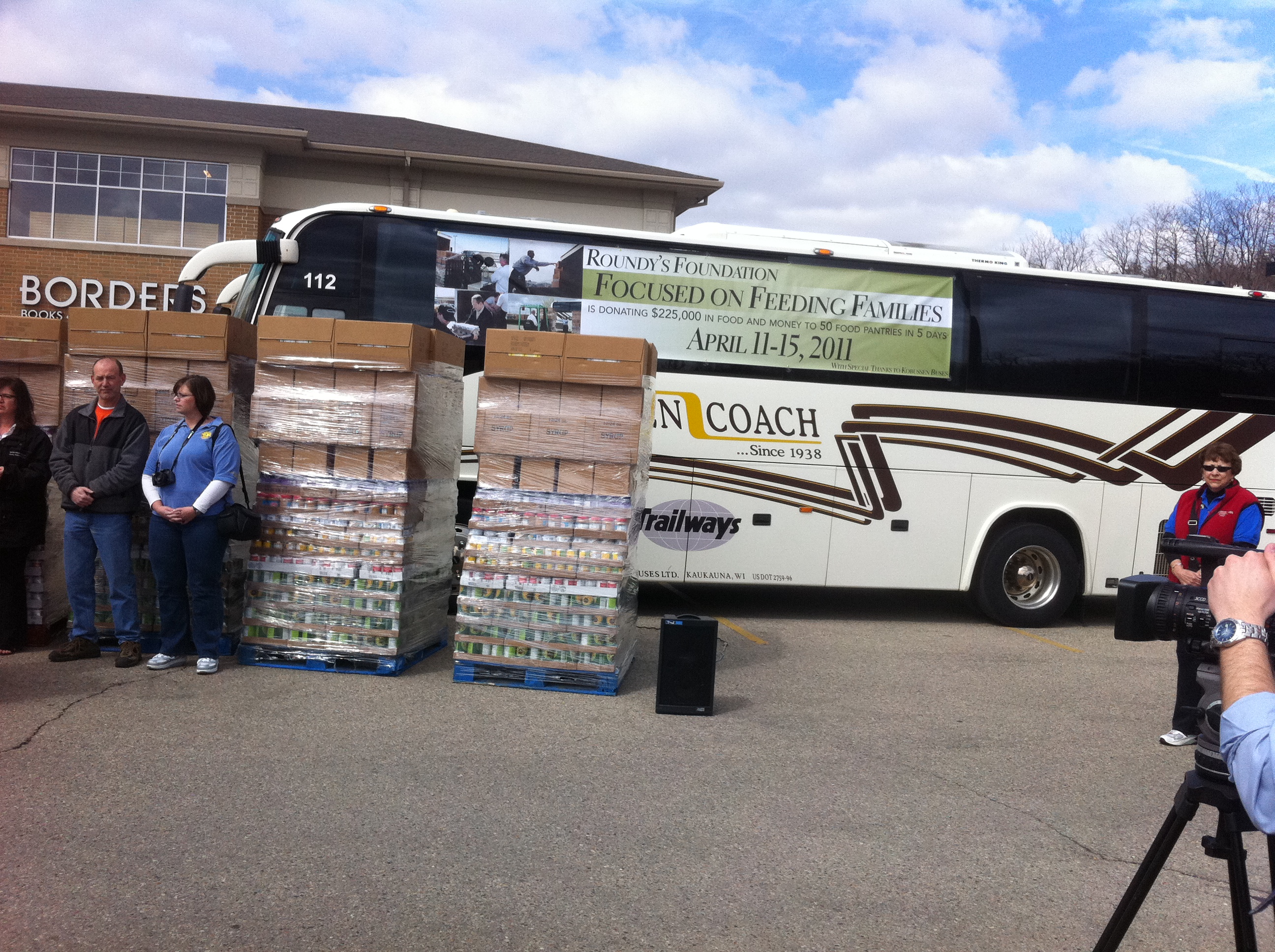
I point this out because I attended an event this morning organized by the Roundy’s Foundation, at which Roundy’s distributed food and money to a number of food pantries and other agencies. Grace’s pantry was one of the recipients. In the course of the program, Chris Brockel of Community Action Coalition cited the increasing numbers of families in Dane County seeking food assistance in the last several years. In fact, the statistics are shaking–a 50% increase in number of families and total number of individuals, seeking food assistance, and a 50% increase in numbers of prepared meals served between 2007 and 2010. Given the level of proposed budget cuts, both on the state and federal level, one can only imagine what the numbers will be like in a couple of years, and the decreased ability of social service agencies to respond to the need. We get much of our food either from the Community Action Coalition (at no cost) or Second Harvest (where we pay only $.18/lb). Of the former, a great deal comes through federal programs.

Here are a couple of photos from the event:


Thanks to Roundy’s for their generous donation of food (over 2000 lb) and a check for $500 intended to go for the purchase of perishables.

Mortal, Can these bones live? A Sermon for the Fifth Sunday of Lent

April 10, 2011

There are many dramatic stories in the scriptures; many stories that grab our imagination and won’t let go. There are stories that are far-fetched and unbelievable. There are stories of people who, quite literally, wrestle with God. But for sheer dramatic power and shocking imagery, there may be no story quite like the story of the dry bones in Ezekiel.

It has come down to us as a spiritual that became something of a children’s song: “Dem bones, dem bones, dem dry bones.” But however familiar we might be with the song, the biblical story in itself presents an even eerier picture, like something out of a horror flick. Ezekiel is brought by God to a valley that is filled with bones. God asks him, “Mortal, can these bones live?” Ezekiel’s response might be a statement of faith but it could also be a sign of his futility, that he thinks the question is unanswerable. In any case, the bones begin to come back together, bone on bone, sinew on sinew. But they do not live. It is only when God’s breath or spirit comes upon them that they come to life. Continue reading

First Monday at Grace (April)

Last night marked a major seasonal change for our first Mondays. The shelter switched to summer hours on March 20 and restrictions on the number of nights guests could stay also began to be enforced (Although because of the unseasonably cold weather the last couple of weeks of March, several nights continued to see numbers more typical of winter).

What that means for us is that we had fewer guests join us, probably about 100, including a large contingent of people who weren’t staying in the shelter last night. We served a little bit later, but we had just as much fun.

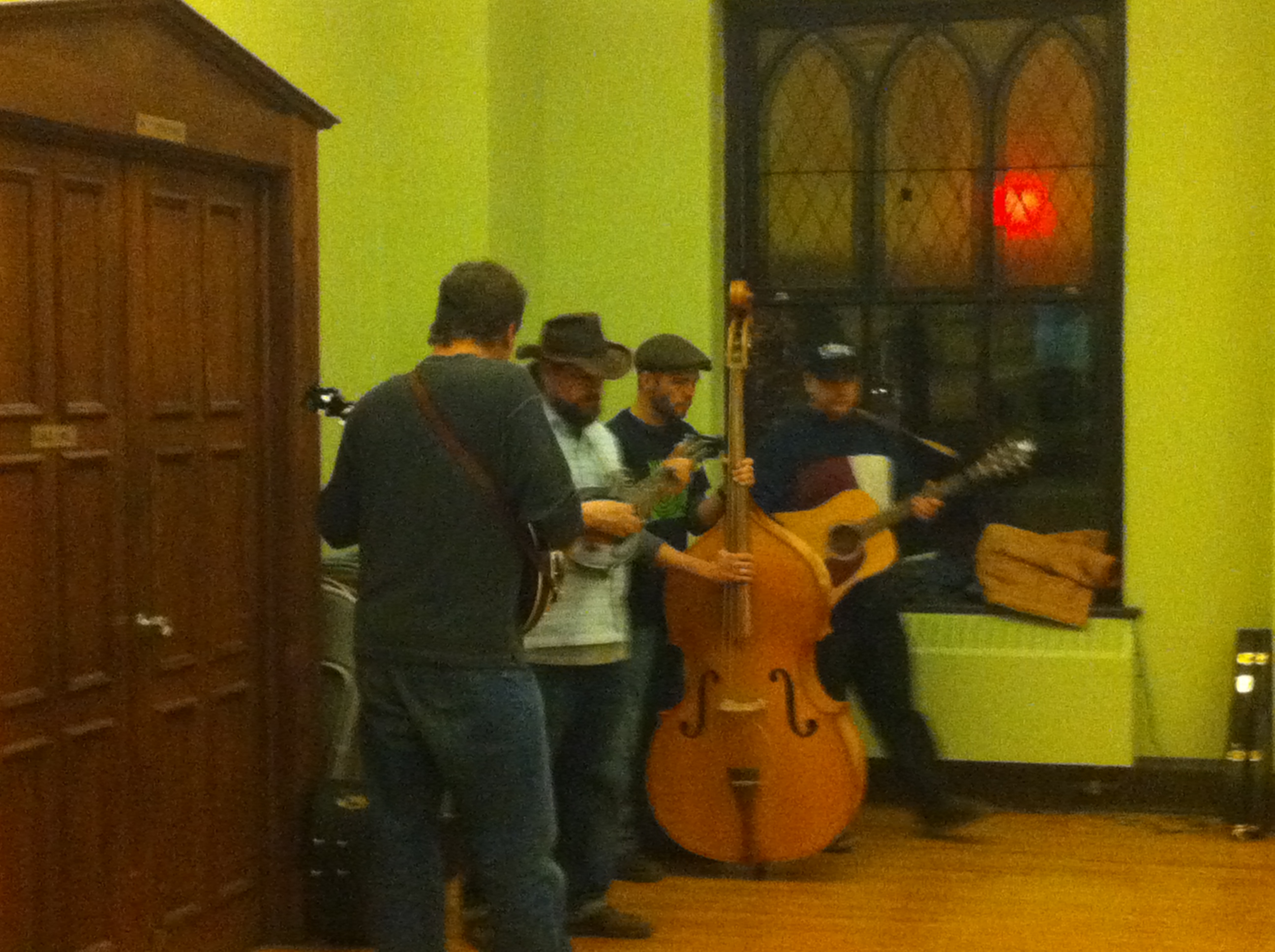
The food was Italian and the music was bluegrass.

The music was provided by members of the Oak Street Ramblers:

Even though it was late, and the NCAA finals were on, a couple of guys stayed to listen to the music. One was heard to say, “That’s hillbilly music, and I’m a hillbilly.”

As a follow-up to the  post about medical care, one guest came in wearing a surgical mask, and as he left, he told me that he had pneumonia.

As we prepared the meal, we could hear sounds from the rally going on at the Capitol. I popped out a couple of times to see the action. Several thousand people were there to hear Jesse Jackson speak on the anniversary of MLK’s assassination in 1968.

Special thanks to the Oak Street Ramblers for providing the music, to some students from St. Francis House (the Episcopal Chaplaincy at UW) who volunteered, and a happy birthday to Emma, who shared a birthday cake with volunteers after we were done serving.

See everyone next month!

Medical and Dental care for the homeless

Two articles on today’s Madison.com featuring doctors and dentists who provide free health and dental care for the homeless. One features Grace member Ben Farrow. If you can pay for dental care, Ben practices at Monroe St. Family Dental.

The other article introduces us to HEALTH, brainchild of Drs. Cate and Erik Ranheim. This group offers free clinics at various places, including once a month at Grace Church.

They aren’t the only ones offering medical care at Grace. Every week, students from the University of Wisconsin Medical School offer a clinic.

I’m surprised again and again in my encounters with homeless people and others seeking help, by the serious medical conditions that many of them are dealing with. I’m told repeatedly by people that it was a medical catastrophe that landed them on the street. Others have chronic conditions that require medications. The efforts of these doctors and dentists, as praiseworthy as they are, can do little to respond to the enormous needs on the street.


Who sinned? A Sermon for the Fourth Sunday of Lent

Who Sinned?
4 Lent
April 3, 2011

We’ve all asked the question—sometimes for ourselves, but often on behalf suffering people we know and love. What did I do wrong, that God is punishing me? What did he, or she, do to deserve this? It’s a natural, human response to pain or misfortune. There must be some reason for it, and when we begin looking for a reason, we often seek the reason in a moral failing or weakness. This tendency, or temptation to blame someone’s misfortune on some personal failure is even more pronounced when it comes to people whom we don’t know. Continue reading