A retrospective on 2011

It’s customary for people to look back and assess the past year; hence the top ten lists like those I linked to in an earlier post. Episcopalian bloggers have done something similar with lists of the ten most important stories.

Here’s Elizabeth Kaeton’s take. Here’s another try, from Susan B. Snook.

I’m not going to comment on either one. Around here, of course, the big story was the protests. It was a year of protests, beginning in February and continuing through the summer with Walkerville. This blog saw a huge increase in visitors during the protests and in fact the number of visits has continued to stay at a much higher level than before. More than 21,000 unique visits in 2011. The busiest day was February 22, the day of the interfaith clergy press conference.

I’ve not gone back to reread what I wrote during the height of the protests. One of the reasons I like to blog is that it is a contemporary equivalent of a day book or diary in which I take note of what’s going on in mind and in the world around me at particular moments. I think it will provide a very useful resource in future years as I reflect on my ministry. But it’s also quite raw, caught up in the moment, and therefore probably lacking in perspective.

If there are images that dominate 2011 as I reflect on the past year, in addition to the protests, I would cite the interfaith 9-11 service that we held at Grace, and then Christmas Eve, with two glorious services and an encounter with a very ill homeless man on the sidewalk after the 4:00 service. That encounter became the heart of my sermon at the 10:00 service.

That Christmas Eve experience of worship in the context of the daily ministry in an urban church is the most challenging and rewarding part of Grace’s mission. To worship surrounded by marathoners, or protestors, means that our worship can never be only about ourselves and God, it is also about those around us. Sometimes it’s hard to see the connection and sometimes, as on Ash Wednesday, the connection is clear only to us inside the church.

The experience of 2011 as we became more clear on what Grace’s role in the community should be, has provided a solid foundation for more visible outreach in the community, being a witness to the Good News of Jesus Christ amidst the crowds and noise on Capitol Square.

No room at the inn, Madison style

As we were leaving church this evening after the early service, we encountered a homeless man, lying in a fetal position, on the sidewalk in front of the church. Released from the hospital a couple of hours earlier, cops had dropped him off here because of the men’s shelter. Unfortunately, he couldn’t walk the twenty yards to the shelter entrance and shelter staff were not going to come out to help him. We called 911 and EMT’s transported him back to the hospital but as they left, they told me that he would probably be back on the street in an hour or so.

He’s not the first person discharged from a hospital to end up at the shelter later the same day. It happens regularly.

The fault in this does not lie with the hospital, or the police, or the shelter staff. The fault lies with all of us, with a society that turns its back on the most vulnerable.

We’ll protest Wall Street, but we won’t feed the homeless

I came across this little nugget. The makeshift, apparently gourmet, kitchen at Zucotti Park closed for several days because the workers thought they were serving too many “professional” homeless people alongside the protestors.

Our experience in Madison over the last months seems to indicate that homeless people found food as well as shelter during the protests here. Numbers at the men’s shelter were quite low for several months, and our monthly meal saw lower numbers than usual, as well. My guess is that Ian’s Pizza and the unions with their free brats were filling lots of empty stomachs, and not trying to distinguish between the deserving and undeserving.

Developments on the library closure

Pat Schneider blogs about the possibility of using a vacant business as a day shelter for the homeless this winter with the closure of the Central Library and the Capitol.

I’ve been participating in these meetings and it’s clear that there are no good options (although there might be some other things in the works).

What fascinates me is the way this conversation emerged and is developing. It’s a response to a crisis, but there’s been no mention of the fact that in the best of times, neither the library or the capitol is adequate to provide for the needs of homeless people during the day, no matter what the weather. Perhaps we will be able to have that conversation as well.

St. Paul’s Cathedral to close because of Occupy London

Here’s the report from CNN.

Thinking Anglicans’ coverage. The Guardian’s coverage. A video shows the size of the encampment.

Seeing the images in that video make the issues clear to me. There’s a great deal of comment in various places about churches needing to participate in the movement, welcome it, etc. I would agree with that position, and early on, the Cathedral was encouraging and welcoming. But churches, a place like St. Paul’s Cathedral has several missions and many constituencies. The presence of so many people camped just outside the building creates enormous issues, and not just health and safety issues. It’s an enormous stress on staff and clergy; it does make worship difficult; and it can prevent, or seriously limit other forms of pastoral ministry. I wonder whether it would be possible to devise a compromise that would permit a small group of protestors to remain, in order to lessen the overall impact. Neither outsiders nor protestors can judge the toll this sort of presence can take on those who live, work, and minister in the middle of it.

There’s been a lot of “theological” reflection on the movement. Tom Beaudoin asked whether it would be possible to occupy the Catholic Church. He also is documenting the use of sacred imagery here and here. There are clergy and seminarians involved as “Protest Chaplains.”

Brian McLaren reflects on the symbolism of the term “occupy”:

The term “occupy” is winning me over because it puts an ironic spin on one of our most questionable national habits—occupying other nations: occupying Iraq, occupying Afghanistan, supporting Israel in occupying Palestine. Like kingdom of God, it turns that familiar language on its head.

The term “occupy” is also winning me over because it’s about presence, making our presence known and felt in public spaces. These public spaces—from economic markets to political processes—have been colonized by powerful corporate elites (the 1 percent, or maybe the 10 percent), elites driven not by an ethical vision but by the relentless demand to maximize shareholder return. The 99 percent are realizing how destructive this colonization of public spaces has become, and by simply coming back—by re-inhabiting public spaces—we are demonstrating that we see what’s happening and we are not going to tacitly comply with its continuing.

Anglicans and #OWS

I’ve not been following the #OccupyWallStreet events closely, but I did come across mention of two churches that have been directly affected and involved with the protests. Trinity Church Wall Street is very close to Zuccotti Park, the center of the protests, and has offered hospitality to protestors, and offered as well to be a place of reconciliation. Here’s the official statement. Their community center, Charlotte’s Place, has offered hospitality, respite, and laptop recharging. And they have already begun the work of reconciliation.

In London, St. Paul’s Cathedral has been the scene of protests as well. People have been camping out on the grounds and steps, and protestors entered the building on October 16. Police who entered the church in order to evict the protestors were asked to leave. The presence of protestors has affected the cathedral’s income from tourism, but Cathedral officials deny asking the protestors to leave. Details are available here. The Guardian’s story is here.

#OccupyMadison is rather small and located a block away from Grace Church so it doesn’t directly impact us as the earlier protests did this year, and we’ve not been directly asked to support them in any way. But I’m heartened to see other churches responding to protests outside their doors in ways similar to our response last winter and spring.


Another article on homelessness in Madison

I’m glad the Wisconsin State Journal is continuing to follow this story. While there’s little new here about either the problem or potential solutions, there is more detail about the situation in the City-County building.

We’ll be having a follow-up meeting with social service providers, churches, and downtown business leaders tomorrow afternoon.

One issue that isn’t highlighted in the article is the scope of the problem on weekends, especially Sundays.

Images of St. Francis

Today is the Feast of St. Francis, when we remember one of the most beloved, and important, figures in the Christian tradition.

Here’s Giotto’s rendering of St. Francis receiving the stigmata:

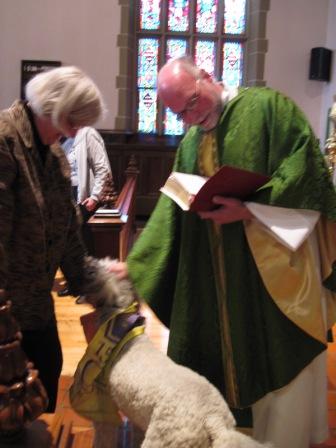
Our images of St. Francis tend be associated with the Blessing of the Animals:

a photo from Sunday that I didn’t post:

Last night, during “First Monday,” I reflected on St. Francis as well. Although he wasn’t mentioned by anyone, or perhaps even thought of (by anyone but me), we were doing the sort of ministry Francis did, among people with whom Francis ministered.

While he preached to birds and tamed wolves, and even rebuilt churches, Francis was most known for his work among the destitute, the poor, the hungry, and the sick. Although the order he founded quickly became powerful and made its home in universities and other cultural centers, Franciscans also tended the sick and dying.

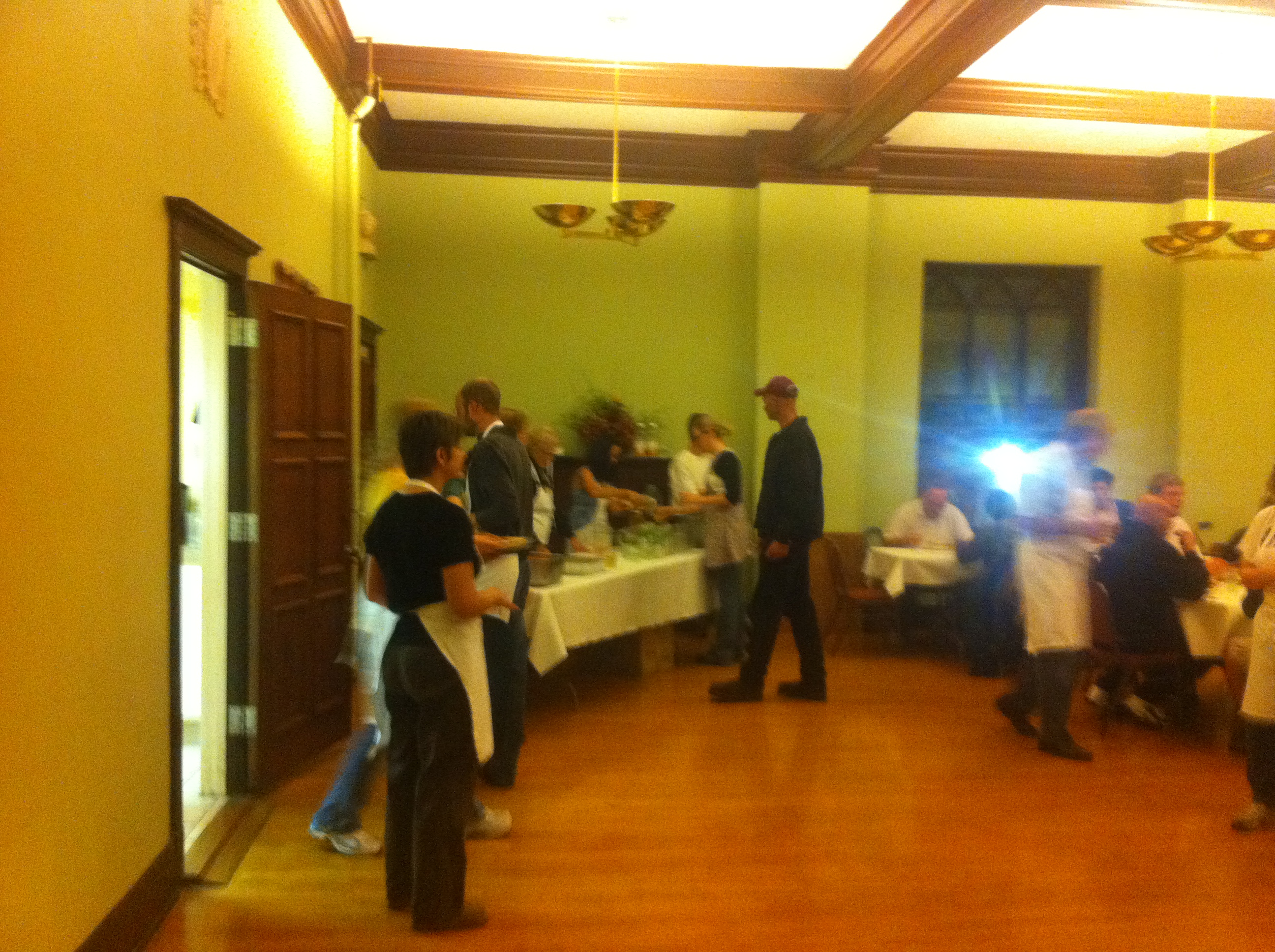
Our feeding of shelter guests and community last night is one way in which we at Grace seek to serve Christ in all persons, to feed the hungry, clothe the naked, and the like. Last night, we were joined by others in the community, some who have become regular volunteers, others who were there for the first time. Among this latter group were members of the Madison Mennonite Church. The band last night was “Off the Porch.”

Here are other images of Franciscan ministry:

The meal had a very different feel, for some reason. Several regular volunteers remarked on the guests’ behavior. We often have brusque, difficult, or demanding guests. Last night, they were friendly, incredibly appreciative, and many lingered long after they had eaten, chatting with friends or volunteers, and listening to the music. It also seemed to me that there was a demographic shift–the percentage of African-Americans seemed lower than in past months, and many of the men looked “middle-class,” by which I mean one could have expected to see them working retail, or in a bank. It was all very odd. Whatever their history, tonight they were here, for a meal, most of them for a bed as well. And for a half-hour or so, they could enjoy some great food, great music, and wonderful hospitality. The spirit of St. Francis was present as well.

Of course, one can’t extrapolate from a single evening. It’s only a snapshot taken on a relatively warm night in early fall.

Thanks to everyone who came, everyone who volunteered, and especially to Metcalfe’s, who helped with the food.