
Babies, Tents, and the Incarnation: A Sermon for Christmas Day, 2014

“In the beginning was the Word and the Word was with God and the Word was God.” These majestic words, the beginning of John’s gospel capture the profundity and the mystery of our faith. For two thousand years, Christians have read these verses, wrestled with them, pondered their meaning. We do that today as we celebrate the miracle of God becoming flesh and living among us.

One of my great joys as a priest is to visit parents of newborn babies in the hospital. Each time I enter the room, I am overwhelmed with the joy, excitement, and love that a new mother and father have for their child. There is also awe and wonder, and usually, especially when it’s a first child, looks of amazement and bewilderment. As I sat with one couple recently, we talked about the life this baby would have, what he would see and experience, who he would become.

I’m awed by the responsibility parents take on. I’m also awed by the vulnerability, weakness, and dependence of newborns. This year, as I’ve reflected on Christmas and thought about what it means that God became flesh in a manger, in a stable, in Bethlehem, I have pondered the mystery that God comes to us, that God became human by being born as a baby, vulnerable, weak, utterly dependent on others for life.

For all the mystery and wonder about the first verses of John’s gospel, “In the beginning was the Word, and the Word was with God, and the Word was God” I think that in some ways, it’s easier for us to get our heads around what John is trying to say here than it is for us to comprehend the fact that God became incarnate in a baby in Bethlehem.

Even if it may be difficult to believe that God created the universe and that the Word was present at creation, such notions at least conform to the idea of God that we have. If there is a God, certainly God created the universe. That’s the sort of thing philosophers debate and a notion that is worthy of an adequate concept of God. But for such a God, as the philosophers argue, all-knowing, all-present, all-powerful, for a God like that to be born as a baby, that just doesn’t make a whole lot of sense.

Immediately, all sorts of questions come up that curious people might wonder. If God is all those things, all powerful, all-knowing, what was God like as a baby? How could a weak, vulnerable infant contain a being of infinite possibility and infinite nature? How do we make sense of these two ways of understanding the way in which God became incarnate—the story Luke tells of Mary and Joseph, of a manger and stable, of shepherds and the story, or poetry of John: In the beginning was the word and the word was with God and the word was God.

Well, John himself makes the connection a few verses into the gospel: “And the Word became flesh and lived among us.” More literally, “the Word became flesh and tabernacled (or tented) among us.”

That’s such an evocative image both for our present context and for the biblical story. Tents are something we’re familiar with. They provide shelter, yes, but they are also relatively insubstantial. They might protect us from rain, but they aren’t much use in a heavy storm with strong winds and few of us would want to have to live through a Wisconsin winter with only a tent for shelter. The image of the tent seems to capture something of the frailty of human nature.

But in the biblical context, the idea of tent or tabernacle takes on even greater significance. For it was in a tabernacle, a tent, that God was present with the Hebrews as they wandered in the desert for forty years. And in the tabernacle, God revealed God’s glory to the Israelites.

John uses that imagery as he seeks to help us understand the nature of God in Christ. For, he says, “we have seen his glory, … full of grace and truth.” Just as God revealed God’s glory to the Israelites in a tabernacle made from the skins of animals, so we see God’s glory in the frail flesh of a new-born baby.

That is the mystery of our faith, that we encounter God in a newborn baby born in Bethlehem. St. Paul articulates this fundamental paradox in the phrase: “power made perfect in weakness” because of course it is not just that we see God in the manger in Bethlehem. We also see God dying on the cross.

In John’s gospel, the paradox of the incarnation is also the paradox of the cross. John loves to use that word “glory” or “glorification” when speaking of the cross. Like Paul, John is telling us that in these moments of weakness, we see God’s majesty and power.

Manger, cross; God’s weakness, God’s vulnerability; God’s power. That is the mystery of the incarnation. That is the mystery and the bedrock of our faith. We may not understand, we may not comprehend it, but we can see it and experience it with our very eyes. We have the reality of the incarnation before us in the God who became flesh and tented among us, the God who died on the cross and was raised again.

But we have the reality of that incarnation before us in many ways. We see it, we taste it in the bread and wine of the eucharist, when we receive the body and blood of Christ. We see it in the very imperfect Church, both our local community, and the worldwide communion, bodies filled with flaws and imperfections, but also, mysteriously, the body of Christ. And finally, we may see it in ourselves, imperfect human beings though we are, but by the grace of God filled with the presence of Christ. May this Christmas rekindle in all of us the knowledge of Christ’s presence, of Christ’s glory, in ourselves, in our church and community, and in all the world. May we experience the reality of the incarnation for ourselves, and share it with the world!



The Light shines in all the dark places: A Sermon for the Feast of the Nativity

Merry Christmas!

What does it feel like to say that familiar greeting this year? Are you filled with Christmas spirit? Are you ready to enjoy the annual celebration with joy overflowing, get-togethers with friends and families? Are you full of Christmas cheer? Or does it all, in spite of every effort, seem like Christmas this year is a little darker, our hope and joy dimmed by a nation and a world that seems to be spiraling out of control in violence, environmental degradation, and fear. Continue reading

2 Poems for Christmas by R. S. Thomas

Carol

What is Christmas without
snow? We need it
as bread of a cold
climate, ermine to trim

our sins with, a brief
sleeve for charity’s
scarecrow to wear its heart
on, bold as a robin.”

from Later Poems (1983)

Hill Christmas

They came over the snow to the bread’s
purer snow, fumbled it in their huge
hands, put their lips to it
like beasts, stared into the dark chalice
where the wine shone, felt it sharp
on their tongue, shivered as at a sin
remembered, and heard love cry
momentarily in their hearts’ manger.

They rose and went back to their poor
holdings, naked in the bleak light
of December. Their horizon contracted
to the one small, stone-riddled field
with its tree, where the weather was nailing
the appalled body that had asked to be born.

–from “Laboratories of the Spirit” (1975)

Incarnation: The Truth About God

willwillimon's avatarWill Willimon

We declare to you what was from the beginning, that we have heard, what we’ve seen with their eyes, what we have looked at in touched with our hands, concerning the word of life – this life was revealed, and we’ve seen it and testify to it, and declare to you the eternal life that was with the father and was revealed to us – we declare to you what we’ve seen and heard so that you also may have fellowship with us; and truly our fellowship is with the father  and with his son Jesus Christ.” (First John 1:1 – 3)

Martin Luther (in his Larger Catechism, 1529) said he felt sad for those who follow faiths other than Christianity.  Even though they might worship the one, true God, they had no way of knowing God’s attitude toward them. “They cannot be confident of his love and blessing,…” because…

View original post 557 more words

Nativity–John Donne

Nativity

Immensity cloistered in thy dear womb,
Now leaves His well-belov’d imprisonment,
There He hath made Himself to His intent
Weak enough, now into the world to come;
But O, for thee, for Him, hath the inn no room?
Yet lay Him in this stall, and from the Orient,
Stars and wise men will travel to prevent
The effect of Herod’s jealous general doom.
Seest thou, my soul, with thy faith’s eyes, how He
Which fills all place, yet none holds Him, doth lie?
Was not His pity towards thee wondrous high,
That would have need to be pitied by thee?
Kiss Him, and with Him into Egypt go,
With His kind mother, who partakes thy woe.

Mary–Perplexed, Pondering, Prophetic: A Sermon for Advent 4, Year A

What comes to mind for you when you think of Mary, the mother of Jesus Christ? Do you think of a painting of her, perhaps a masterpiece from the Renaissance depicting her as a young woman, clothed in a beautiful blue dress, sitting demurely as the angel announces to her, “Hail Mary, full of grace!” Do you think of her at the foot of the cross, or holding the dead body of her son? Do you think of the theological and doctrinal debates surrounding her virginity or immaculate conception? Continue reading

Strike up “Nearer my God, to Thee:” The Titanic (aka Episcopal Church) is sinking

We’re done rearranging deckchairs; it’s all hands overboard. TREC (the Task Force on Reimagining the Episcopal Church, or maybe commission, I can’t remember) has issued its final report, available here.

I skimmed some of it but my eyes soon glazed over, I have four sermons to write in the next week or so, plus a vestry meeting tonight, so I waited for Crusty Old Dean to weigh in. And weigh in he did. I’m grateful to him because he knows the Constitutions and Canons, Episcopal history, and has extensive experience in the wider church as a long-time staff member and now as a Seminary dean. If you feel you must read the TREC report, be sure to have Crusty’s commentary open in another window.

Well, I’ll admit, I started reading the thing, but then I got to page 2 and to this paragraph:

The movement always precedes the institution, and practice always precedes structure. For this reason, we believe the most important thing we can do together in this moment is
return to three basic practices that helped to animate the early Christian movement. We believe that, rather than an anxious focus on how to preserve our institution, a joyful focus on the basic practices of the movement will hold the real key for moving us into God’s future. As in the past, the new future of The Episcopal Church will emerge from a focus on adapting and renewing the movement’s basic practices in our own various local contexts while adapting the current structures to enable and even encourage this movement to catch on.
I don’t know where this distinction between “movement” and “institution” comes from but I remember the former President of the House of Deputies use it in a talk and finding it remarkable that someone as deeply connected to the institutional church would find it a useful way of explaining the process of reform in the church. (I guess it derives ultimately from Troeltsch and or Weber, but I’m eager to be educated).
What bothers me about this distinction is that it’s artificial and utopian. We can posit the existence of a “Jesus movement” but the only sources we have for it were sanctioned by the institution (The Gospel of Jesus’ Wife notwithstanding). Jesus and his followers existed within and alongside an institutional Judaism which they were trying to reform and we know about Jesus only because of the institution that emerged from his death and resurrection.  Movement and institution are inseparable.
Something Crusty wrote in his closing paragraphs got me thinking, however. As he bemoaned the failure of TREC to capture the historical moment, he began to prognosticate:
and in the 2020s and 2030s our churchwide structures will collapse on their own.   There’s going to be lots of collapse in the church, after all.  A number of seminaries, about half our congregations, and maybe 40% of our dioceses will eventually no longer be viable.  Our churchwide organization will do the same.  Those surviving Episcopalians doing the mission of the Gospel will come together and create something.  Like the Popes declaring themselves infallible as their temporal power ended in 1870, like Episcopalians creating a new church only when their old one was destroyed in the Revolution, we can only create a new order when the old one has passed away.
I’m not sure why he mentioned those two particular historical moments but I began to think about other historical crises to which the church had to respond. The first that came to mind was the Protestant Reformation. It took decades (almost thirty years) for the Roman Catholic Church to respond institutionally to the challenge of Luther and the other Protestants. And the response itself took considerable time (the Council of Trent met sporadically from 1545 to 1563). But in the long run, Roman Catholicism was stronger and more vibrant, more stable too, than it had been in the preceding centuries.
An example closer to home (at least for Anglicans) is the Evangelical Revival of the late 17th and 18th centuries. A “movement” attempted reform; some elements of it remained within the institutional church; others left to form their own institutions. There are many other historical examples–the Franciscans (and Dominicans) in the 12th century; Vatican II; even Pope Francis, although it’s far too soon, decades too soon, to render any judgment there.
I suppose the point I’m trying to make is that if one looks at the History of Christianity, the impetus for reform almost never comes from the institutional center. In fact, the center almost always resists the reform. Occasionally, it will attempt to coopt it (as Innocent IV did with Francis), but usually even that fails.
Like Crusty, I had some hopes for TREC. I should have known better. Like Crusty, I have no doubt that the institutional structures that we have known, loved, profited from, and railed against, will not survive the next half-century. But I’m also quite confident that in the absence of planetary death or the parousia, in fifty years there will be new structures and institutions that will be the Body of Christ and participate in the Missio Dei, and that in less than a century, there will be new cries for reform in saecula saeculorum.

Pointing to Christ: A Sermon for Advent 3, Year B

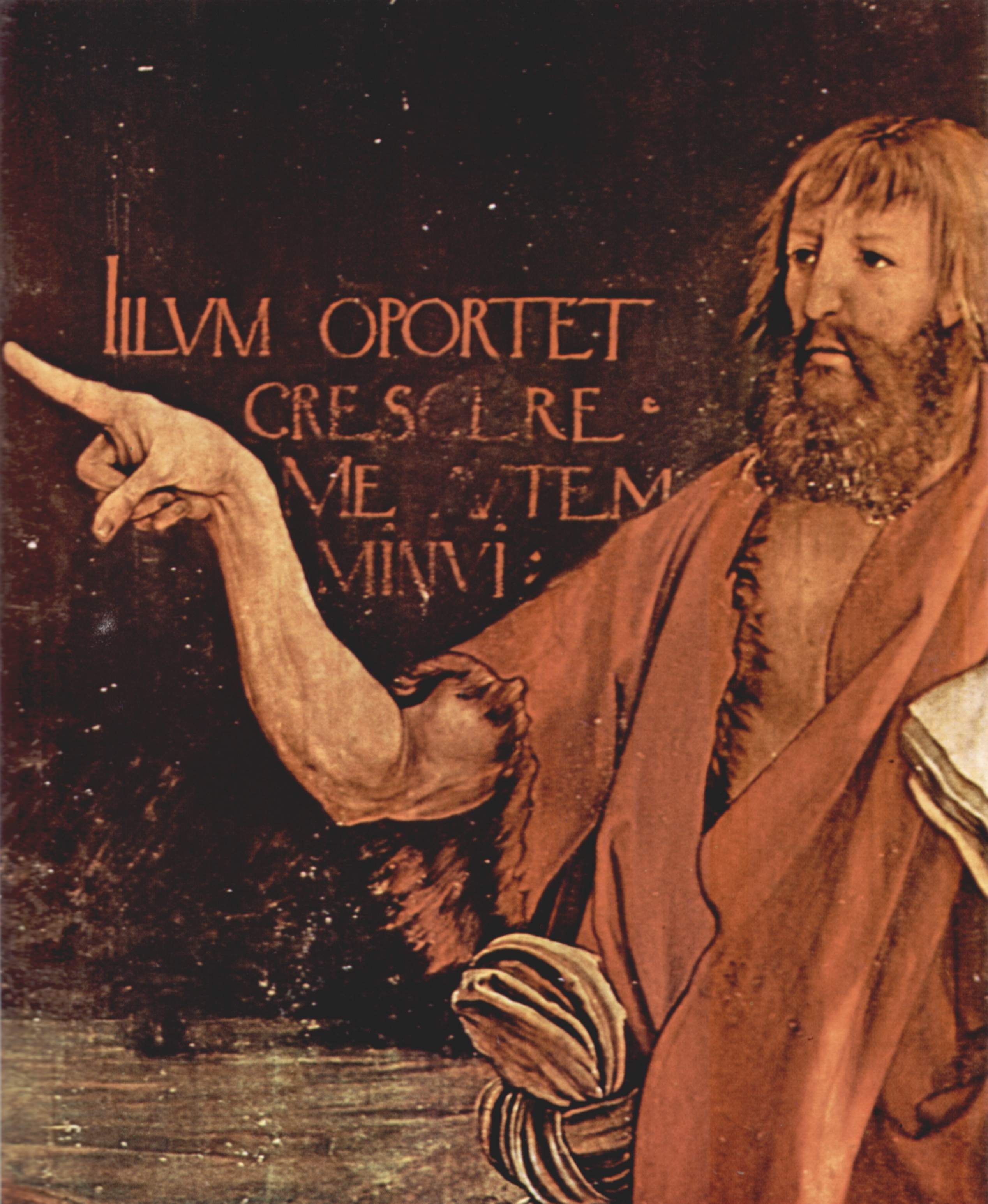
Mathis_Gothart_Grünewald_024The cover art on today’s service bulletin is a detail from one of the great works of art-Matthias Gruenewald’s Isenheim altarpiece. Created for a hospital and designed so that the patients could see the altarpiece from their beds, the center panel of the altarpiece depicts the crucifixion. Standing beneath the cross is the image of John the Baptist, with the lamb of God, a small lamb carrying a cross, by his side. Gruenewald was a master of perspective and artistic technique, so what stands out to me in this image is John’s index finger, pointing at the crucified Christ, which is all out of proportion with his hand. Continue reading

Torture and the cross

Finally, today, the executive summary of the Senate’s torture report was released to the public. It’s available here.

I’ve not gathered up the courage or the stomach to read it but from what I’ve read, the CIA  used torture much more widely, indiscriminately, and ineffectively than previously reported. Andrew Sullivan’s liveblog makes for interesting reading as he includes commentary from tweeters and from voices on the left and right.

Of everything done by the US in the war on terror–the wars, the indiscriminate killing, the destruction of people’s lives, the lies, the assault on civil liberties–what has affected me most profoundly is the use of torture. To subject human beings to such pain and suffering in the hope of getting useful information is counter-intuitive. The report documents just how ineffective torture was in the war on terror. That many continue to defend it is mind-boggling.

In my last term as a college professor, I taught a course on the witch hunt in early modern Europe. We read a wide variety of sources including handbooks for witch hunters, the accounts of interrogations, and trial records. I remember a student asking as we discussed the case of one accused witch, who implicated her neighbors after being tortured, why anyone would believe the testimony of someone who had been tortured. The year was 2009. I reminded him and the rest of the class about the contemporary debate about torture. He got very quiet, very quickly.

My own scholarly research was on dissident religious groups in early modern Europe. I read trial records, interrogations, and the like of hundreds, perhaps thousands of individuals who were suspected of holding heterodox religious beliefs. Many of them were tortured. Some of them persisted in their beliefs, some of them denied them, many of them seemed to search for the words to say whatever they thought their interrogators wanted to hear, if for no other reason than to end their suffering.

The Enlightenment comes under attack for many things, but one of its great achievements was to bring some order and reason to the judicial process and to assert some very basic human rights. There was a time, not too long ago, when the community of nations condemned the use of torture. There was a time, not so long ago, when the US condemned torture. But now we make use of it and our President, our President!, seeks to suppress the evidence of torture and refuses to bring those who perpetrated these acts to account.

Perhaps most offensive to me is the fact that many, perhaps most American Christians, seem not to care that the US has used torture. We worship a God who became human and dwelt among us, a God who was crucified, a form of capital punishment that is essentially execution by torture. We Episcopalians promise at our own baptisms, and at every baptismal service we attend, “to respect the dignity of every human person.”

By definition and practice, torture denies human dignity. Reading accounts of “rectal feeding” is gruesome evidence of what happens when interrogators no longer see the people they are questioning as human.

Perhaps we Christians would begin to understand what it’s all about if we began to use a waterboard as the symbol of our faith instead of the cross

What shall we cry? A Sermon for Advent 2, Year B

Whenever I read today’s reading from Isaiah 11:1-11, I find myself reading it in the cadences of Handel’s Messiah, the beautiful Tenor aria that begins that oratorio. I have no idea how many times I have heard that music; it was an annual accompaniment to Christmas throughout my childhood and youth. Although it’s been years since I’ve attended or sung in a performance of it, the music remains in my memory.

I’m fascinated by the different ways in which we encounter and interpret scripture. Take Messiah, for example. If you’re familiar with it, it’s very hard not to hear it when you read, or listen to, the scriptures that Handel set to music. There’s a sense in which the music has shaped our experience and interpretation of the texts. By the way, that’s one of the wonderful things about the Lessons and Carols service we’ll have at 10:00—our experience of scripture is enhanced and deepened by the music. Continue reading