
Three Kings? No Kings? One King: A Sermon for the Second Sunday of Christmas, 2026

C

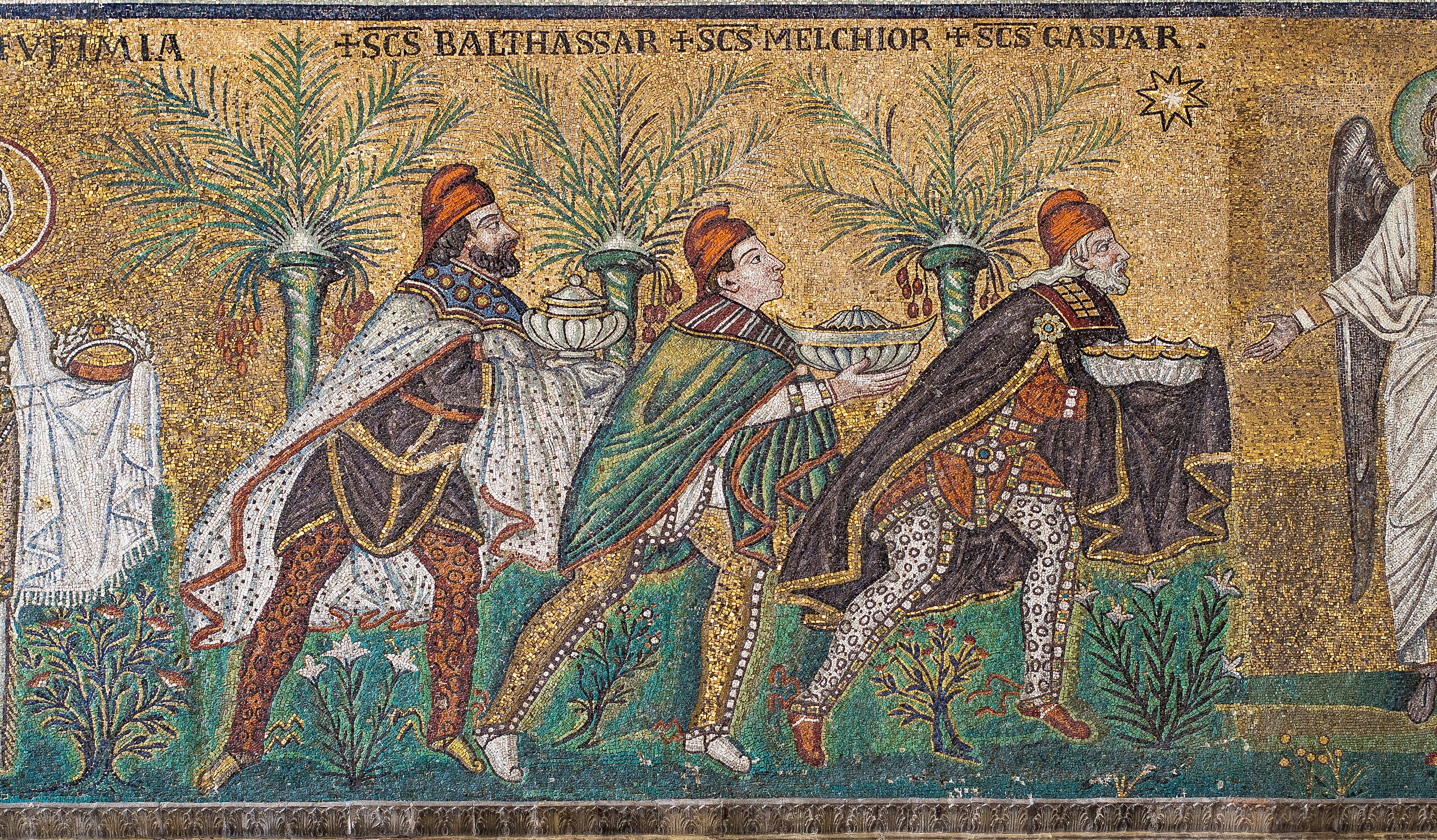
“The Magi” Mosaic, Sant’Apollinare Nuovo, Ravenna, Italy, 6th century

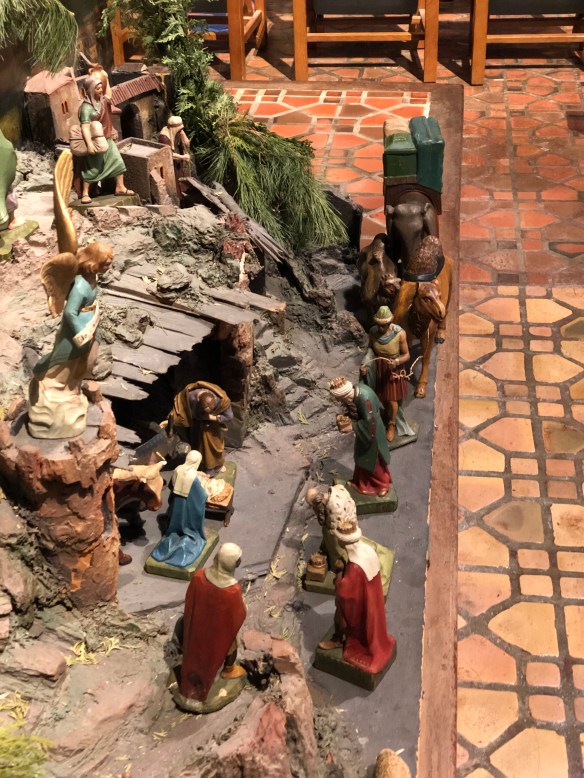
The cover image on today’s service bulletin is of a mosaic in the Basilica of Sant’Apollinare Nuovo in Ravenna. It probably dates to the 6th century and the reason I love it is because it shows how early Christians had already developed considerable speculation about the beloved figures in today’s gospel reading, the magi. For here we see that the tradition had fixed on the idea that there were three, although the only mention of that number is with regard to the gifts: gold, frankincense, and myrrh. In addition, they already have names attached to them: Balthasar, Melchior, and Caspar. It would be later in the Middle Ages, part of the general exoticizing of the figures, that one of them would usually be depicted as black. Other examples of such exoticizing can be seen in the figures in our creche. The elephant, for example is a wonderful symbol of the strange and foreign east, from which we are told the magi came.
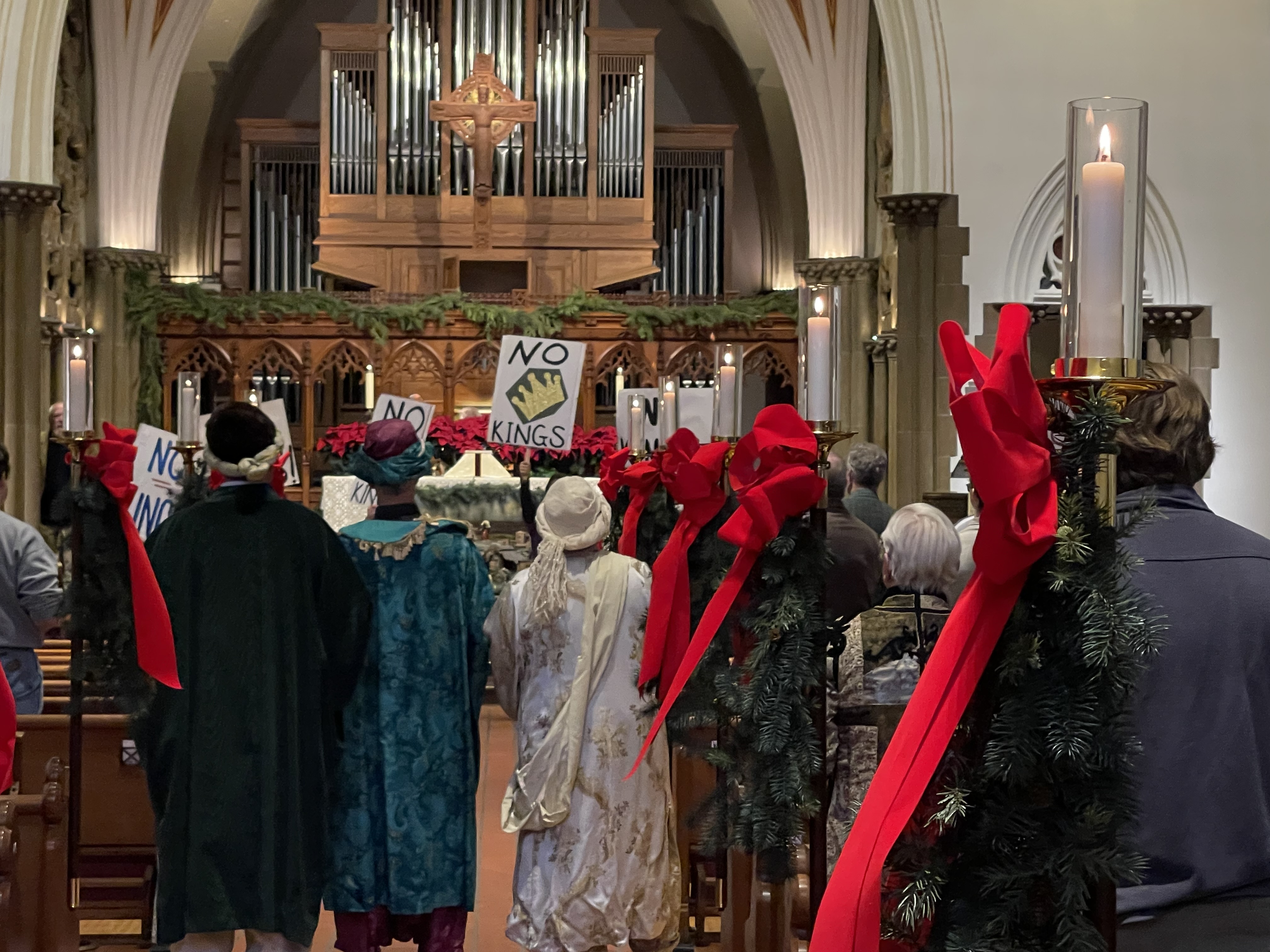
And while our skit insisted “No Kings” and in my sermon last Sunday I pointed out the presence of two kings in the story—Herod and Jesus, and noted that in Matthew’s gospel Jesus is referred to as “King of the Jews” only here in the nativity story and at the end in his trial and crucifixion. The elevation of the magi to “kings” is also a fairly early development in Christian devotion though there’s no scriptural warrant for it.

My point is not to debunk the story. In fact, I think these developments reflect deep Christian piety and devotion that can be instructive to us as well. At the same time, it’s worth noting the ways in which such images have reflected and continued to shape our prejudices. It’s a lovely, familiar story but it also packs a wallop. 

Perhaps especially today as we experience it while our nation undertakes yet another foreign adventure, initiating regime change for illegitimate reasons and flouting international law and human rights. Not content with blowing boats out of the water, our administration decided to intervene in another nation, and as has happened so often in the past, has little idea what to do now that it has removed the political leader. A region that has seen its share of ruthless dictators and petty tyrants, is now threatened with instability.

As if destabilizing one nation isn’t enough, spokespeople for the administration are sabre-rattling about regime change elsewhere as well and hinting at territorial expansion: Greenland, Canada. Those of us who have imagined our nation to be a force for peace, human rights, and democracy are watching in real time as those values are upended both here and globally. In a year when we observe the 250th anniversary of the Declaration of Independence, the gap between our ideals and the reality in which we live seems wider than ever.

Moreover, that so much of this is carried out in the name of Christian nationalism poses yet another challenge. Propaganda from the Department of Homeland Security and other federal agencies advocate for an ethnic cleansing of the nation in the name of Christ and whiteness. Of course, we’ve seen this before with language and imagery of crusade being invoked in the runup to and during the Iraq War of 2003. 

With all this as backdrop, with all this swirling through our minds on this day, we may be tempted to placate ourselves by ignoring it all and losing ourselves in a familiar story and well-known hymns. We may want a simple story that hearkens back to our childhoods, and allows us to linger in awe and worship at the creche on this 10th day of Christmas even as the attention of the rest of our culture is elsewhere, on military adventurism, or more likely, football.

But even here, in this story, there are ominous notes. We are introduced to Herod, the client ruler of Rome, 

Although a convert to Judaism, Herod was hated by most Jews as the king of Judea, in part because they thought he was Jew in name only and in part because of his pro-Roman leanings. He became king by submitting to Roman authority. He lavished his territory with building projects, including a renovation and expansion of the temple in Jerusalem. Known for his ruthlessness, Herod executed at least three of his sons for conspiring against him. The slaughter of the innocents, which Matthew recounts immediately after his story of the magi is not recorded in any history of the period, but is entirely consistent with Herod’s personality.

The exchange between the magi and Herod borders on the absurd. Who in their right mind would approach a king who has killed his own sons because of their designs on his throne, and ask him where the next “King of the Jews” would be born? But Matthew uses it to heighten the contrast between the reign of Rome through Herod, and the reign of Jesus Christ. The same is echoed at the end of Matthew’s gospel, when Pilate sarcastically asks Jesus, “Are you the King of the Jews?”

There is irony here for Matthew as well. Part of his point in telling the story of the magi is to emphasize that these gentiles, these foreigners, can recognize Jesus’ divinity, and worship him, even if his own people cannot. 

And that may be the message for us as well. We are distracted, angry, disheartened, fearful. We have seen so many succumb to the temptations of wealth and power, perverting the gospel to serve their own ends and to serve evil. The tyrants of this world, whether political or economic seek our submission and silence, demand we bow before them. 

But across the millennia, this familiar story offers us a different path, like the one taken by the magi on their return home, a path that leads us away from the centers of power and the seduction of wealth, and back to Bethlehem, to the creche, where the Christ child lays. 

It is a path that will lead also to the cross, where Jesus offers himself, a sacrifice of love in a world of hate. It is a difficult road, full of danger but it is the journey to which we are called as followers of Jesus, to listen to his voice, to hear his gospel of love, and to share the good news in a broken and hurting world, offering healing to those who are suffering and hope to those in despair. As we kneel at the creche with the magi in adoration and worship, may we gain the courage and strength for the journey ahead, and may the light and love of Christ fill our hearts.
There were two kings, not three: A Sermon for the Feast of the Epiphany, 2018

Today is the Feast of the Epiphany. While it is a major feast day of the Church, unless it falls on a Sunday, as it does this year, most Christians, most Episcopalians, don’t really observe it. Epiphany marks the end of Christmastide in our calendar, so while the church is still decorated for Christmas today, the decorations will be removed after today’s service. There’s a bit of confusion or controversy there, because many people take down their Christmas trees and other decorations on 12th night, which occurred yesterday, the 12th day of Christmas. We keep our decorations up largely because we want to retain the crèche and enjoy seeing the magi and their entourage worshiping the christchild at the crèche. If you weren’t here for Christmas, they spent the entirety of Christmas season on the table in the rear of the nave.

Our focus may be on the star and the magi or wise men on Epiphany, but it’s a feast that has other connections in the larger Christian tradition. It is also associated with Jesus’ Baptism and with Jesus’ first miracle recorded in John, the turning of water into wine at the wedding feast of Cana.

Both of those stories point to the deeper meaning of the feast of the Epiphany. The word Epiphany comes from the Greek word that means “appearance,” or “manifestation”—especially of the divine or of God. It was used in the Hellenistic world of Jesus’ day to describe those appearances of the divine to humans, moments when the gods seemed especially near. It was also used often as a title for rulers and became associated with the imperial cult, as emperors came to be understood as manifestations of the divine.

We see elements of that notion in our familiar gospel story, the story of the coming of the wise men following the star. It’s a lovely story, but one that’s been very much domesticated by the Christian tradition, so that we miss the deeper meaning and power of Matthew’s larger purposes in telling it. First of all, the wise men, or kings. Well, they’re not kings, are they? Associating them with kings derives from other scriptural references such as those from today’s reading from Isaiah and from the Psalm. When we call them “magi” we’re getting closer to what Matthew had in mind, astrologers from the East, very likely Zoroastrian priests from Iran—who were astrologers, using the movements of the constellations and planets to predict the future.

Their very exoticism, their “otherness” is part of Matthew’s point. Coming from the east, they had no knowledge of Jewish scriptures or traditions; they were Gentiles. In part, Matthew wants us to see them as part of the larger mission of sharing the good news—to all the world, as he has Jesus command his disciples in the last verses of his gospel. But he also wants us to understand that even apart from scripture, Gentiles can come to some understanding of God and of God’s saving work—all it took for the magi to begin their quest was to see a new star rising in the East.

The magi’s intuition of God’s new actions in the world provide a sharp contrast with that of Herod who had know clue about the birth of the “king of the Jews” and was terrified when he heard of it. He had to bring in scripture experts to answer the question the magi posed to him.

Let me tell you a little bit about Herod the Great. Herod’s father and grandfather had been supporters of Rome and rulers of provinces in Palestine. Herod’s father appointed him Governor of Judea. Eventually, in the midst of conflict over succession to Julius Caesar, Herod fled to Rome and succeeded in getting declared King of Judea by the Senate; returning to Palestine, he also gained control over Galilee, and eventually, by marrying the daughter of his chief rival, became de facto King of the Jews. He was a ruthless ruler, known for his excessive taxation. He built Roman style cities such as Caesarea Maritima and began the rebuilding and expansion of the Jerusalem Temple. He also had considerable conflict within his domestic life—he had five wives, one of whom he had executed, and killed two of his sons when he feared conspiring against him, and just days before his death, had a third son executed.

All of this is backdrop to Matthew’s story and while we didn’t hear the next episode of this story—the flight to Egypt and the execution of all boys in Bethlehem under the age of two, and while there’s no independent evidence to support this episode, it’s entirely in keeping with what we know about Herod historically. If he killed his own sons because of their efforts to wrest power from him, it’s likely he would have had no qualms with large-scale executions of whole demographic groups.

Matthew is drawing a sharp distinction between Herod, King of the Jews, and Jesus, King of the Jews. He is also drawing a sharp distinction between Jerusalem and Bethlehem. When Herod heard the news of these visitors from the East in search the child born “king of the Jews” Herod was frightened, and all Jerusalem with him. The magi say their intent is to go to the newborn child and pay him homage—we should have in mind a formal act of obeisance a subject might offer to a king or ruler.

So there are two kings in this story, not three. The two kings are rivals—both King of the Jews, one is Jesus, one is Herod. Herod represents the power and ruthlessness of the world, willing to take any action to gain and consolidate power, and once in power to use everything and everyone at his disposal to display and project his wealth and power.

On the other hand, the king of the Jews, born in Bethlehem, born to ordinary, poor, people who are at the mercy of the other king—whose experience of his kingship is terror and fear, who flee their home for another country in search of safety. That king of the Jews will grow up to proclaim the coming of God’s reign, a reign not of power and fear, maintained by bloodshed, but a reign of peace and justice. Jesus’ life will end as he is proclaimed “King of the Jews” by the charges leveled against him by the Roman Empire, a revolutionary, a rabble-rouser.

Like the magi, we stand between these two kings, these two kingdoms. Our journey in search of Jesus has brought us to this place, to this crossroads. We may want to make homage to the king of the Jews, but do we know what that truly means? Are we able to make that journey? Herod’s kingdom may beckon to us with its power and wealth, even with its ruthlessness, but the kingdom of the one who was born in Bethlehem, whose parents fled with him toEgypt, who preached mercy and peace, and whose life ended on the cross in Herod’s city of Jerusalem, beckons to us as well. To whom will we pay homage, before whom will we offer our gifts?