
Happy Saints: A Sermon for All Saints’ Sunday, 2023

Today is All Saints’ Sunday. I love it because of its wide range of meanings and observances. Today, we remember the faithful departed, a commemoration that is connected with November 2, traditionally All Souls’ Day. We also remember all of the saints. The observance of All Saints’ goes back to the early Middle Ages and arose as an occasion on which to recognize all of the saints, mostly martyrs, mostly nameless, who did not have a day reserved for their memory. For us, it’s also an opportunity to think of those anonymous saints, the people in our lives and community that have helped to shape us as followers of Jesus and served as models of faith.

All Saints’ is also one of those days set aside in the liturgical calendar that is especially appropriate for baptism. So, in addition to remembering those who have passed, and acknowledging the pillars of faith that uphold our community now, we are bringing into the body of Christ new members. It’s a visible, and powerful symbol of body of Christ that includes those who have gone before us, and those who will come after us.

But what sort of community is this one to which belong and into which we are bringing Evie? It is a question that we must ask ourselves as we seek to be faithful disciples of Jesus Christ. It is a question we must ask as we explore God’s call to us in this place, in this moment. And there is perhaps no better place to begin exploring that question than in the words of Jesus we hear in the gospel this morning—the Beatitudes.

Today’s gospel helps us to make sense of the roles others play in our lives, and also about the roles we may play in the lives of others. It takes us back to the very beginning of Jesus’ public ministry in the Gospel of Matthew. For Matthew, these are the first words that Jesus says publicly. It’s the beginning of the Sermon on the Mount, and we commonly call these first verses the beatitudes—the blessings. Blessing or blessed is one of those words we don’t use in regular conversation anymore, except when someone sneezes, or in certain phrases, like the southern “Well, bless your heart!” and even then we use the word without thinking about it much.

The word that’s translated as “blessed” could also be translated “happy” and that translation may help us get at all this means. “Happy are those who mourn, for they will be comforted.” Get it now?

I didn’t think so. That makes no sense, but that may be what Jesus means by all this. Happy are the poor in spirit; happy are the meek, happy are the merciful, happy are they who hunger and thirst after righteousness, happy are the peace makers, happy are those who are persecuted for righteousness’ sake. We don’t associate any of those things with happiness. For us, happiness is associated with a very different range of ideas, emotions, and states of being. We can’t fathom how the poor in spirit might be happy.

 So we try to do something else with these sayings. We try to make them goals for ourselves—if we become poor in spirit, we will attain the kingdom of heaven, if we become merciful, we will receive mercy. But that’s not what Jesus is saying, either. Rather, those who are already poor in spirit are blessed, those who are merciful are blessed. Jesus is describing people who are already doing or being the things for which they are blessed.

We know the world we live in isn’t like the world that Jesus describes. We know that the meek, the pure in heart, peacemakers, the poor in spirit are not praised or rewarded in our culture. What Jesus is describing is an alternate reality with different values. Jesus is proclaiming, as he does throughout the gospel of Matthew, the reign of God. It’s a world turned upside-down, where the last are first and the first are last, where the meek, not the powerful inherit; where the merciful receive mercy.

There may be no more urgent message in our time than this—that God is not on the side of the powerful, the prideful, the wealthy but rather, on the side of the weak, the humble, the poor. In a time when military force is being used against captive populations; when nations seek to extend their influence by force of might, when those who are victims of state violence and climate change seek better lives in other places and are repelled at borders and treated inhumanely, to express the values of the beatitudes is revolutionary indeed.

And that is what we are called to be and to do as followers of Jesus. That is what we commit to in our baptismal covenant. When I baptize Evie later, I will ask all of you: 

CelebrantWill you proclaim by word and example the Good
News of God in Christ?
PeopleI will, with God’s help.
 
CelebrantWill you seek and serve Christ in all persons, loving
your neighbor as yourself?
PeopleI will, with God’s help.
 
CelebrantWill you strive for justice and peace among all
people, and respect the dignity of every human
being?
PeopleI will, with God’s help.

The commitments we make and remake today are signposts on the way to the world Jesus is calling into existence in his teaching and ministry. Our response to his teachings help to bring that world into being, even as all around us the forces of evil, death, and destruction fight mightily against it. That evil may seem more powerful than the words and vision of Jesus. Nevertheless, in the midst of that evil, we, and all the saints bear witness to the greater power of Jesus’ love. May his love and grace give us the strength to embody that love in all that we do.
Communion of all the saints: A Sermon for All Saints’ Sunday, 2019

The Episcopal Church I first attended regularly was St. Paul’s, Newburyport, Massachusetts. It was constructed in the early 20th century, on the site of an earlier building that had been destroyed by fire. As was the custom in England, and in many colonial towns, St. Paul’s churchyard was also a graveyard. To enter the building, you walked along a sidewalk that cut through a jumble of old headstones, some of which dated back to the late 18th century. It was a reminder of the church’s history, of all those who had worshiped there over the centuries. Continue reading

A communion of saints: A Sermon for All Saints’ Sunday, 2018

Today is All Saints’ Sunday. In the life of Grace Church, it’s a day full of opportunities to reflect on who we are as a community and who we are becoming, and called to become. We are baptizing a baby today. We commemorate those who have died from our congregation and our loved ones, in the last year and distant past. We welcome new members into our community, and finally, we gather up our pledges of financial commitment to the ministry and mission of Grace for the coming year. Continue reading

A Cloud of Witnesses: A Homily for All Saints’ Sunday, 2017

Today is All Saints’ Sunday. It’s a Sunday that is jam-packed liturgically as we will baptize an infant and an adult and commemorate those from our parish and our loved ones who have died, especially in the past year. We will also recognize new members today and we’ve set this day as our ingathering of pledges for our annual stewardship campaign. This evening we will gather again for Choral Evensong. Continue reading

Blessed Saints, Blessed by the Saints: A Sermon for All Saints’ Sunday, 2014

There’s something about our commemoration of All the Saints each year that appeals to historical sensibilities. Each year, as I reflect on the day and prepare my sermon, I find myself drawn to the stories of Christians who lived in the past. Usually my focus is not on the famous saints, the ones we remember in our calendar of commemorations, but on ordinary men and women who lived out lives of faithfulness in obscurity. Continue reading

The Feast of All Saints

Almighty God, you have knit together your elect in one communion and fellowship in the mystical body of your Son Christ our Lord: Give us grace so to follow your blessed saints in all virtuous and godly living, that we may come to those ineffable joys that you have prepared for those who truly love you; through Jesus Christ our Lord, who with you and the Holy Spirit lives and reigns, one God, in glory everlasting. Amen.

Three of the images that are at the forefront of my mind today:

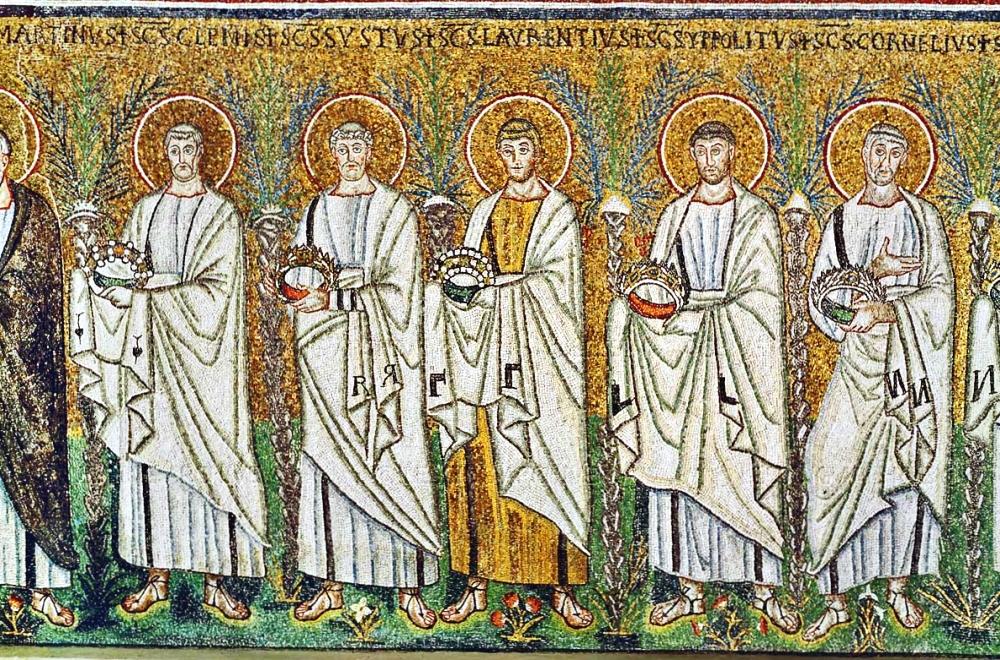
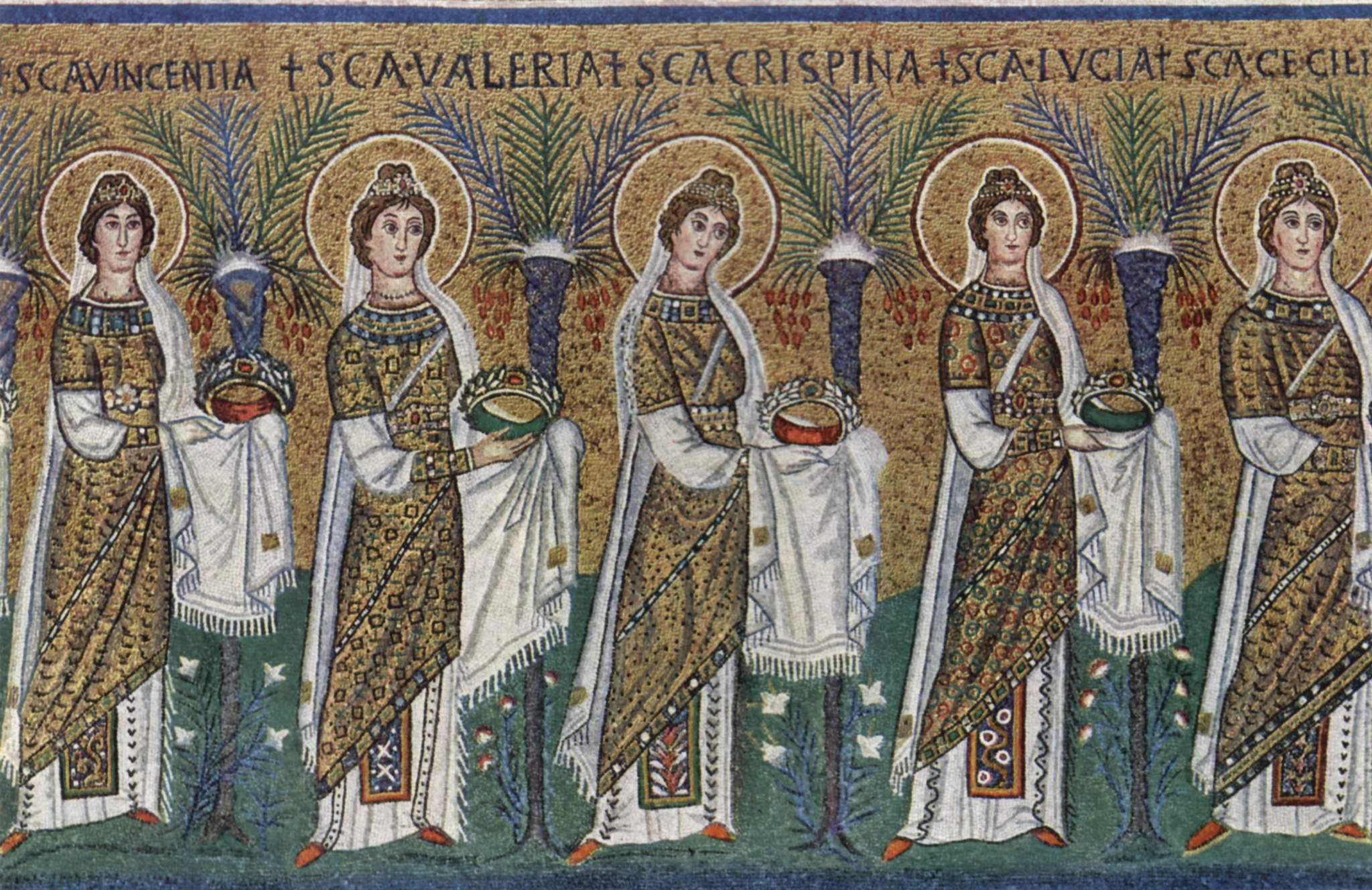
The marvelous and awe-inspiring procession of martyrs that grace the walls of S. Apollinare Nuovo in Ravenna:

???????????????????????????????????????????????????????????????????????????????????????????????????????????????????????????????????????????????????????????????????Meister_von_San_Apollinare_Nuovo_in_Ravenna_002And from a very different historical period, and a radically different expression of the communion of saints (the 16th century Anabaptist Dirk Willems, who after breaking free from his captors, went back to save one who had fallen through the ice. Willems was executed):

Dirk+Willems+small

Thinking about All Saints’


To those who know a little of christian history probably the most moving of all the reflections it brings is not the thought of the great events and the well-remembered saints, but of those innumerable millions of entirely obscure faithful men and women, every one with his or her own individual hopes and fears and joys and sorrows and loves — and sins and temptations and prayers — once every whit as vivid and alive as mine are now. They have left no slightest trace in this world, not even a name, but have passed to God utterly forgotten by men. Yet each one of them once believed and prayed as I believe and pray, and found it hard and grew slack and sinned and repented and fell again. Each of them worshipped at the eucharist, and found their thoughts wandering and tried again, and felt heavy and unresponsive and yet knew — just as really and pathetically as I do these things. There is a little ill-spelled ill-carved rustic epitaph of the fourth century from Asia Minor: — ‘Here sleeps the blessed Chione, who has found Jerusalem for she prayed much’. Not another word is known of Chione, some peasant woman who lived in that vanished world of christian Anatolia. But how lovely if all that should survive after sixteen centuries were that one had prayed much, so that the neighbours who saw all one’s life were sure one must have found Jerusalem! What did the Sunday eucharist in her village church every week for a life-time mean to the blessed Chione — and to the millions like her then, and every year since then? The sheer stupendous quantity of the love of God which this ever-repeated action has drawn from the obscure Christian multitudes through the centuries is in itself an overwhelming thought.

Dom Gregory Dix, The Shape of the Liturgy (1945).

h/t Wesley Hill

A confusion of saints and souls: A Homily for All Saints’ Sunday, 2012

There’s something of a confusion in our commemoration of All Saints. We’re not quite sure what we should be doing today in our worship. Our lessons, all of them, are among the lessons chosen for the burial service. We are worshiping as the choir sings Faure’s Requiem, and later in our service, we will remember the faithful departed, those of our congregation who have died in the past years, and others, our loved ones, who have died in the past year or before. So, what we really seem to be doing is celebrating what used to be called All Souls’ Day, or what in our calendar appears on November 2, the commemoration of all the faithful departed. Continue reading

I sing a song of the saints of God: A Homily for All Saints’ Sunday

I love cemeteries; I have loved cemeteries for a very long time. The best ones are sacred places of beauty and repose, where one can wander and ponder the lives of those who lie buried. I suppose I first encountered the sacred power of graveyards when I visited the Jewish cemetery of the German town of Worms, which was established in the Middle Ages and chronicled the life and struggles of that community through the centuries to the Nazi period. But it was in New England where I come to love spending time in cemeteries. There were the colonial cemeteries in Boston and elsewhere, like Copps Hill, or Old North burial ground, the churchyard of St. Paul’s Newburyport, or the old burying ground in that same city. I could wander in them for hours, reading inscriptions of famous men and women, and of those who were known only to a few friends and family. I also liked to visit Mt. Auburn cemetery, said to be the first in America to be created as much as a beautiful landscape as for more utilitarian reasons. Continue reading

Who are these like stars appearing?

We sang this hymn yesterday on All Saints’ Sunday. I suppose I’ve sung it many times before, but as with so many hymns, I didn’t pay particular attention to the text. Then, a parishioner drew my attention to verse 4:

These are they whose hearts were riven,
sore with woe and anguish tried,
who in prayer full oft have striven
with the God they glorified;
now, their painful conflict o’er,
God has bid them weep no more.

The first two verses of the hymn are a description of the saints arrayed before God’s throne, asking the question: who are they? Verse three begins to answer the question. So verse four is an answer to the question of who are the saints?

What’s wonderful about verse four is that it describes people who do not simply submit to God’s will:

“who in prayer full oft have striven with the God they glorified.”

In other words, their prayer has often been an intense struggle with God. It’s a powerful description of one aspect of a devout Christian life.

The text is a translation by Frances Elizabeth Cox of a hymn written by Theobald Heinrich Schenck (1656-1727). I tried to learn more about the author. He was German, educated at Giessen University (in Hesse) taught in the high school (Gymnasium) there and then became a pastor. It’s the only hymn he wrote that was published. His other publications are several funeral sermons (a popular genre of edifying literature in the early modern period). Giessen was a hotbed of Pietism in the late seventeenth and early eighteenth centuries, but whether Schenck belonged to that reform movement is not mentioned in the material I found.

I was also unable to find the original German text of the hymn. No doubt I’ve got it in a hymnal somewhere, but apparently the Germans aren’t as quick to put stuff like that on the internet. I’d be curious to see what it reads like in the original. There are a total of fifteen verses in the original.