
The Archbishop of Canterbury on the Bible

In his New Year’s message this year, the ABC used the 400th anniversary of the King James Bible as a starting point:

Perhaps someone some time has said to you that you shouldn’t hide your light under a bushel. Or told you to set your house in order. Maybe you only survived a certain situation by the skin of your teeth. Perhaps it’s time you listened to the still small voice within.

All those everyday phrases come from one source – a book whose four hundredth anniversary we celebrate this coming year, the King James Bible – or the Authorised Version as it’s sometimes called.

He points out the important role the KJV had in shaping the language and the vision of the English-speaking world; that it provided generations with a story in which they could locate themselves. It may not play that role any longer, but Archbishop Williams went on to say that we all need some such story with which to orient our lives.

The full text of his message is here: Scroll down below the video and the summary for the full text.

A couple of things to point out. First, he acknowledges that the language of the KJV was already somewhat archaic by 1611 and purposely so; to add gravitas, no doubt. What he doesn’t point out was that the translation was both a political and religious act. King James VI, recently crowned king of England, wanted a version that would supplant the “Geneva Bible” preferred by Puritans.

 

Every homeless person has a story, updated

I linked to this remarkable story yesterday. Today, there’s been a wonderful development.

Of course, most stories don’t end like this. Thanks to Karen Hipp who forwarded this link to me, and wrote:

My aunt’s ex-husband was a brilliant PhD who taught at several universities, including the Sorbonne. He was also an addict and was homeless on several occasions during his life. It is a reminder to show compassion for all of God’s children, because we all DO have a story.

What continues to shock me, after nearly eighteen months in Madison, is the number of people made homeless because of medical issues. And that includes veterans. I’ve met them being dropped off by cabs from the VA hospital; with catheters or breathing tubes, looking for shelter for the night.

Charles Simic on “Winter’s Philosophers”

Beautifully-written reflections on thinking in winter.

There is something profound about the weather in January in the north. I went back through sermons I wrote for the season after Epiphany, and every year, I had something to say about it. After thirty-five years in the north, the move south was a cultural shift, not least because in the south, one doesn’t have to get ready for winter. In South Carolina, one rarely needs to “get ready” to go outside in January, other than throwing on the closest jacket. I’ve always linked that to other cultural patterns, including patterns of thought. If Simic can’t name a cold-weather philosopher, how about one from temperate climes?

It only took me one year living in Germany, though, to suspect that one possible explanation for Kierkegaard was that he lived even further north, and in grayer skies in Denmark.

Simic concludes:

“No philosopher has ever influenced the attitudes of even the street he lived on,” Voltaire was reputed to have said. That’s not what I believe. With deep winter upon us and the weather growing colder, even the wood smoke out of the neighbors’ chimneys could be described as philosophizing. I can see it move its lips as it rises, telling the indifferent sky about our loneliness, the torment of our minds and passions which we keep secret from each other, and the wonder and pain of our mortality and of our eventual vanishing from this earth. It’s a kind of deep, cathedral-like quiet that precedes a snowfall. One looks with amazement at the bare trees, the gray daylight making its slow retreat across the bare fields, and inevitably recalls that Emily Dickinson poem in which she speaks of just such a winter afternoon—windless and cold, when an otherworldly light falls and shadows hold their breath—and of the hurt that it gives us for which we can find no scar, only a closer peek inside ourselves where the meanings and all the unanswered questions are.


Roman Catholic Archdiocese of Milwaukee declares bankruptcy

Numerous media outlets are reporting this story, with details to follow.

According to Archbishop Listecki, the bankruptcy reorganization is intended to help the archiocese “to compensate victims and survivors while also allowing the church to continue its mission.”

In the past decade, several Roman Catholic dioceses have declared bankruptcy because of the financial fallout from the clergy sex abuse scandal, and at least two other archdioceses–Portland, Oregon and San Diego. The Archdiocese of Boston apparently avoided bankruptcy only by a massive sell-off of assets.

It’s a sad day for the Roman Catholic Church, the latest development in the long history of the scandal; but it’s a sad day for Christianity in general, and can’t make the work of reaching out with the love of Christ to those who don’t know him.

A homily for the Second Sunday after Christmas, 2011

We Three Kings
II Christmas
January 2, 2011

There was a lunar eclipse a couple of weeks ago. We couldn’t see it because the skies over Madison were overcast, but it generated considerable buzz in the streets and certainly on the Internet. Such celestial phenomena are little more than curiosities to us. To people in the ancient world, they were much more than that. It wasn’t just the fear many people had during an eclipse of the sun that the sun might be going dark forever. Ancients, and not so Ancients saw a close connection between their own lives and the movements of the planets and stars. Most believed that in some way, the movements of the planets shaped the fates of humans. Hence the zodiac and horoscopes. That’s still with us, of course. When I logged on to yahoo yesterday, the lead story was “What’s in store for you in 2011? Find out what the stars have planned for your career and your romantic relationships.”

Continue reading

2010 in review

The stats helper monkeys at WordPress.com mulled over how this blog did in 2010, and here’s a high level summary of its overall blog health:

Healthy blog!

The Blog-Health-o-Meter™ reads Fresher than ever.

Crunchy numbers

Featured image

The average container ship can carry about 4,500 containers. This blog was viewed about 14,000 times in 2010. If each view were a shipping container, your blog would have filled about 3 fully loaded ships.

In 2010, there were 236 new posts, growing the total archive of this blog to 422 posts. There were 34 pictures uploaded, taking up a total of 3mb. That’s about 3 pictures per month.

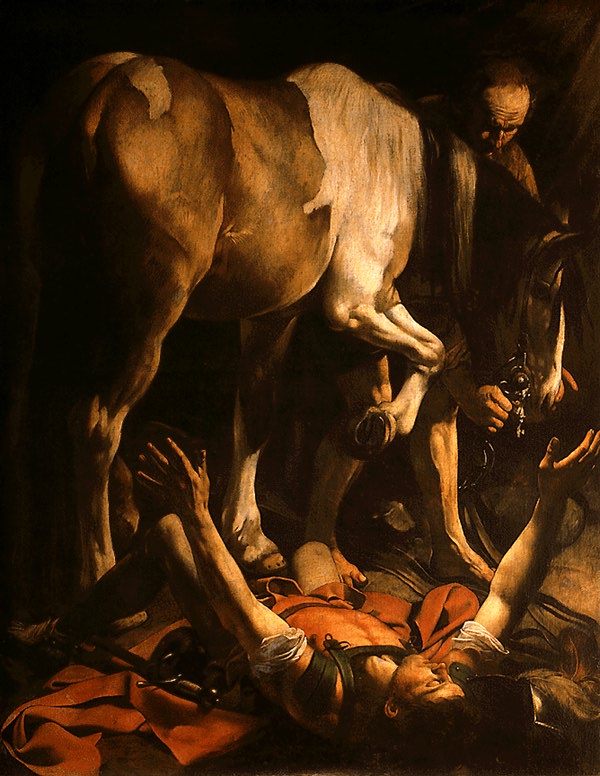
The busiest day of the year was April 19th with 113 views. The most popular post that day was The Conversion of St. Paul (or another excuse for posting a Caravaggio image).

Where did they come from?

The top referring sites in 2010 were graceec.org, facebook.com, blogger.com, en.wordpress.com, and thedailypage.com.

Some visitors came searching, mostly for caravaggio, bible verse tattoos, bible tattoo verses, conversion of st. paul, and conversion of st paul.

Attractions in 2010

These are the posts and pages that got the most views in 2010.

1

The Conversion of St. Paul (or another excuse for posting a Caravaggio image) January 2010
1 comment

2

Caravaggio’s “Madonna of the Loreto” January 2010

3

The Prodigal Son–A Sermon for the 4th Sunday in Lent March 2010

4

Martha, Mary, and the Better Part: A Sermon for the 8th Sunday after Pentecost (Proper 11, Year C) July 2010

5

Sermon for the Third Sunday in Lent, March 7, 2010 March 2010

New perspectives on medieval warfare

A recent archaeological find has upended traditional views of medieval warfare (and medieval culture, too). Discovery of a mass grave in Towton, England, that dates from the Wars of the Roses has allowed scholars to learn a great deal about warfare and even living conditions. Contemporary accounts estimate 28,000 men were killed in the battle that occurred in December 1460 and a modern scholar estimates that as many as 75,000 men fought that day, 10% of the country’s fighting-age population.

Among the discoveries: the first use of lead shot in England, and perhaps a fragment of the first handgun. More interestingly was the extent of injuries to the dead. In addition to evidence of wounds from earlier battles, many of those killed were struck multiple times.

Most interesting to me was this:

Yet as a group the Towton men are a reminder that images of the medieval male as a homunculus with rotten teeth are well wide of the mark. The average medieval man stood 1.71 metres tall—just four centimetres shorter than a modern Englishman. “It is only in the Victorian era that people started to get very stunted,” says Mr Knüsel. Their health was generally good. Dietary isotopes from their knee-bones show that they ate pretty healthily. Sugar was not widely available at that time, so their teeth were strong, too.

That leads to a reassessment of the late-medieval standard of living, at least in England. BTW, 1.71 m is roughly 5’7″. And the savagery puts paid to the notion of gallantry and chivalry in medieval warfare.

The full story is here.

E. J. Dionne on why getting the Civil War right matters

From The New Republic.

Money quote:

After the war, in one of the great efforts of spin control in our history, both Davis and Stephens, despite their own words, insisted that the war was not about slavery after all, but about state sovereignty. By then, of course, slavery was “a dead and discredited institution,” McPherson wrote, and “(to) concede that the Confederacy had broken up the United States and launched a war that killed 620,000 Americans in a vain attempt to keep 4 million people in slavery would not confer honor on their lost cause.”

He concludes:

Why does getting the story right matter? As Mississippi Governor Haley Barbour’s recent difficulty with the history of the civil rights years demonstrates, there is to this day too much evasion of how integral race, racism and racial conflict are to our national story. We can take pride in our struggles to overcome the legacies of slavery and segregation. But we should not sanitize how contested and bloody the road to justice has been. We will dishonor the Civil War if we refuse to face up to the reason it was fought.

Whatever happened to the “Ground Zero Mosque”?

Check out the article on Salon.com.

Here’s what happens if you google it:

I’m not quite so sanguine as Justin Elliott that:

In 2011, the “ground zero mosque” story will probably live on — but primarily on Fox News and Pamela Geller’s blog. It’s unlikely that anyone else will pay much attention ever again.

If it was effective in 2010, there’s no reason to think it won’t be tried in 2011.