Atheists, Unitarian Universalists, Catholics

Atheist Convert: Jennifer Fulwiler.

My feelings of frustration and resentment towards God reached a head. And then, just at the right time, I happened to come across a quote from C.S. Lewis in which he pointed out:

[God] shows much more of Himself to some people than to others — not because He has favourites, but because it is impossible for Him to show Himself to a man whose whole mind and character are in the wrong condition. Just as sunlight, though it has no favourites, cannot be reflected in a dusty mirror as clearly as in a clean one.

Of course. I’d been walking around talking trash, watching TV shows that portrayed all types of nastiness, indulging in selfish behavior…and yet wondering why I couldn’t feel the presence of the source of all goodness. I realized that, if I were serious about figuring out if God exists or not, it could not be an entirely intellectual exercise. I had to be willing to change.

I wasn’t sure if I was ready to sign up for that for the long haul, but I decided to give it a shot: I committed to go a month living according to the Catholic moral code. I bought a copy of the Catholic Catechism, a summary of the Church’s teachings, and studied it carefully, living my life according to what it taught, even in the cases where I wasn’t sure the Church was right.

My goal with the experiment had been to discover the presence of God; instead, I discovered myself — the real me. I had thought that cynicism, judgmentalness, and irritability were just parts of who I was, but I realized that there was a purer, better version of myself buried underneath all that filth — what the Church would call sins — that I had never before encountered.

I found that the rules of the Church, that I had once perceived to be a set of confining laws, were rules of love; the defined the boundaries between what is love and what is not. It had changed me, my life, and my marriage for the better. I may not have experienced God, but, by following the teachings of the Church that was supposedly founded by him, I had experienced real love.

An atheist responds: http://bigthink.com/ideas/41085

Also on the Big Think: Can an atheist be a Unitarian-Universalist? Part I. Part II. Not according to the Unitarian-Universalist, who seems unable to answer the Atheist’s questions reasonably. His argument: Atheism=Hitler and Stalin.

Annual Meeting: Now it’s time for a few days off!

Annual Meetings are necessary things, but it’s not always apparent why. We elected wardens, vestry members, diocesan and convocation delegates, heard about our financial situation and the draft budget for 2012. Ideally, they should be a time to reflect on where we’ve been over the past year and to talk about plans for the coming year. It’s also an opportunity to reflect on my own tenure at Grace. This was my third annual meeting and so, in some ways, I suppose, we are entering into a new phase in our shared ministry.

Here are some excerpts from the annual report I gave to the parish today. Blog readers will recognize many of the themes.

The news is dire. Church membership and attendance are going down. Membership in the Episcopal Church has dropped below 2,000,000, a 16% decline between 2000 and 2009. Average Sunday attendance has declined even more precipitously—23% in that same period. Closer to home, membership in the Episcopal Diocese of Milwaukee has shrunk by a third. Here at Grace, while membership has declined, attendance has remained rather stable and perhaps even ticked up in the last few years.

But it’s not just the Episcopal Church. All of the mainline denominations are getting smaller and even the Southern Baptist Convention has seen decline in membership in each of the last four years. Wider studies bear witness to this phenomenon: more Americans than ever before, as many as 20%, claim no religious affiliation.

To begin the annual rector’s report with these statistics may seem a bit odd, even depressing. I cite them not as an excuse or explanation, but to help us understand the world in which we live and the reality that faces us. Whatever struggles we have are shared by churches across the country, in all denominations and traditions. At the same time, Grace is positioned well to meet the future, to adapt to this changing environment and to share the Good News of Jesus Christ in a fearful and hurting world.

This new reality invites us to experiment with new ways of being God’s people. Old patterns and structures, no matter how well they may have worked in the past, may no longer be adequate to reach people. We have already begun to do just that.

One of the most important ways in which we can experiment is through cooperation. Thanks to Andy Jones, Rector of St. Andrew’s, who reached out to me and to Paula Harris, who began as Rector of St. Luke’s on the same day I did, the Madison Episcopal Churches have forged new bonds of fellowship and have begun to cooperate in joint ministries. The Madison Episcopal Teens, or MET, as it is now called began as our attempt to create a youth experience for our teens that could achieve critical mass and create relationships and community across parish lines. Now under the direction of our own Lauren Cochran, MET meets monthly, with average attendance of 15 from at least four parishes. Thanks to the vision of Michael Ramsey Mulshoff, a group representing four parishes began meeting to talk about ways of making our congregations more inviting to LGBT persons, and especially to teens struggling with sexual identity. Eventually this group took the name Gay Straight Episcopalians, participated in Madison’s Capitol Pride march. Over the years, we have cooperated on Vacation Bible School and Lenten programming. We will continue to seek out ways of cooperating on outreach projects as well as formation.

The past year has also seen increased ecumenical cooperation. Grace became a gathering place for clergy and people of faith during the protests, and with the help of other clergy I organized a successful interfaith service on the tenth anniversary of 9-11. These are important steps, but more important are other efforts to find common ground and cooperate on ministry and mission. I convened a meeting of representatives from the four downtown churches this fall as we began conversations about the effects of the library and capital closures on the downtown homeless population. I hope that meeting is a first step in a developing relationship among our parishes. We also welcomed to our services the Rev. Franklin Wilson of Luther Memorial Church, and although our relations with LMC were strained by the proposal for development of the St. Francis House site, we will continue to work on ways in which we might cooperate. Next week, representatives from the Lubar Institute will be presenting an adult forum on interfaith relations and I hope many of you will participate in that session. For all of the differences among the religions, in some respects we have more in common with one another than with the secular outlook that pervades much of our society.

Next October, Diocesan Convention will be headquartered in Middleton, but we are already making plans to celebrate the Convention Eucharist here at Grace. Convention will be an opportunity for us to work even more closely together as Madison Episcopalians, and to highlight that cooperation to the rest of the diocese.

In addition to experimentation in our relationships outside the parish, this year has also been a time of experimentation within the congregation. The book of annual reports records many of the achievements in our ministries and programs. I would like to highlight three. First, thanks to the vision and hard work of Junior Warden Bruce Croushore, Grace Presents, our concert series has gotten off to a marvelous start. Experimenting with different kinds of music from classical to Gypsy Swing, and with different times including Saturday mornings and most recently a Wednesday evening, the series has opened our doors to new audiences and created a space where musicians can offer their gifts and skills.

With the retirement of the Rev. Pat Size last year, the Hispanic Ministry could have ended, but its membership decided to continue. Mary Ray Worley has provided much needed leadership and organization, and that group continues to show its strength, resilience, and passion for being a Spanish-language presence on the Capitol Square. Lay leadership has developed to officiate at Morning Prayer and to offer meditations during those services. In addition, the Rev. Charles Granger has recently stepped forward to offer regular Spanish-language Eucharists at 12 noon on Sundays.

Growing out of conversations around pastoral care, Darby Puglielli has gathered a group of people to meet each Monday to pray together. The presence of this prayer group at Grace may be a spark for all of us to deepen our prayer lives, both for ourselves and on behalf of others and the church. Prayer helps to bring us together, and even if you aren’t able to join with the group at Grace physically on Mondays, you may pray with them at home, work, school, or wherever you might find yourself.

Each of these efforts has been led and nurtured by lay people. The staff and clergy have offered assistance, insight, and moral support, but most of the envisioning, planning and implementation has been done by lay people. That fact reminds us of the power of lay people to develop and sustain ministries and programs, to catch sight of a vision and to make that vision a reality.

As we look ahead into 2012, it is important that we capitalize on the momentum we have already gained, and seek new ways of expanding our efforts to engage the wider community. One crucial step in that process is to make our space more inviting and welcoming to visitors. The last major renovation of our facilities took place almost twenty-five years ago. Crucial areas of our program and ministry—the undercroft which is home to our nursery and Sunday School, the reception area, to cite two examples—need to be re-imagined as places of invitation and welcome. In the coming months, our Aesthetics Committee and Buildings and Grounds will develop a plan to create in those areas spaces that invite the our congregation and the larger community to make them spaces of respite, life, and sanctuary for the twenty-first century.

The presence at Grace for the next year and a half of the St. Francis House Episcopal Campus Ministry is also an opportunity for us to think carefully and creatively about outreach to young adults. We already do that well. Someone recently mentioned to me after a 10-O’Clock service that our young adults embrace and engage young adult visitors enthusiastically. The fact of the matter is, however, that for many young adults, Sunday morning services are never going to be the center of their spiritual lives. We need to think about ways of engaging them in non-traditional ways, and at non-traditional times. With the help of a new full-time chaplain arriving some time in the New Year, we may be able to create other opportunities for worship, outreach, and spiritual development among college students and young adults.

One of our greatest strengths is our liturgy and worship, thanks to the strong music leadership offered by Berkley and Greg, and all of those people who are involved in preparing and offering worship—from the altar guild, to acolytes, lectors, and Eucharistic ministers. I cannot tell you how many times visitors tell me how wonderful our services are. Still, we need to do more, explore ways of making our worship more accessible to outsiders, more meaningful to all, and ensure that what we do on Sunday morning and at other times speaks to the deep spiritual needs of our culture, needs that may not be met in traditional ways. For example, our new sound system will allow us to offer our services online which may allow us to connect both with parishioners who are unable to attend on Sunday morning and to reach out more widely into the community. In addition, during Advent, and if successful on a continuing basis, we will offer a weekly  evening Eucharist.

 

Losing My Religion: Generation Ex-Christian

Drew Dyck is the author of Generation X-Christian. He was interviewed a month ago on Patheos. I skimmed it and marked it for later reading and finally got around to looking at it again. His analysis is on target:

There are three things that make this generation different. First, young adults today are dropping religion at a greater rate than young adults of yesteryear, “five to six times the historic rate,” according to sociologists David Putnam and Robert Campbell. Second, young adulthood is not what it used to be—it’s much longer. Marriage, career, children—the primary sociological forces that drive adults back to religious commitment—are now delayed until the late 20s, even into the 30s. Returning to the fold after a two- or three-year hiatus is one thing. Coming back after more than a decade is considerably more unlikely. Third, there’s been a shift in the culture. Past generations may have rebelled for a season, but they still inhabited a predominantly Judeo-Christian culture. For those reared in pluralistic, post-Christian America, the cultural gravity that has pulled previous generations back to the faith has weakened. So I’m not banking on an automatic return. I think it’s a scandal that these young adults are adrift spiritually and missing from our churches.

Nicole Havelka says much the same. The idea that young people will return to regular church-going when they get married and have children is probably a relic of an early generation when such things did happen, even among baby-boomers. We now live in a post-Christian culture in many respects, and churches cannot have the power to attract young people who were never members or participants in the first place.

Havelka writes:

We should acknowledge that young adults are not going to return to church (or visit for the first time) without some effort on the part of our local churches. We can offer substantive programs to help young families and single adults form their new adult faith. We can reach out to college students. We can be sensitive to the needs of our communities and tailor our ministries to meet those needs.


Encounters with homelessness

Working at Grace Church means that homelessness is always at the forefront of my consciousness and my ministry. When I arrive in the morning, whenever I leave, during the day or at the end of the day, I encounter homeless people lingering on the streets around the church. It’s fairly easy to pass them by with a nod or a “Good Morning” but it’s just as likely that we will engage in a conversation or that I will be asked for help.

I was asked this week about whether that constant presence and the repeated requests for assistance have made me more callous to the reality of the need I encounter each day. I don’t know. I have heard many stories of distress and hardship and I often jokingly say, “and some of what I’ve heard is true.” We do put up barriers to the depth of the pain and suffering, and as individuals and as agencies, we also set limits to what we can do. Survival requires such measures.

Still, an encounter or a series of encounters can be profoundly unsettling. The desire to help can overwhelm and the reality that whatever we can do–a meal–will not solve the problems.

In the past few days, I’ve read two powerful essays written by people who work with homeless people. Amy Scheer shares her experience working in a women’s shelter, dealing with the needs of women and the necessity of rules to maintain order. How can she offer what little food they have to a pregnant woman without causing conflict with the other women who might be as hungry as she?

James Lang reflects in America on his experience volunteering through his parish with the Interfaith Hospitality Network:

To me, homelessness would mean one more faceless man asking for change on a street corner were it not for those nights I spent (not) sleeping in the parish center; it would mean an article on page four of the daily newspaper; it would mean a pleasant argument about politics with my friends, sitting at a party over drinks and appetizers. As a result of those nights, however, homelessness now means a 5-year-old girl with a ponytail and missing front teeth, knocking on my door at 6:30 a.m. and pulling a fairy wand out of a box of toys someone had donated. Because of those nights, homelessness has a face; homelessness has entered my life.


Truthfulness, Dignity, and Aesthetic Quality: Marilynne Robinson on the possibilities of Christianity

Marilynne Robinson, the author of the beautiful novels Gilead and Home, recently visited Duke University where she gave a reading and was interviewed by Jason Byassee. In the course of that interview, she said

What people need in this culture is truthfulness, dignity and aesthetic quality. Not everything in the world, but many things are depleting exactly those aspects of life now.

The churches are in a position to give people what they urgently need and give them something that is only consistent with their dignity as human beings.

This intrigues me because of what she suggests about what the churches might offer humans “truthfulness and dignity” and the importance of beauty. One of the great challenges facing us as individuals and as a civilization is the extent to which everything in our world tends towards our diminishment–the reduction of human desire to consumption, of human community to immediate self-satisfaction, and of human fulfillment to wealth accumulation.

There’s a sense in which our encounter with beauty, whether that be the beauty of nature, of art or architecture, of literature or music, invites us to self-transcendence. It’s what I see when I watch a wanderer off the street encounter the interior of Grace Church, or chat with a visitor after our choral Eucharist. It’s also something of what Grace has offered in the midst of the political turmoil over the last year.

The entire interview is here. And her reading of parallel passages from Gilead and Home available as a podcast.

Robinson has also published a rambling essay in the most recent issue of The Nation. In this piece she reflects on developments in the culture of the West in the wake of financial turmoil by playing the present off against the cultural conflict of the Cold War.

She writes:

I have always identified the United States with its best institutions and traditions, its best thought, believing, and having seen, that they could act as a corrective to the less admirable aspects of the culture. I have profoundly enjoyed the wealth of experience that has been offered to me, and I hope I have made some use of it. Yet it seems to me, on the darkest nights, and sometimes in the clear light of day, that we are losing the ethos that has sustained what is most to be valued in our civilization. This may sound alarmist. But it is true, to paraphrase Franklin Roosevelt, that fear is very much to be feared, not least because it is a potent stimulant. Nothing is so effective at foregrounding self-interest. Yet fear is the motive behind most self-inflicted harm. Western society at its best expresses the serene sort of courage that allows us to grant one another real safety, real autonomy, the means to think and act as judgment and conscience dictate. It assumes that this great mutual courtesy will bear its best fruit if we respect, educate, inform and trust one another. This is the ethos that is at risk as the civil institutions in which it is realized increasingly come under attack by the real and imagined urgencies of the moment. We were centuries in building these courtesies. Without them “Western civilization” would be an empty phrase.

The Shame of College Sports: Another icon has feet of clay

People often ask me if I follow college athletics. I reply that I did, until I began teaching college students. The barriers to achieving any academic success, even for students at NCAA Division III schools, even for participants in “minor” sports like golf are enormous. I never taught at a Division I college football power, but dealing with students who missed the first day of classes because of a volleyball match scheduled at a college across the state, or the first week of classes because of baseball games, outraged me as a professor.

I grew up a fan of the Ohio State Buckeyes–don’t blame me, I grew up in Ohio. I remember only last year how tv announcers and commentators praised the “squeaky clean” image of Jim Tressel. While they were speaking those platitudes, Tressell knew he was playing ineligible players.

Now, we have the Penn State spectacle, which is drawing analogies with the sexual abuse crisis in the Roman Catholic Church. Paterno and Penn State president Spanier were fired this evening.

Taylor Branch’s The Atlantic article entitled “The Shame of College Sports” should be read by everyone who follows NCAA sports.

Preparing for Annual Meeting: A Dying and a Rising

Our Annual Meeting occurs on Sunday, November 13. We’ve got all of the paperwork taken care of; we’ve got a slate of excellent candidates for vestry and wardens; our stewardship campaign is well underway and we have a draft budget.

I’ve begun working on my annual report, my third as Rector of Grace. It’s an opportunity to reflect back on where we’ve been over the last year (and longer) and where we are headed. Taking stock of the past is no easy thing. Detecting and analyzing trends and themes in ministry and mission can be difficult; it’s easy to come up with compelling and competing narratives that make sense of where we are. Looking into the future is even more difficult. What will the new year bring?

My experience in the past year has brought home to me how easy it is to be overtaken by events. I couldn’t have predicted the wave of protests that broke out on Madison’s Capitol Square last February and how they shaped Grace’s ministry for months. There was no way to prepare for something like this; no way to have thought about in advance how to respond. The same is true for other things.

It’s easy to operate in a crisis mentality for a time. For most churches, the budget, for example, seems always to be in crisis. We look for quick solutions that will solve the problem for this year or next, and the only longer-term trend we notice is the long-term reality (at Grace, it goes back decades) that we run annual operating deficits in the tens of thousands of dollars.

Focusing on that long-term trend may distract us from focusing on other long-term trends that might help to explain the situation we are in and help us begin to strategize how to move forward. The Episcopal Church, Christianity, even religion are in decline in the United States. More people than ever before claim no religious affiliation; membership and attendance numbers in the Episcopal Church are down, mirroring trends in other denominations.

In spite of our prominent location on Madison’s Capitol Square, Grace Church, like other churches, exist on the periphery of our culture. I doubt that’s going to change. We might want to mourn that fact, look back wistfully on the “glory days” of the 50s and 60s; we might even think that there’s something we can do that could return us to prominence. I don’t think so.

Former Presiding Bishop Frank Griswold was recently interviewed by Faith and Leadership. He said:

I also think that ecclesial bodies — just as in our own life cycle — go through a paschal pattern again and again. There’s a dying and a rising, a dying and a rising.

There’s an arrogance and a self-confidence that is shattered by things falling apart. Usually, that is an invitation to deeper wisdom. It may be difficult and painful, but there’s usually a grace hidden in that in some way, and then there’s a resurrection with new insight and wisdom that comes out of suffering or loss.

He used the image of the earthquake damage to the National Cathedral as a symbol of what’s happening in our church. Built at a time when the Episcopal Church and Episcopalians were at the center of our culture and power, the damage forced the congregation and its programs, beginning with the 9-11 commemoration, to other venues.

We are broken, as a denomination and as mainline Christianity. To use another of Griswold’s images, we are in a desert place. But as he says, that can be a good place, a creative place, where old baggage is jettisoned and new possibilities envisioned and engaged.

Lectionary Reflections: Proper 28 Year A

The Hebrew Bible reading for Proper 28 in the semi-continuous reading is Judges 4:1-7. I was surprised to learn that this is the only reading from Judges in the entire three-year lectionary cycle. That means some of the great stories of the Hebrew Bible might not be encountered by ordinary churchgoers–the Samson cycle, for example, or the story of Gideon.

Judges belongs to a larger historical work that spans the books of Joshua through II Kings (not including Ruth). They’ve given it the tongue-twisting name of the Deuteronomic History, because it tells the history of Israel and Judah from the conquest to the destruction of Jerusalem and the Exile in the 6th century BCE. It was written during the Exile to explain why the Exile happened.

Judges plays a central role in this story. It’s a collection of stories, some of them stories of heroes, others occasionally seeming like folktales. Each episode follows a similar pattern. A judge dies (judges are as much military rulers as judges in the contemporary sense) and the land falls into chaos with the Israelites suffering from foreign invasion and abandoning the worship of God. They cry out and God raises up a new judge who defeats the enemy and establishes a period of peace; but when he (or she) dies, the cycle repeats itself. The book helps to explain why monarchy was needed, but there is also something of a critique of the Israelites, had they been faithful to God, they would not have needed the strong hand of a monarch. The last verse in Judges expresses it well: “In those days there was no king in Israel; all the people did what was right in their own eyes (21:25).

So the question becomes, why of all the possible stories in Judges, is this one included? That’s a puzzle of its own, for it really isn’t a story at all, but the beginning of a story involving two women, both of them also involving military victory. Deborah is a judge and prophetess, who leads the Israelites (with Barak) into battle. Interestingly, of all the judges mentioned in the book, it is only Deborah who is shown actually “judging:” “She used to sit under the palm of Deborah between Ramah and Bethel in the hill country of Ephraim; and the Israelites came up to her for judgment” (4:4)

Nestled between this scene and the actual battle is another story–the assassination of the Canaanite general Sisera by Jael a woman who, after offering him hospitality, kills him with a tent peg. The Deborah story concludes with what may be the oldest part of the Bible, the Song of Deborah (5:2-31). In it, Deborah is called “mother of Israel.” The story concludes with the observation that “the land had rest forty years” (5:31).

No doubt, this story is included in the lectionary because it shows a powerful and important woman, Deborah, a judge and prophetess, and calls us to remember that God calls both men and women to leadership roles. The nature and exercise of authority is a theme that has run through the Hebrew Bible readings from the story of Moses to this point and it will continue to dominate the history of the Israelites throughout the monarchy.

It’s an issue for contemporary Christians as well. Shaped by our culture and historical context, models of authority from politics and the corporate world contribute to our notions of the proper exercise of authority in the church. On the other hand, in the gospels, Jesus offers a very different model of authority: “I am among you as one who serves” (Lk 22:27).

I sing a song of the saints of God: A Homily for All Saints’ Sunday

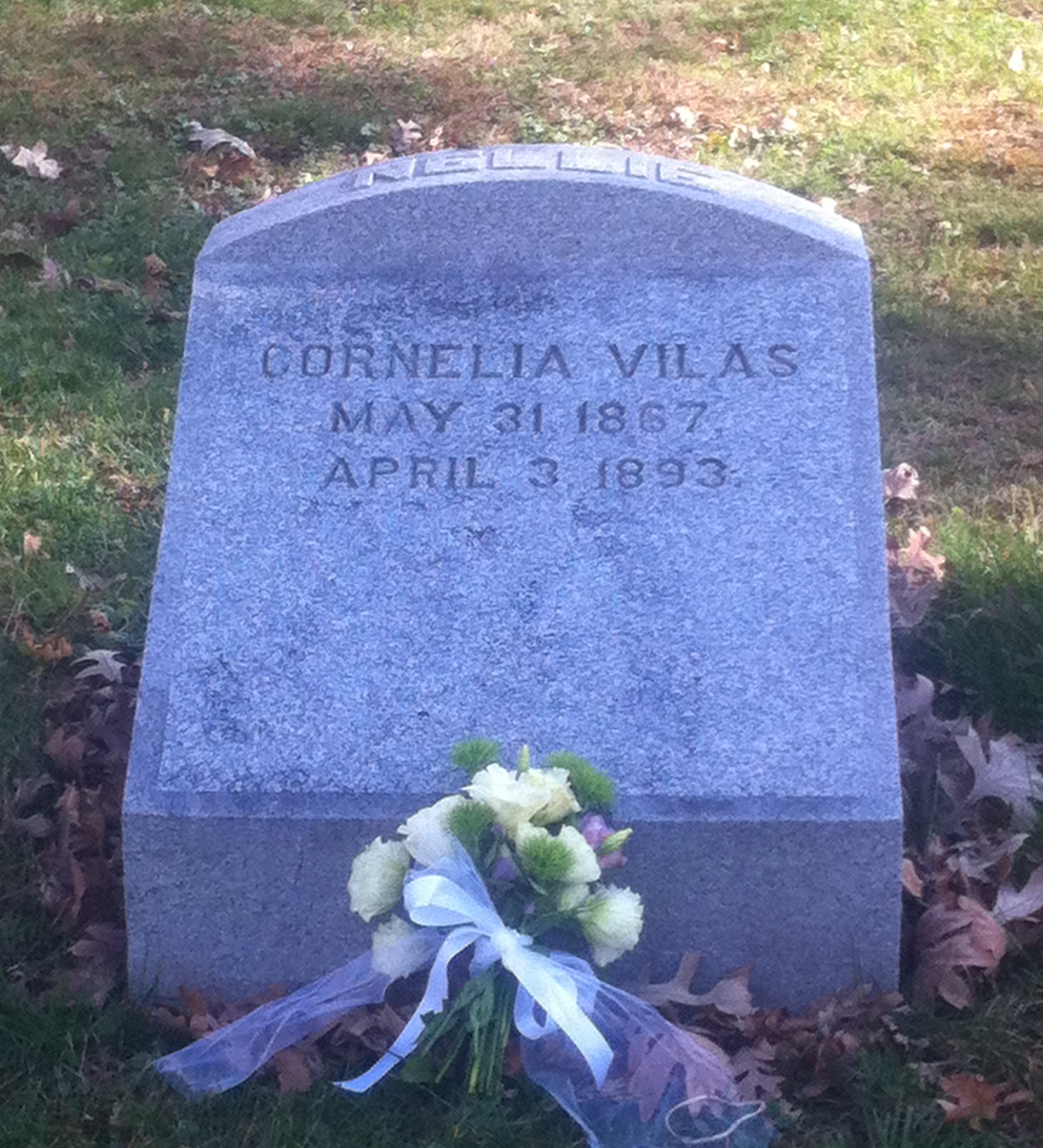
I love cemeteries; I have loved cemeteries for a very long time. The best ones are sacred places of beauty and repose, where one can wander and ponder the lives of those who lie buried. I suppose I first encountered the sacred power of graveyards when I visited the Jewish cemetery of the German town of Worms, which was established in the Middle Ages and chronicled the life and struggles of that community through the centuries to the Nazi period. But it was in New England where I come to love spending time in cemeteries. There were the colonial cemeteries in Boston and elsewhere, like Copps Hill, or Old North burial ground, the churchyard of St. Paul’s Newburyport, or the old burying ground in that same city. I could wander in them for hours, reading inscriptions of famous men and women, and of those who were known only to a few friends and family. I also liked to visit Mt. Auburn cemetery, said to be the first in America to be created as much as a beautiful landscape as for more utilitarian reasons. Continue reading