Tuesday in Holy Week

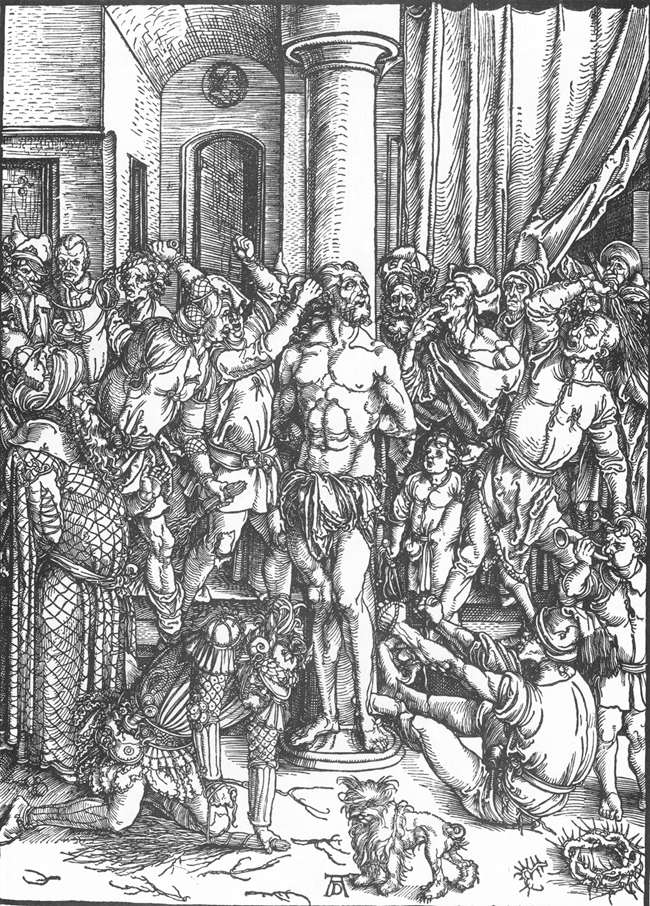
04largepAlbrecht Dürer, Ecce homo (from the Large Passion)

The Collect.

O God, by the passion of your blessed Son you made an instrument of shameful death to be for us the means of life: Grant us so to glory in the cross of Christ, that we may gladly suffer shame and loss for the sake of your Son our Savior Jesus Christ; who lives and reigns with you and the Holy Spirit, one God, for ever and ever. Amen.

Monday in Holy Week

385px-Albrecht_Dürer_-_Christ_Carrying_the_Cross_(NGA_1941.3.3)Albrecht Dürer, Christ Carrying the Cross

The Collect for Monday in Holy Week

Almighty God, whose most dear Son went not up to joy but first he suffered pain, and entered not into glory before he was crucified: Mercifully grant that we, walking in the way of the cross, may find it none other than the way of life and peace; through Jesus Christ your Son our Lord, who lives and reigns with you and the Holy Spirit, one God, for ever and ever. Amen.

On the 33rd anniversary of the martyrdom of Oscar Romero

It helps, now and then, to step back and take a long view.

The kingdom is not only beyond our efforts, it is even beyond our vision.

We accomplish in our lifetime only a tiny fraction of the magnificent
enterprise that is God’s work. Nothing we do is complete, which is a way of
saying that the Kingdom always lies beyond us.

No statement says all that could be said.

No prayer fully expresses our faith.

No confession brings perfection.

No pastoral visit brings wholeness.

No program accomplishes the Church’s mission.

No set of goals and objectives includes everything.

This is what we are about.

We plant the seeds that one day will grow.

We water seeds already planted, knowing that they hold future promise.

We lay foundations that will need further development.
We provide yeast that produces far beyond our capabilities.
We cannot do everything, and there is a sense of liberation in realizing that.

This enables us to do something, and to do it very well.
It may be incomplete, but it is a beginning, a step along the way, an
opportunity for the Lord’s grace to enter and do the rest.
We may never see the end results, but that is the difference between the master
builder and the worker.
We are workers, not master builders; ministers, not messiahs.
We are prophets of a future not our own.

Although commonly attributed to Archbishop Romero, the prayer was written by Ken Untener, Bishop of Saginaw

“Jesus, Remember me:” A Sermon for Palm Sunday, 2013

“Jesus, remember me, when you come into your kingdom.”

We’ve been singing those words to a simple melody the past few Sundays during communion; we will continue to do so through Maundy Thursday this week. It may be that you found both the words and music monotonous; you may have found them meaningful. It may be that you had no idea where they came from, what they meant, or why we might be using this chant from the ecumenical monastic community of Taize, France. Continue reading

The backlash of institutions (and their spokespeople) against “Spiritual but not Religious”

Another week, another study. There are some remarkable numbers here. Among those aged 18-24, 32% prefer no religion; of those between the ages of 25 and 34, 29% claim “no religion;” Among those 35-44, only 19%. But underneath those headlines lies  a more complex reality. They may have no religious affiliation but the vast majority of Americans continue to express belief in God or belief in a higher power. The percentage of those identifying as atheist (3.1%) or agnost (5.6%) remains very small.

This study, as others before it, makes clear that while institutional affiliation may be falling dramatically, religious belief and practice are not declining significantly.

Gary Laderman, chair of the Religion Department at Emory University and scholar of American Religion, points out that the rise of the “nones” means the study of Religion in America is more interesting than ever. He gives several reasons for the rise, one of them is:

Finally, the rise of the “nones” surely suggests it is the end of religion as we know it. Forget churches; forget priests and pastors; forget the Bible; forget organized religion generally. What is sacred are no longer conventional objects like a cross, a singular religious identity like being a Methodist, nor activities like going to church or prayer. Instead, the religious worlds in the contemporary and future United States are robust and capacious, providing an abundance of spiritual possibilities found in unexpected places like drum circles and meditation exercises, sports events and other expressions from popular culture. It is a brave new world for religious Americans who are increasingly unhinged from traditional authorities and institutions.

Elizabeth Drescher is studying the prayer practices of the “nones” and has some pointed questions about prayer divorced from religious traditions and communities.

I’ve blogged about Lillian Daniel’s views before. Her recent book continues to garner interest. I’m not exactly sure who she’s writing for, to reassure those of us who are caretakers of traditional religious institutions are doing valuable work? Is she trying to convince the SBNR folks that their efforts to make meaning in their life are of little value? At least she doesn’t harangue them quite like Rabbi David Wolpe.

One one level, all this consternation from religious institutions and their representatives about the nones reminds me of the complaints throughout history of pastors, theologians, bishops, and other insiders about the behavior of their flocks. In the fourth century, Ambrose worried that the faithful were going out of the city to martyrs’ shrines and not attending his sermons. In the Middle Ages, preachers and priests complained that people didn’t pay attention to sermons or came only when they heard the sanctus bell that indicated the moment of the consecration of the host. In the sixteenth and seventeenth centuries Protestant preachers also complained that attendance at services was poor and devotion languished. Had you asked those who were criticized for their lukewarm faith and behavior, I’ve no doubt they would have responded by saying they were good Christians. They just weren’t the sort of Christians their leaders wanted them to be.

The fact of the matter is that throughout the history of Christianity, indeed, throughout the history of religion, there has been a disconnect between what institutions and sacred experts wanted in terms of behavior (and doctrinal purity) of their communities, and what ordinary men and women actually did religiously, and how they understood and appropriated what they did. What we are seeing is not so much a decline in religious practice or belief, but rather a decline in the understanding that religious practice and belief must be tied to religious institutions. They are free of the religious expectations imposed on them from above.

The question, then, is not how to get people back into the pews, but rather, how can we connect with people who no longer automatically see us as valuable experts on religion or even as valuable spiritual guides? How can we encounter them where they are, invite them to ask their questions, encourage them to enter more deeply into the rich spiritual traditions of Christianity, but at the same time recognize that they may never join the Altar Guild. It’s likely, however, that if we have concrete outreach opportunities for them to engage, they will work side by side with us. To succeed with the nones may not mean getting them to join our churches. Instead, it may mean recognizing the legitimacy of their spiritual journeys and engaging them there, rather than trying to force them to engage us on our terms.

The Changing Sea Project is exploring the spirituality of emerging adults and their relationship with religious institutions. More on the spirituality and religious practices of “emerging adults:”

This group of emergent adults says they feel close to God. They adapt religious traditions according to their own individual needs and desires. But religion has high salience for them. They really care
about the meaning of life and other deep questions. Religious attendance is medium, with some regular attending and others not. They engage in service to others. It’s a religiosity that would not exclude attendance or personal prayer.

And another cautionary note: Young philanthropists want to support causes not institutions:

They have judged previous generations to be largely motivated by recognition for their giving and want little part of it. They want to see societal change through the causes they support; they could care less about the named scholarship fund or the plaque on the wall. Christian institutions making appeals to younger donors need to show how their work is part of the unfolding shalom of God for all of creation.

And

young donors want to be engaged in the work of a cause or institution itself. As the study notes, this is a generation that grew up volunteering and believes that investing time as much as money is essential. But note — this on-the-ground service is also another way that they will assess impact over rhetoric.

A new spirit blowing in the churches? Pope Francis and the Archbishop of Canterbury

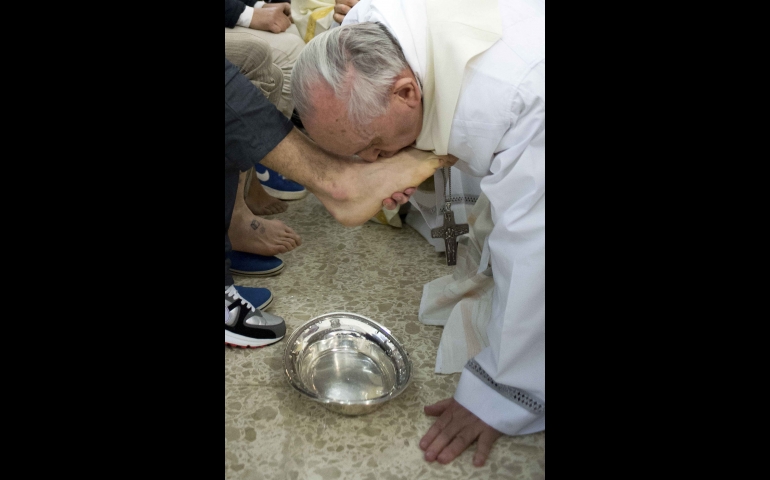
It’s all quite disorienting. A new pope who seems reluctant to accept the trappings of his office and reaches out to ordinary people. For example, he is going to break with tradition by celebrating Maundy Thursday in a prison for youthful offenders, washing the feet of prisoners rather than those of retired clergy. A new Archbishop of Canterbury whose style is very different from Rowan Williams and who has in his early statements, tried to reach out to bridge some of the most difficult divisions in the Church of England. Perhaps more important still, the ecumenical gestures that have broken new ground–the presence of the Greek Orthodox patriarch in Rome on March 19, and the wonderful diversity in the enthronement service yesterday.

I’m tempted to see something of a new spirit beginning to blow throughout Christianity from the simple, yet powerful gestures of Pope Francis. No doubt there are rumblings of discontent in the back alleys and hidden corners of the Vatican, but the stultifying, rigid conservatism of the last decades has for a moment at least been sidelined by a spirit of humility, simplicity, and tenderness (the prominence of that word in the Pope’s homily noted by several commentators). That is not to say that the Pope is less conservative doctrinally than his predecessors, but by choosing to focus on other things, he is changing the tone and perception of the Roman Catholic Church in popular culture.

Both leaders face significant problems and it remains to be seen whether they will be any more skillful in negotiating those conflicts than their predecessors. Still, we can hope.

Some commentary on the enthronement of the Archbishop of Canterbury

A little background and summary of the event.

David Sinden links to photos, highlight videos, etc.

His Grace has this to say. An excerpt:

The moment the great oak doors of Canterbury Cathedral were flung open, the fanfare seemed to blow away an entire age of theological aloofness and stuffy ecclesiology. We had a new and vibrant liturgical dialogue, written by the Archbishop himself, explaining the whole meaning of the day to a nation that no longer knows or cares. The interrogation by the Christian child, Evangeline Kanagasooriam, was brief. But its illumination could not have been brighter.

“Who are you and why do you request entry?”

“I am Justin, a servant of Jesus Christ, and I come as one seeking the grace of God, to travel with you in his service together.”

An interview with the new Archbishop of Canterbury

Colin Coward reflects on another interview with the ABC:

The new Archbishop said: “You see gay relationships that are just stunning in the quality of the relationship.” He told the BBC he had “particular friends where I recognise that and am deeply challenged by it”. Justin Welby clearly has gay friends, partnered gay friends, and knows perfectly well that their relationships are equal in love and quality to those of his married friends and of his own marriage.

A new ecumenical spirit?

Pope Francis urges dialogue with Muslims.

His relationship with the Jewish community of Argentina.

His message of greetings to the new Archbishop of Canterbury.

Archbishop of Canterbury is Enthroned

There is every possible reason for optimism about the future of Christian faith in our world and in this country. Optimism does not come from us, but because to us and to all people Jesus comes and says “Take heart, it is I, do not be afraid”. We are called to step out of the comfort of our own traditions and places, and go into the waves, reaching for the hand of Christ. Let us provoke each other to heed the call of Christ, to be clear in our declaration of Christ, committed in prayer to Christ, and we will see a world transformed.

The entire sermon is available is here.

Walking the Stations of the Cross with her 7-year old son

Miranda Hassett, Rector of St. Dunstan’s in Madison has a lovely, thoughtful post on her son’s participation in a recent Stations of the Cross. It’s here.

What did G do, while we were going around and reading the Stations? He stood with us -sometimes relatively still, sometimes hopping from foot to foot. Sometimes reading along in his booklet, sometimes flopping his booklet back and forth, sometimes holding his booklet over his face with just his eyes peering over. He wandered off and sat down on a chair, a rocker, the floor. He drew a cross in red marker on one page of the booklet. He gazed at the art. He breathed on the glass of the windows and drew crosses in the water vapor with his finger. He fell over, once. He peered into the faces of the two adults in the room, to try to figure out what we were thinking and feeling. Sometimes he read the responses with us; sometimes he missed them.

And – I know this because I’m his mom, and because at least half my attention was on him the whole time – he was tuned in, listening, taking it in and thinking about it, the whole time. He was wiggly and distracting and all over the place, but he was, in his 7-going-on-8 way, fully present. And, as I started to read Station 7, he said, “I’ll read the next one.” He read Station 8 and Station 10. He declined to read again, but the other adult encouraged him to read the last one, and he did. He read most of it from a seated position astride our (heavy, stone) altar rail.

She goes on to reflect on the inclusion of kids in worship. Read it.

Next Monday (the 25th), there will be a Stations of the Cross as a Witness against Violence (part of a nation-wide effort of the Episcopal Church) at St. Dunstan’s at 6:00 pm. More info here.

Jesus, Remember me: Lectionary Reflections for Palm Sunday, Year C

This week’s readings are here.

We have slowly been gaining insight into Luke’s understanding of Jesus these past few months–slowly because our gospel readings have jumped around in Luke and have also included readings from the Gospel of John. Among the most important texts for Luke’s understanding of Jesus is his teaching in the synagogue at Nazareth (Lk 4:17:21, read on the 3rd Sunday after the Epiphany). There Jesus announces the fulfillment of the prophecy of the recovery of sight for the blind, that prisoners will be set free, and the poor will have the good news preached to them. Over the following weeks, we saw some of that activity. In the Parable of the Prodigal Son, we also saw the promise of forgiveness from a loving God.

It may be that it is only now, in the crucifixion scene, that many churchgoers will encounter central aspects of Luke’s image of Jesus. His prayer for forgiveness as he is crucified is a prayer that God will forgive his executioners whether or not they repent of their actions. In fact, Jesus says that “they know not what they do.” Jesus responds similarly to the plea of the second criminal, “Jesus, remember me when you come into your kingdom.” Here, the criminal doesn’t ask for forgiveness but Jesus extends his forgiveness nonetheless: “Today you will be with me in Paradise.”

In Luke Jesus is crucified not to pay for the sins of humanity. He is crucified because the Roman Empire and its Jewish collaborators have chosen to execute him. The charges brought against him are political: perverting our nation,telling people no to pay taxes, and calling himself Messiah, a king (Lk 23:2). Pilate finds him innocent of the charges; Herod’s interrogation is inconclusive because Jesus doesn’t answer his questions. The second criminal also pronounces him condemned unjustly and the centurion says as Jesus dies, “Certainly this man was innocent.”

Jesus’ innocence and his forgiveness of those who crucified him in spite of that innocence is central to the story. Luke will draw on that same theme in Acts when the first martyr, Stephen, asks God to forgive those who stone him.

Many contemporary Christians and those who struggle with Christianity wrestle with the meaning of the cross, with the doctrine of atonement, and especially with the notion that Jesus had to die for our sins. As hard as it is for us to get our heads around this notion, it may be that Luke’s understanding of the cross is still more puzzling–an innocent victim who prays for forgiveness: that’s an image of a God of great compassion, and of a Christ who is difficult to imitate. But forgiveness of others is at the heart of our faith (Forgive us our sins as we forgive those who sin against us) and should also be at the heart of our ethics