
The Wesleys might well be the two most influential figures in the history of English-speaking Christianity. I suppose that’s debatable, but certainly the shape of Christianity would be dramatically different without them. Sons of an Anglican priest and educated at Oxford, after travels to colonial America, they became leaders of the Evangelical Revival in England. John was the elder and more responsible for the theological and structural basis of what would become Methodism; but it might be that Charles, through his thousands of hymns, had the greater impact on the religious lives of English-speaking Christians over the past two and a half centuries. His hymns are probably in the hymnals of every Protestant Church, and generations of people undoubtedly knew many of them by heart.
They were often criticized in their own time for the kind of emotional responses evoked by their sermons and in Methodist prayer meetings. Hogarth’s engraving captures anti-Methodist sentiment:
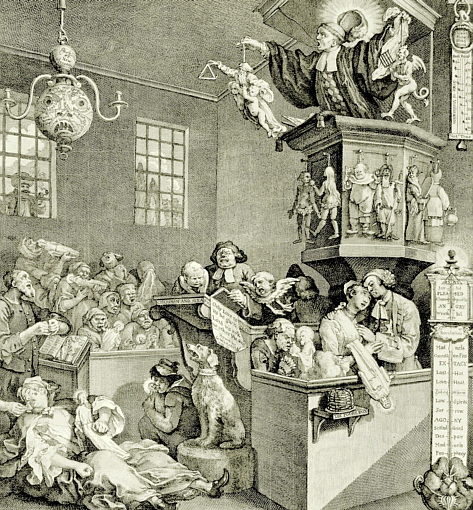
Much of the opposition could be attributed to class issues–the Methodists target working and middle class people–and to their tactics. They adopted George Whitefield’s practice of preaching in the open air, held meetings outside of regular church hours and in places other than churches, and they licensed lay people to preach.
From a twenty-first century perspective shaped by contemporary Christianity, what may be most surprising is the social justice emphasis of the Methodist revival. John Wesley opposed slavery and one of the last letters he wrote before dying was to William Wilberforce who was leading the campaign for abolition in Parliament, urging him to persevere in his efforts.
I can’t think about the Wesleys, though, without thinking of their hymns and beginning to sing them: “O For a Thousand Tongues to Sing” or “Love Divine, All Loves’ Excelling.


 Preaching Grace on the Square