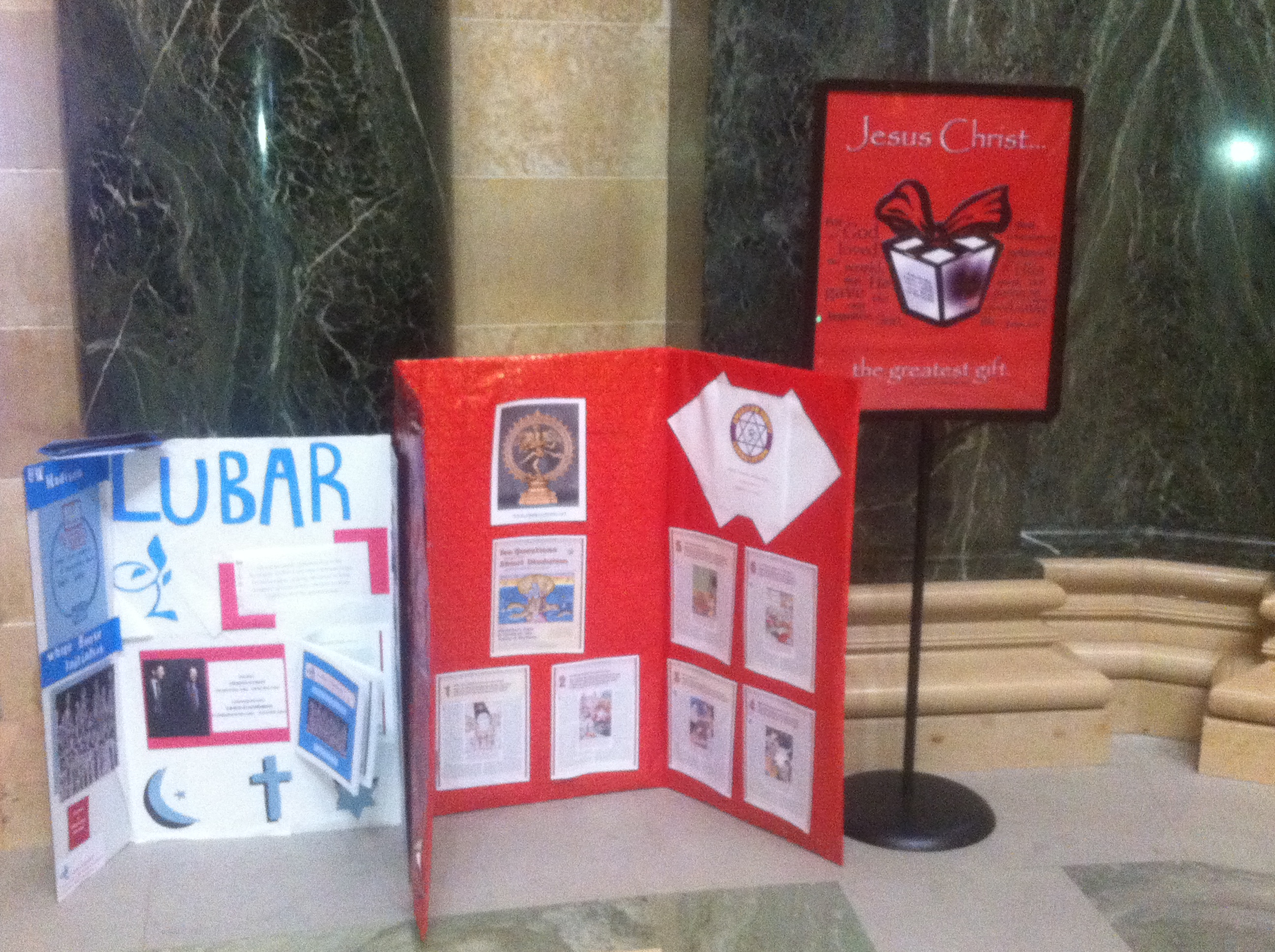
St. John of the Cross, December 14

Today is the commemoration of the great Spanish mystic, St. John of the Cross. My blog post from last year is here.

As a complement to last year’s quotation from “The Dark Night of the Soul,” a few stanzas from “The Spiritual Canticle:”

SONG OF THE SOUL AND THE BRIDEGROOM

I

THE BRIDE

Where have You hidden Yourself,

And abandoned me in my groaning, O my Beloved?

You have fled like the hart,

Having wounded me.

I ran after You, crying; but You were gone.

II

O shepherds, you who go

Through the sheepcots up the hill,

If you shall see Him

Whom I love the most,

Tell Him I languish, suffer, and die.

III

In search of my Love

I will go over mountains and strands;

I will gather no flowers,

I will fear no wild beasts;

And pass by the mighty and the frontiers.

IV

O groves and thickets

Planted by the hand of the Beloved;

O verdant meads

Enameled with flowers,

Tell me, has He passed by you?

V

ANSWER OF THE CREATURES

A thousand graces diffusing

He passed through the groves in haste,

And merely regarding them

As He passed

Clothed them with His beauty.

VI

THE BRIDE

Oh! who can heal me?

Give me at once Yourself,

Send me no more

A messenger

Who cannot tell me what I wish.

VII

All they who serve are telling me

Of Your unnumbered graces;

And all wound me more and more,

And something leaves me dying,

I know not what, of which they are darkly speaking.

VIII

But how you persevere, O life,

Not living where you live;

The arrows bring death

Which you receive

From your conceptions of the Beloved.

The sad decline of the war on Christmas

I went to the Capitol today. It was kind of eerie, because I hadn’t entered it since the protests last February, when it was occupied by thousands, and a group of interfaith clergy made their way from the steps of Grace to the rotunda to show our solidarity.

It was much quieter today. The Christmas tree (before this year, it was a Holiday tree) is beautiful. I was on a mission, looking for the nativity scene put up by a conservative Christian organization that wanted to witness to the “true meaning of Christmas.” It took me a while to find the display, on the second floor of the rotunda. But there it was, as were a couple of signs proclaiming loudly the Christian faith, and near them, the remains of last week’s interfaith display–posters from UW’s Lubar Institute and from a group of Hindus. Here’s the article from Madison.com

No doubt those who erected the creche are convinced that they are making a profound and valiant witness to the truth of Christianity in the face of a secular onslaught. In fact, they have done little more than attract notice from the Freedom from Religion folks, who are always looking for a good fight.

Here are photos:

here's the infamous nativity scene

here’s the accompanying message

No sign yet of the display from Freedom from Religion.

Meanwhile, sophisticated Christians are laughing about the youtube video of a Christian choir singing about Merry Christmas: http://www.youtube.com/watch?v=TWrrvQ_3-40&feature=share

The second verse features the following lines:

If you don’t see Merry Christmas in the window,

No, you don’t go in that store …

It’s the one and only reason

we celebrate the season,

wishing love to all and peace upon the earth

But not, apparently, to retailers.

As I was greeting people after the service yesterday, one parishioner said, Merry Christmas, to me, and then apologized, saying she wasn’t sure anymore what she could say. I pointed out to her that in the liturgical calendar, the season of Christmas begins only on December 24, so technically, one shouldn’t say “Merry Christmas” until then. And then I laughed.

Ambrose of Milan, December 7

Today is the commemoration of Ambrose of Milan. I had this to say about him last year. With a nod to the season, here is one of his hymns:

1. Redeemer of the nations, come;
Virgin’s Son, here make Thy home!
Marvel now, O heaven and earth,
That the Lord chose such a birth.

2. Not by human flesh and blood;
By the Spirit of our God
Was the Word of God made flesh,
Woman’s offspring, pure and fresh.

3. Wondrous birth! O wondrous Child
Of the virgin undefiled!
Though by all the world disowned,
Still to be in heaven enthroned.

4. From the Father forth He came
And returneth to the same,
Captive leading death and hell
High the song of triumph swell!

5. Thou, the Father’s only Son,
Hast over sin the victory won.
Boundless shall Thy kingdom be;
When shall we its glories see?

6. Brightly doth Thy manger shine,
Glorious is its light divine.
Let not sin overcloud this light;
Ever be our faith thus bright.

7. Praise to God the Father sing,
Praise to God the Son, our King,
Praise to God the Spirit be
Ever and eternally.

Here’s one version of it: http://youtu.be/amkzPGSf-y4


The Messianic Banquet–Reflections on Wednesday in the first week of Advent

The readings for today from the daily eucharistic lectionary:

Isaiah 25:6-10a
Psalm 23
Matthew 15:29-37

All three scriptures feature meals. The gospel story is Matthew’s account of the feeding of the five thousand. Psalm 23 includes the line, “you spread a table for me in the presence of those who trouble me.” The Isaiah passage begins:

On this mountain the Lord of hosts will make for all peoples
a feast of rich food, a feast of well-matured wines,
of rich food filled with marrow, of well-matured wines strained clear.

The messianic banquet is one of the predominant images for Jewish reflection about the messianic age in the decades leading up to Jesus. Drawing on rich biblical imagery, the Dead Sea Scrolls and other sources express a hope that the age to come will include a bountiful feast of rich foods and wines. That image was picked up and expanded in early Christianity. One need only think of the importance of table fellowship in Jesus’ ministry, the numerous times we see him feasting (and the criticism of his and his disciples’ actions). But in the gospels, Jesus also brings about the messianic feast. In the gospel for today, Jesus creates more than enough food from sparse resources, so that everyone goes away satisfied. In John’s gospel, Jesus makes wine out of water after the part had already been going on for quite some time.

At the Last Supper, in language echoed by the gospels’ accounts of the feeding miracles, Jesus takes bread and wine, gives thanks, and gives it to his disciples. The Eucharist is a foretaste of the heavenly banquet.

Advent is a time when we think not only about Jesus’ first coming, but also about his Second Coming, and the idea of a messianic banquet remains a powerful image in Christian reflection. The Isaiah text is one of the suggestions for Hebrew Bible readings in the BCP Burial Service liturgies, and rightly so. It evokes the rich memories of our own celebratory meals, and looks forward to an even greater celebration in the age to come.

Our holidays are full of celebrations, parties, meals like Thanksgiving Day and Christmas Day when tables groan from all the food on them. We seldom make the connections between those meals, the Eucharistic feast, and the messianic banquet, but we should. The meals we share together as families and friends are icons of the meal we share when we share Christ’s body and blood.

They are not for ourselves alone to enjoy. For our joy to be complete, our invitation must be shared with all of humanity, our table extended to include who hunger and thirst.

The Peacable Kingdom–Tuesday in the First Week of Advent

The readings in the daily Eucharistic lectionary for Tuesday in the first week of Advent include Isaiah 11:1-10, the prophet’s vision of the peacable kingdom:

6 The wolf shall live with the lamb,
the leopard shall lie down with the kid,
the calf and the lion and the fatling together,
and a little child shall lead them.
7 The cow and the bear shall graze,
their young shall lie down together;
and the lion shall eat straw like the ox.

It’s one of the most familiar and most beloved images from all of scripture, a beguiling picture of a world at peace with itself, of God’s creatures playing and resting together. For many of us, the most familiar artistic depiction is that by the early American artist, Edward Hicks, who painted 61 different versions. Here is one: Hicks was a folk artist and the naivete of his style seems well-suited to what might seem to twenty-first century readers, a certain naivete in the vision of the prophet. We live in a world which seems much more in keeping with Thomas Hobbes’ idea of the state of nature in which:

where every man is enemy to every man, the same consequent to the time wherein men live without other security than what their own strength and their own invention shall furnish them withal. In such condition there is no place for industry, because the fruit thereof is uncertain: and consequently no culture of the earth; no navigation, nor use of the commodities that may be imported by sea; no commodious building; no instruments of moving and removing such things as require much force; no knowledge of the face of the earth; no account of time; no arts; no letters; no society; and which is worst of all, continual fear, and danger of violent death; and the life of man, solitary, poor, nasty, brutish, and short.

I don’t know about you, but sometimes I feel like the times in which we live are approaching Hobbes’ state of nature. We are certainly in a world where everyone seems to be at war with everyone else.

Does the prophet’s vision continue to offer hope for us in this season of Advent? Can we imagine a world in which we are remade in God’s image, refashioned as loving and creative persons, and perhaps most importantly living in peacable community with one another? Sometimes I think that vision is so far separated from reality that we can no longer imagine it as a possibility as a vision of our future, rather than the rantings of an eighth-century prophet, or the childish images of a nineteenth-century painter.

The prophet’s vision may no longer hold power over us. But the idea behind that vision cannot be tossed into the dustbin of an abandoned faith and a past time. A human race, no, a world, at peace itself, that idea must continue to shape and empower us. What that world might look like, what our vision of that world might look like, may be different from the prophet’s but it must be beautiful enough to sustain us and to give us hope.

In Advent, in this troubled world and in these troubled times, God waits for us. God waits for us to find our way to that peacable kingdom, where we encounter and embody, God’s love.

Advent

It is very remarkable that we face the thought that God is coming, so calmly, whereas previously peoples trembled at the day of God, whereas the world fell into trembling when Jesus Christ walked over the earth. That is why it is so strange when we see the marks of God in the world so often together with the marks of human suffering, with the marks of the cross on Golgotha. We have become so* accustomed to the idea of divine love and of God’s coming at Christmas that we no longer feel the shiver of fear that God’s coming should arouse in us. We are indifferent to the message, taking only the pleasant and agreeable out of it and forgetting the serious aspect, that the God of the world draws near to the people of our little earth and lays claim to us. The coming of God is truly not only glad tidings, but first of all frightening news for everyone who has a conscience. Dietrich Bonhoeffer, “The Coming of Jesus in our Midst”

From a sermon Bonhoeffer preached on the First Sunday of Advent, 1928, in Barcelona; from The Living Pulpit

More evidence of the moral bankruptcy of Higher Education?

We are learning, day by day, more about the rotten core of higher education (at least its administration). The corporatization of higher education, the constant need for more money and “better” students has have taken a lasting toll. My stomach turned watching the video of events at UC Davis. If you haven’t seen it, here’s video of the assault.

The students’ response shows that there is hope yet. Their resolute non-violence during the attacks, and their actions after the Chancellor’s press conference (which was breath-taking in its venality), prove that whatever they’ve learned in college so far, it isn’t the immorality of their institution’s administrators.

Video of the chancellor’s departure from a news conference. It turns out she was accompanied by a campus minister.

One Assistant Professor has not succumbed to the rule to lay low until you have tenure.

Sexual Abuse, abuse of power, and institutional self-preservation

As we learn more about what happened at Penn State, and people reflect more on the events and what they might mean, there have been a number of essays that examine some of the underlying issues that may have led to the apparent cover-up by Penn State officials.

Matt Feeney blames big-time college sports in general:

What happened at Penn State was the scheme of big-money college sports working as it was designed to work. The act of looking away, repeated by so many in State College, is the perfect emblem for the cognitive politics of the NCAA. It should be on their flag.

Katha Pollitt also blames college athletics, not only for the Penn State crimes, but for its effects on academia in general. She goes further, attacking the masculine privilege inherent in athletics today:

There really is a message here about masculine privilege: the deification of a powerful old man who can do no wrong, an all-male hierarchy protecting itself (hello, pedophile priests), a culture of entitlement and a truly astonishing lack of concern about sexual violence. This last is old news, unfortunately: sexual assaults by athletes are regularly covered up or lightly punished by administrations, even in high school, and society really doesn’t care all that much. A federal appeals court declared that a Texas cheerleader could be kicked off the squad (and made to contribute to the school’s legal costs) for refusing to cheer her rapist when he took the field—and he’d pleaded guilty to misdemeanor assault too, so why was he even still playing?

Jane Leavy, whose earlier essay may be found here, writes an open letter to Mike McQueary. Commenting on all those who have vilified him for not taking stronger action, she points out that

When you were called to testify by the grand jury, you didn’t just expose a predator, Kohn pointed out. You exposed the morally lax administrators, directly contradicting the testimony of the now-fired university president, the vice president, and the athletic director. “But for McQueary, the coach [Sandusky] may still be there,” Kohn said. “The athletic department would be unchanged. That he didn’t throw himself under the bus doesn’t surprise me in the least. Look at the janitors. They didn’t tell anybody.”

I can’t help reading the Presiding Bishop’s statement about Bede Parry without thinking of Penn State. Bede Parry was a Roman Catholic priest and monk, accused of sexual misconduct and eventually released from the monastery (He has confessed to committing sexual abuse during the late 1970s). He found his way to the Episcopal Church and was received as a priest by Presiding Bishop Jefforts Schori when she was Bishop of Nevada. News about this broke several months ago when one of his victims filed a lawsuit. There’s background here.

What I find surprising is the absence of a psychiatric evaluation in Parry’s process. The PB states that he was required to undergo medical and psychological evaluations and a background check. The canons for reception of a priest (as for ordination) also provide for “psychiatric referral if desired or necessary.” When I was in the ordination process, a psychiatric evaluation was required. Mine was somewhat perfunctory, but all of the necessary questions were asked, and one would think that a bishop would want to have as much information as possible, especially if someone had undergone treatment.

If true and there’s no reason to doubt her, the PB has done no wrong here. But waiting since the allegations were first made public in July, till now to make an official statement sends the wrong message. The impulse for institutional self-preservation should not silence the truth.

Atheists, Unitarian Universalists, Catholics

Atheist Convert: Jennifer Fulwiler.

My feelings of frustration and resentment towards God reached a head. And then, just at the right time, I happened to come across a quote from C.S. Lewis in which he pointed out:

[God] shows much more of Himself to some people than to others — not because He has favourites, but because it is impossible for Him to show Himself to a man whose whole mind and character are in the wrong condition. Just as sunlight, though it has no favourites, cannot be reflected in a dusty mirror as clearly as in a clean one.

Of course. I’d been walking around talking trash, watching TV shows that portrayed all types of nastiness, indulging in selfish behavior…and yet wondering why I couldn’t feel the presence of the source of all goodness. I realized that, if I were serious about figuring out if God exists or not, it could not be an entirely intellectual exercise. I had to be willing to change.

I wasn’t sure if I was ready to sign up for that for the long haul, but I decided to give it a shot: I committed to go a month living according to the Catholic moral code. I bought a copy of the Catholic Catechism, a summary of the Church’s teachings, and studied it carefully, living my life according to what it taught, even in the cases where I wasn’t sure the Church was right.

My goal with the experiment had been to discover the presence of God; instead, I discovered myself — the real me. I had thought that cynicism, judgmentalness, and irritability were just parts of who I was, but I realized that there was a purer, better version of myself buried underneath all that filth — what the Church would call sins — that I had never before encountered.

I found that the rules of the Church, that I had once perceived to be a set of confining laws, were rules of love; the defined the boundaries between what is love and what is not. It had changed me, my life, and my marriage for the better. I may not have experienced God, but, by following the teachings of the Church that was supposedly founded by him, I had experienced real love.

An atheist responds: http://bigthink.com/ideas/41085

Also on the Big Think: Can an atheist be a Unitarian-Universalist? Part I. Part II. Not according to the Unitarian-Universalist, who seems unable to answer the Atheist’s questions reasonably. His argument: Atheism=Hitler and Stalin.