Today is the commemoration of St. Teresa of Avila (1515-1582), the great Spanish reformer, mystic, and doctor of the Church. I’ve written about her before on this blog and linked to Richard Wilbur’s poem. For today, only this image:
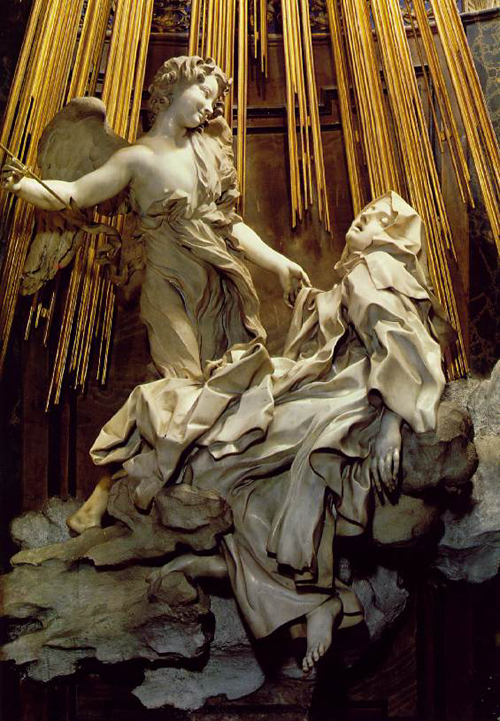

Today is the commemoration of St. Teresa of Avila (1515-1582), the great Spanish reformer, mystic, and doctor of the Church. I’ve written about her before on this blog and linked to Richard Wilbur’s poem. For today, only this image:
The 1662 edition, that is. But Wood’s focus is on the genius of Cranmer. He also discusses the lingering influence of the BCP on English writers, including Austen and Woolf:
For Austen, belief was stable enough so that the liturgy could be mocked, fondly and without danger, exactly as a silly vicar could be safely made fun of. Both Woolf and Beckett approach Cranmer’s words without easy mockery but with something closer to reverent irony. Yet they both use the language of the Prayer Book to enact prayers that have no hope of answer: at best, we are “vouchsafed” something, but cannot say what it is. The words persist, but the belief they vouchsafe has long gone. A loss, one supposes—and yet, paradoxically, the words are, in the absence of belief, as richly usable as they were three hundred and fifty years ago. All at once, it seems, they are full and empty. They comfort, disappoint, haunt, irritate, disappear, linger.
 Preaching Grace on the Square