Do we need denominations?

Ken Carter has written an essay arguing for the importance of denominations. His starting point is the problem of authority and governance. Using a non-denominational church as an example, he shows what happens when authority is situated only in the local congregation (and its pastor), and the problems that arise for staff and when conflict arises.

I love the local church. It is the basic context for the mission of making disciples for the transformation of the world. At the same time, the local church will, on occasion, be stronger as it accomplishes mission that is beyond its own capacity, and as it is accountable to a wisdom that is outside its own day to day movements. Here the analogy of Ronald Heifitz of the dance and the balcony is helpful. Faithful congregations and clergy are engaged in the dance, the daily and weekly movements that, added together, shape parish life: worship, spiritual formation, pastoral care, local and global outreach, evangelism. A balcony perspective, in times of health and in times of crisis, will help the local church to sustain this activity. The absence of such a balcony perspective, in particular circumstances, can lead to chaos and a constricting of the movement of energy. A denomination, at its best, provides that balcony perspective: a person in authority who can intervene in a season of conflict, or a compelling and needed mission that can lift the vision of a community beyond itself.

Carter’s essay is here.

One can see these dynamics at play in the Episcopal Church. In the last couple of weeks, we have seen increasing debate over national structure. This week saw the emergence of an investigation into the Episcopal Bishop of South Carolina (follow the story here, here, and here). Episcopalians believe our polity (bishops, dioceses, local parishes) is not simply a matter of convenience or “best practices,” but rather that it reflects the New Testament understanding of church (to be sure, Baptists, Presbyterians, et al, believe the same).

I think Carter is asking the wrong question. By focusing on conflict, authority, governance, and structure, he is emphasizing organization rather than mission and ministry. Few denominations, even when identified in terms of polity (Episcopal, Presbyterian) were created to embody that particular structure. Instead, they emerged out of unique theological, spiritual, and liturgical insights, which together make up their ethos. If denominations are to survive, it is because they will continue to embody a particular vision of the church, one that is not embodied in other forms of Christianity.

It’s when we lose sight of that, a particular ethos, charism, or voice, that denominations atrophy and deserve to die. At the same time, many of those non-denominational churches which Carter mentions have come to take on the characteristics of denominations, even if they don’t admit it. I think what we’re seeing, though, may not be the end of denominations, but their transformation into something different, more organic and fluid, and less structured.

I suppose the question for me in a case like the Diocese of South Carolina, is whether it continues to embody the charism of Anglicanism in its current form. I’m not able to make that judgment from this distance.

The ordination of Scott Anderson

On Saturday, October 8, Scott Anderson will be ordained to the ministry by the John Knox Presbytery of the PCUSA at Covenant Presbyterian Church in Madison, WI. I will be attending. So, too, apparently, will protestors from Fred Phelps’ Westboro Baptist Church. Here’s the article.

It’s already something of a media circus but I’ve been in touch with Scott and with the interim pastor of Covenant and they seem to be handling everything with grace. Keep them in your prayers.

A profile of Scott from the Milwaukee Journal Sentinel.

I will post my reflections on Saturday.

Images of St. Francis

Today is the Feast of St. Francis, when we remember one of the most beloved, and important, figures in the Christian tradition.

Here’s Giotto’s rendering of St. Francis receiving the stigmata:

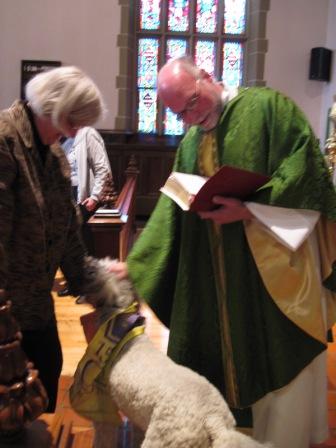
Our images of St. Francis tend be associated with the Blessing of the Animals:

a photo from Sunday that I didn’t post:

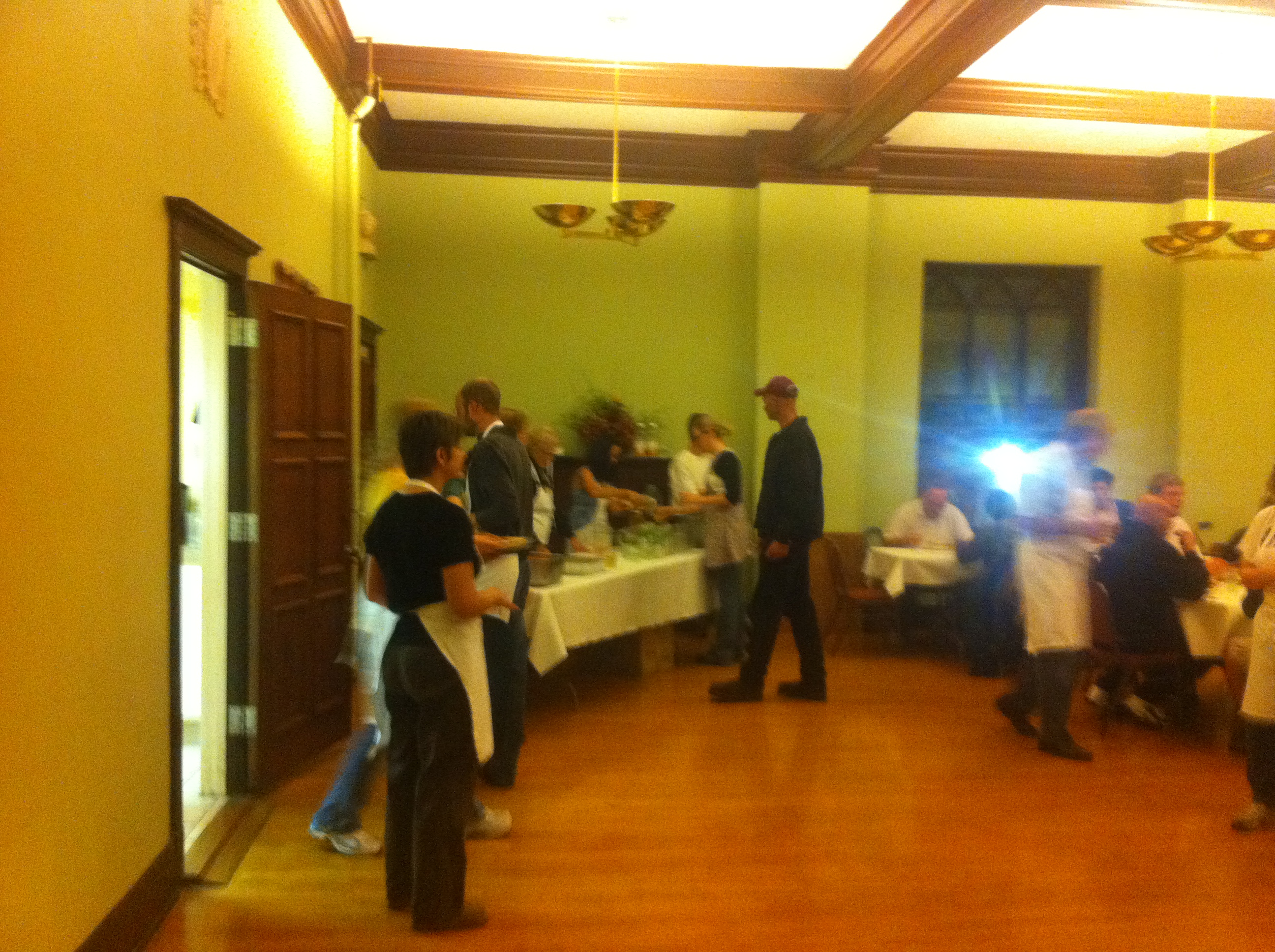
Last night, during “First Monday,” I reflected on St. Francis as well. Although he wasn’t mentioned by anyone, or perhaps even thought of (by anyone but me), we were doing the sort of ministry Francis did, among people with whom Francis ministered.

While he preached to birds and tamed wolves, and even rebuilt churches, Francis was most known for his work among the destitute, the poor, the hungry, and the sick. Although the order he founded quickly became powerful and made its home in universities and other cultural centers, Franciscans also tended the sick and dying.

Our feeding of shelter guests and community last night is one way in which we at Grace seek to serve Christ in all persons, to feed the hungry, clothe the naked, and the like. Last night, we were joined by others in the community, some who have become regular volunteers, others who were there for the first time. Among this latter group were members of the Madison Mennonite Church. The band last night was “Off the Porch.”

Here are other images of Franciscan ministry:

The meal had a very different feel, for some reason. Several regular volunteers remarked on the guests’ behavior. We often have brusque, difficult, or demanding guests. Last night, they were friendly, incredibly appreciative, and many lingered long after they had eaten, chatting with friends or volunteers, and listening to the music. It also seemed to me that there was a demographic shift–the percentage of African-Americans seemed lower than in past months, and many of the men looked “middle-class,” by which I mean one could have expected to see them working retail, or in a bank. It was all very odd. Whatever their history, tonight they were here, for a meal, most of them for a bed as well. And for a half-hour or so, they could enjoy some great food, great music, and wonderful hospitality. The spirit of St. Francis was present as well.

Of course, one can’t extrapolate from a single evening. It’s only a snapshot taken on a relatively warm night in early fall.

Thanks to everyone who came, everyone who volunteered, and especially to Metcalfe’s, who helped with the food.


Forgiveness in Action

October 2 was the fifth anniversary of the shocking killings at an Amish schoolhouse in Lancaster County, PA. It wasn’t only the violence that shocked the community and the nation; it was also the immediate response to the shooter’s family by the Amish community. Five years later, those acts of forgiveness continue to inspire.

Here’s a story about the mother of the shooter, who now visits a paralyzed survivor on a weekly basis.

An article from a Mennonite publication on a recent conference that looked back on the event and sought to draw some larger lessons. Don Kraybill, sociologist called the way in which the Amish drew together to help the Roberts family “a moral barnraising.”

It’s a remarkable story, made more remarkable by the almost immediate response by the Amish community to the tragedy. Within hours, Amish neighbors were in the homes of Roberts’ parents, offering them prayers, consolation, and love. The human propensity is to lash out violently when such violence is done; and often the desire for revenge persists indefinitely. But here, healing has taken place; new relationships have been forged, and new hope as well.

There may be few better examples in our culture of people putting the words of Jesus into action.

Update on homelessness in Madison

Pat Schneider of the Capital Times continues to pursue this story. As I’ve mentioned before, with the imminent closure of the Central Library for renovations and continuing closure of the Capitol basement, there is great concern about where homeless people will go during the day this winter.

Schneider interviewed Steve Schooler, Executive Director of Porchlight, which runs the Drop-in Shelter housed at Grace and other downtown churches. In initial meetings with other service providers, churches, and the downtown business community, stop-gap measures were identified, but as Schneider and Schooler point out, there are large gaps in potential coverage, especially on the weekends. Schneider’s most recent article is here.  For a depressing perspective on attitudes toward homeless people, read the comments thread.

I’ve previously discussed this issue here and here.

Walker Percy, Bourbon, and the Holy Ghost | First Things

Ruminations on the spiritual power of bourbon, from Walker Percy, nonetheless: Walker Percy, Bourbon, and the Holy Ghost | First Things.

To return to more earthly spirits, bourbon is for Percy a way to be for a moment in the evening. Why might one take an evening cocktail? Baser reasons are: an addiction to alcohol, or the desire to appear sophisticated. Better reasons, according to Percy, are the aesthetic experience of the drink itself—the appearance, the aroma, the taste, the cheering effect of (moderate) ethanol on the brain. Another reason is that a drink incarnates the evening; it marks the shift from the active workday to a reflective time at home. One simply must choose a way to be at a five o’clock on a Wednesday evening. Instead surrendering to TV, Percy recommended making a proper southern julep. I prefer my bourbon as an old-fashioned, a drink that reflects the colors of an autumn day. “Love God and do what you will,” Saint Augustine advised. This presumes that you have allowed God’s grace to order you to love properly, and you have taken proper note of your own God-given gifts and dispositions. Then, praise God, and be.

Walker’s original essay can be read here.


St. Francis of Assisi–An otherwordly falling in love

Tomorrow, Grace will have a Blessing of the Animals at our 10:00 service. It is one way in which we honor St. Francis of Assisi, whose feast day is October 4. St. Francis is fondly remembered for his love of creation and especially of animals, but he was much more than that. Here is an excerpt from a reflection on America’s “In all Things” blog:

The story of Francis encountering the San Damiano crucifix wonderfully illustrates what the great Jesuit theologian and philosopher Bernard Lonergan called “the Law of the Cross.” What was that?

When Lonergan pondered our salvation, he rejected the idea that the Father causes it through any act of external intrusion into history.   For Lonergan salvation isn’t something God accomplishes without our cooperation. God certainly doesn’t declare our alienation to be at an end because we’ve killed the Son. On the contrary, God saves us through our being drawn by love into the cross of Christ. The knowledge of the Son’s gift upon the cross compels our conversion, because it calls us to love. Lonergan defined conversion as “otherworldly falling in love.”

We’re meant to look upon Jesus, as Francis did in that Umbrian chapel, and fall in love. And having fallen in love, as any lover knows, the entire world is changed.

The entire post, written by Terrance W. Klein, is available here.