
One of the fun things for me about having a doctorate in the History of Christianity and being an Episcopal priest is musing over the historical background of particular customs or even canons. Bishop Miller’s visit to Grace has been the occasion for some not-so-serious reflection on the history of Episcopal visitations.
The visitation was introduced in the late middle ages as an effort at reform. First targeting monastic houses, reform-minded bishops and church organizations began visitations of parishes as well. One of the early, and most famous, visitations was that of Electoral Saxony (Luther’s home) in 1528. Eventually, the requirement for regular visitations was enshrined for Roman Catholics at the Council of Trent. When I was working on my doctorate, visitation records were all the rage. Visitors (not bishops, but state or church bureaucrats) would go to all of the parishes and inquire about the religious life and faith of the community, asking as well about the priest or minister. From these records, we gain insight into the level of religious commitment, religious practice, and other things like magic, witchcraft, heresy, and clerical malfeasance. The visitors often had a set of very detailed questions to ask, and they also demanded that people do things like say the 10 Commandments or creed.
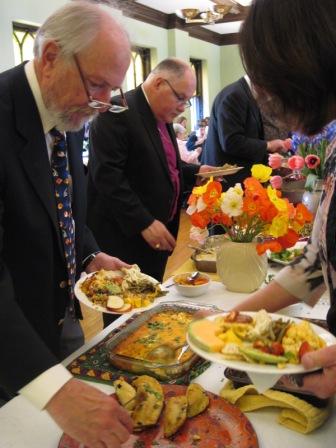
In the Episcopal Church, the Bishop’s visit is usually the occasion for confirmation. Such was the case for us, but unlike visitors of yore, Bishop Miller did not query confirmands on their catechism (good thing!). After confirmation, as is the custom in many places, we had a reception. Here are some photos:

Thy table now is spread
The Bishop and the Senior Warden analyzing the situation
There was music as well:
From the children:

And from Los Soles:

In addition to celebrating the confirmands and all of our mothers, we belatedly celebrated the Rev. Pat Size’s ministry among us. She retired at the end of 2010.

Mary Ray Worley gives Pat a scrapbook of her ministry with the Hispanic community
 Preaching Grace on the Square