
Reaching for the sacred when there is no holy ground

The memorial service in Tuscon was fascinating, moving and disturbing at the same time. Set in a gymnasium at the University of Arizona, it began as a combination pep rally and marketing effort for the University, as the University President tried to cast the institution as a locus of community, healing and hope. Those in attendance did what spectators at basketball games do. They applauded the team, whooped and hollered. As at all sporting events, the university provided t-shirts.

At first, the turn to scripture, Hebrew and Christian, was jarring, but as President Obama began speaking, he wove a tapestry of scripture, reflections on the lives of the dead and wounded that helped all of us think in new ways about the tragedy and about the future of our nation. His prepared remarks are available here. His words made the place, and the service itself, sacred.

Better scholars than I will be able to place this event in the context of the continuing evolution of civil religion in America. There’s been a great deal of discussion over the last few days about the decline of political rhetoric. All of that may be true. But it seems to me that President Obama was able to give a speech that placed the events in the historical context of the United States and to offer a trajectory of hope.


Blood Libel

It’s not often that concepts from Medieval or Early Modern history enter contemporary political discourse, but “blood libel” did today. The term refers to the myth that Jews ritually murdered Christians, especially children, and especially at Passover. The first example is from twelfth-century England, where the accusation was made after a young boy, William of Norwich, went missing and was later found dead. He became the object of religious devotion. The story eventually found its way into Canterbury Tales.

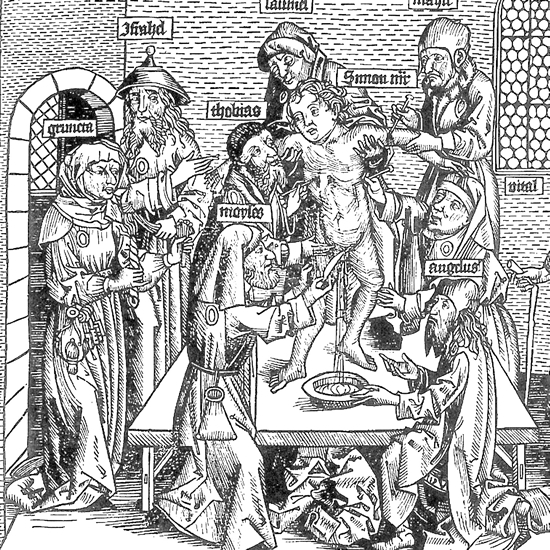
The Blood Libel had a long history after that. Among the most famous was Simon of Trent, in 1475. R. Po Chia Hsia wrote a book-length study placing this event in the larger historical and religious context. The Myth of Ritual Murder is worth reading.

There have been several discussions of the historical meaning of the term in today’s media.  Salon provides background, including quotes from Hsia.

Here’s a contemporary woodcut of Simon of Trent:

The Blood Libel persisted long after trials ended around 1600 (they were repeatedly denounced by both secular and religious authorities in Europe). In fact, there was an accusation in New York state in the early twentieth century.

While completely baseless, the myth of the Blood Libel points to the depths of Christian anti-Judaism, and later to Antisemitism. And it continues to resonate.