
Why I love the Daily Office: Psalm 39 edition

How often have I read or recited Psalm 39 over the years? For some reason this evening, while saying Evening Prayer, the words of Psalm 39 jumped out at me:

1 I said, “I will keep watch upon my ways, *
so that I do not offend with my tongue.

The opening verses are striking in tone, but it was the last verses that really threw me:

13 Hear my prayer, O LORD,
and give ear to my cry; *
hold not your peace at my tears.
14 For I am but a sojourner with you, *
a wayfarer, as all my forebears were.
15 Turn your gaze from me, that I may be glad again, *
before I go my way and am no more.

Verse 13 is clearly a plea to God to attend to the Psalmist’s cries, but what’s going on with verses 14 and 15? On the surface, v. 14 seems to be self-deprecating, but v. 15 is a plea for God to ignore the Psalmist–apparently God’s gaze is oppressive–until the Psalmist’s death.

What profound and unsettling notions of God and human being are packed into those two verses!
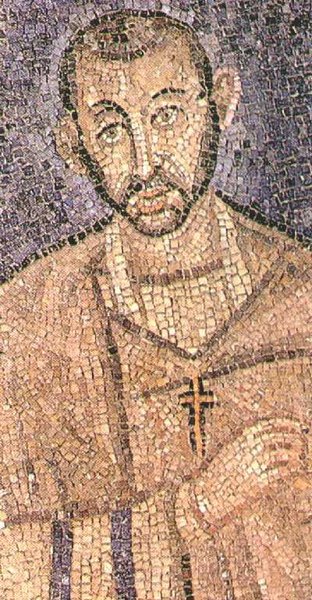
Ambrose of Milan, December 7

Today is the commemoration of Ambrose of Milan, one of the great Fathers of the Church. After a successful career in the Imperial Administration, Ambrose, according to legend was acclaimed bishop of Milan by the mob. He was a fierce defender of Nicene orthodoxy against the Arians and did battle against emperors, most notably forcing Theodosius to do public penance for the massacre of several thousand people in Salonika. He is credited with introducing hymnody into the western Church.

Augustine writes of him in Confessions:

And so I came to Milan to Ambrose the bishop, known throughout the world as among the best of men, devout in your worship… I used enthusiastically to listen to him preaching to the people … I hung on his diction in rapt attention … my pleasure was in the charm of his language…. (V.xiii.23)

Ambrose’s preaching and exegesis contributed to Augustine’s intellectual conversion (as a young man he had found Manichaean theology more convincing than Christian scripture):

I was also pleased that when the old writings of the Law and the Prophets came before me, they were no longer read with an eye to which they had previously looked absurd, … And I was delighted to hear Ambrose in his sermons to the people saying, as if he were most carefully enunciating a principle of exegesis: ‘The letter kills, the spirit gives life’ (II Cor. 3:6) Those texts which, taken literally, seemed to contain perverse teaching he would expound spiritually, removing the mystical veil. (VI.iv.5)

In Confessions, Augustine quotes Ambrose’s hymn Deus creator omnium several times:

GOD that all things didst create
and the heavens doth regulate,
Who doth clothe the day with light,
and with gracious sleep the night….

And we will sing another on Sunday during our Festival of Lessons and Carols, Veni Redemptor gentium (Redeemer of the nations, come).