The Shame of College Sports: Another icon has feet of clay

People often ask me if I follow college athletics. I reply that I did, until I began teaching college students. The barriers to achieving any academic success, even for students at NCAA Division III schools, even for participants in “minor” sports like golf are enormous. I never taught at a Division I college football power, but dealing with students who missed the first day of classes because of a volleyball match scheduled at a college across the state, or the first week of classes because of baseball games, outraged me as a professor.

I grew up a fan of the Ohio State Buckeyes–don’t blame me, I grew up in Ohio. I remember only last year how tv announcers and commentators praised the “squeaky clean” image of Jim Tressel. While they were speaking those platitudes, Tressell knew he was playing ineligible players.

Now, we have the Penn State spectacle, which is drawing analogies with the sexual abuse crisis in the Roman Catholic Church. Paterno and Penn State president Spanier were fired this evening.

Taylor Branch’s The Atlantic article entitled “The Shame of College Sports” should be read by everyone who follows NCAA sports.

Preparing for Annual Meeting: A Dying and a Rising

Our Annual Meeting occurs on Sunday, November 13. We’ve got all of the paperwork taken care of; we’ve got a slate of excellent candidates for vestry and wardens; our stewardship campaign is well underway and we have a draft budget.

I’ve begun working on my annual report, my third as Rector of Grace. It’s an opportunity to reflect back on where we’ve been over the last year (and longer) and where we are headed. Taking stock of the past is no easy thing. Detecting and analyzing trends and themes in ministry and mission can be difficult; it’s easy to come up with compelling and competing narratives that make sense of where we are. Looking into the future is even more difficult. What will the new year bring?

My experience in the past year has brought home to me how easy it is to be overtaken by events. I couldn’t have predicted the wave of protests that broke out on Madison’s Capitol Square last February and how they shaped Grace’s ministry for months. There was no way to prepare for something like this; no way to have thought about in advance how to respond. The same is true for other things.

It’s easy to operate in a crisis mentality for a time. For most churches, the budget, for example, seems always to be in crisis. We look for quick solutions that will solve the problem for this year or next, and the only longer-term trend we notice is the long-term reality (at Grace, it goes back decades) that we run annual operating deficits in the tens of thousands of dollars.

Focusing on that long-term trend may distract us from focusing on other long-term trends that might help to explain the situation we are in and help us begin to strategize how to move forward. The Episcopal Church, Christianity, even religion are in decline in the United States. More people than ever before claim no religious affiliation; membership and attendance numbers in the Episcopal Church are down, mirroring trends in other denominations.

In spite of our prominent location on Madison’s Capitol Square, Grace Church, like other churches, exist on the periphery of our culture. I doubt that’s going to change. We might want to mourn that fact, look back wistfully on the “glory days” of the 50s and 60s; we might even think that there’s something we can do that could return us to prominence. I don’t think so.

Former Presiding Bishop Frank Griswold was recently interviewed by Faith and Leadership. He said:

I also think that ecclesial bodies — just as in our own life cycle — go through a paschal pattern again and again. There’s a dying and a rising, a dying and a rising.

There’s an arrogance and a self-confidence that is shattered by things falling apart. Usually, that is an invitation to deeper wisdom. It may be difficult and painful, but there’s usually a grace hidden in that in some way, and then there’s a resurrection with new insight and wisdom that comes out of suffering or loss.

He used the image of the earthquake damage to the National Cathedral as a symbol of what’s happening in our church. Built at a time when the Episcopal Church and Episcopalians were at the center of our culture and power, the damage forced the congregation and its programs, beginning with the 9-11 commemoration, to other venues.

We are broken, as a denomination and as mainline Christianity. To use another of Griswold’s images, we are in a desert place. But as he says, that can be a good place, a creative place, where old baggage is jettisoned and new possibilities envisioned and engaged.

Lectionary Reflections: Proper 28 Year A

The Hebrew Bible reading for Proper 28 in the semi-continuous reading is Judges 4:1-7. I was surprised to learn that this is the only reading from Judges in the entire three-year lectionary cycle. That means some of the great stories of the Hebrew Bible might not be encountered by ordinary churchgoers–the Samson cycle, for example, or the story of Gideon.

Judges belongs to a larger historical work that spans the books of Joshua through II Kings (not including Ruth). They’ve given it the tongue-twisting name of the Deuteronomic History, because it tells the history of Israel and Judah from the conquest to the destruction of Jerusalem and the Exile in the 6th century BCE. It was written during the Exile to explain why the Exile happened.

Judges plays a central role in this story. It’s a collection of stories, some of them stories of heroes, others occasionally seeming like folktales. Each episode follows a similar pattern. A judge dies (judges are as much military rulers as judges in the contemporary sense) and the land falls into chaos with the Israelites suffering from foreign invasion and abandoning the worship of God. They cry out and God raises up a new judge who defeats the enemy and establishes a period of peace; but when he (or she) dies, the cycle repeats itself. The book helps to explain why monarchy was needed, but there is also something of a critique of the Israelites, had they been faithful to God, they would not have needed the strong hand of a monarch. The last verse in Judges expresses it well: “In those days there was no king in Israel; all the people did what was right in their own eyes (21:25).

So the question becomes, why of all the possible stories in Judges, is this one included? That’s a puzzle of its own, for it really isn’t a story at all, but the beginning of a story involving two women, both of them also involving military victory. Deborah is a judge and prophetess, who leads the Israelites (with Barak) into battle. Interestingly, of all the judges mentioned in the book, it is only Deborah who is shown actually “judging:” “She used to sit under the palm of Deborah between Ramah and Bethel in the hill country of Ephraim; and the Israelites came up to her for judgment” (4:4)

Nestled between this scene and the actual battle is another story–the assassination of the Canaanite general Sisera by Jael a woman who, after offering him hospitality, kills him with a tent peg. The Deborah story concludes with what may be the oldest part of the Bible, the Song of Deborah (5:2-31). In it, Deborah is called “mother of Israel.” The story concludes with the observation that “the land had rest forty years” (5:31).

No doubt, this story is included in the lectionary because it shows a powerful and important woman, Deborah, a judge and prophetess, and calls us to remember that God calls both men and women to leadership roles. The nature and exercise of authority is a theme that has run through the Hebrew Bible readings from the story of Moses to this point and it will continue to dominate the history of the Israelites throughout the monarchy.

It’s an issue for contemporary Christians as well. Shaped by our culture and historical context, models of authority from politics and the corporate world contribute to our notions of the proper exercise of authority in the church. On the other hand, in the gospels, Jesus offers a very different model of authority: “I am among you as one who serves” (Lk 22:27).

I sing a song of the saints of God: A Homily for All Saints’ Sunday

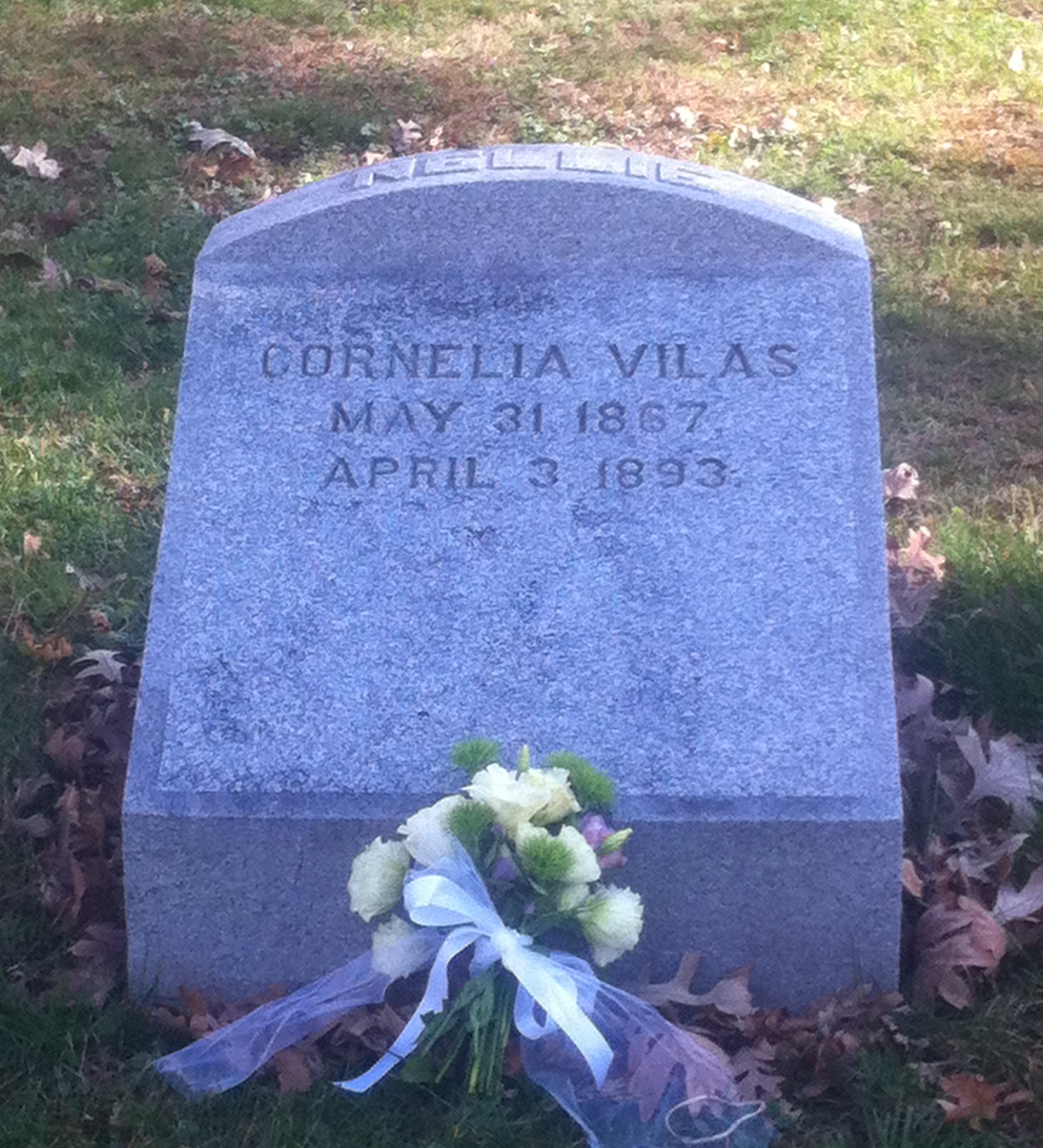
I love cemeteries; I have loved cemeteries for a very long time. The best ones are sacred places of beauty and repose, where one can wander and ponder the lives of those who lie buried. I suppose I first encountered the sacred power of graveyards when I visited the Jewish cemetery of the German town of Worms, which was established in the Middle Ages and chronicled the life and struggles of that community through the centuries to the Nazi period. But it was in New England where I come to love spending time in cemeteries. There were the colonial cemeteries in Boston and elsewhere, like Copps Hill, or Old North burial ground, the churchyard of St. Paul’s Newburyport, or the old burying ground in that same city. I could wander in them for hours, reading inscriptions of famous men and women, and of those who were known only to a few friends and family. I also liked to visit Mt. Auburn cemetery, said to be the first in America to be created as much as a beautiful landscape as for more utilitarian reasons. Continue reading

What happened at Vatican II? And does it still matter?

I just finished reading John O’Malley’s What Happened at Vatican II (Harvard University Press, 2008). I read it for at least three reasons. First, John is a teacher, mentor, and friend. Second, I realized I had never read anything substantive about the council, a glaring lacuna in my knowledge. Third, with the recent developments in Roman Catholic liturgy and practice, it struck me as important pastorally to understand some of the background to the Roman Catholic church of the late twentieth century, what conservative Catholics are reacting against, and what disaffected Catholics are struggling with.

O’Malley delivered on all of those points. It’s an engaging read of a difficult subject, and probably very difficult to make interesting for the non-specialist. To talk about machinations behind the scene, debates over schemas and the like is no easy thing. He doesn’t divide the opposing camps into “liberal” and “conservative” but calls them “majority” and “minority.” One gets the sense that the council had a life of its own that made it difficult to control and surprising in its outcomes to both participants and observers.

Most interesting to me are the three underlying themes that O’Malley detects. These, he says, are “the issues under the issues” and are key both to understanding the council and to making sense of Catholicism today. They are: 1) the development of doctrine; 2) the relation of center to periphery; 3) the “style” or model according to which authority is exercised.

In many respects, these three issues are not unique to Catholicsm. It may be that because Anglicanism is shaped very much like the Roman Catholic Church that we experience them acutely, but it seems to me they are pervasive throughout Christianity, and to some degree, throughout the History of Christianity. The first two are, of course, particularly important in debates within and concerning the Anglican Communion. The third I find especially intriguing. O’Malley points out that the documents of Vatican II are self-consciously written in a “pastoral” style, a remarkable break from the doctrinal formulas and anathemas of previous councils. That style involved a change in rhetoric, towards teaching, a change in vocabulary, but also a change in form, perhaps with the emphasis on collegiality.

I read a blog post about “the theology of the text message.” In it, Jason Byassee argues that pastors must be ready to “text” with younger parishioners or risk not communicating at all with them. He talks about offering pastoral care via text message, but there is more to be said. Christians are people of the Book, readers and interpreters of scripture. The question is, what sort of theological and spiritual “style” might emerge from our use of new media?

One possibility: The New Media Project at Union Seminary offers a case study of the House for All Sinners and Saints.

Giles Fraser’s last sermon at St. Paul’s Cathedral

It was Evensong. The reading was Luke’s version of the Beatitudes: “Blessed be you poor, for yours is the Kingdom of God. His reflections from the Church Times are here.

His conclusion:

For too long the Church has been obsessed with its own internal work­ings and with silly arguments about sex. Now is the time for a new debate and a new emphasis. For if we are not fully involved with complex dis­cussions about the relationship be­tween financial justice and the way our financial institutions work, then we might as well give up on being a proper Church and admit that we are the spiritual arm of the heritage industry.

Red tape in the way of a day shelter in Madison

I’ve been blogging about the impact of the library and Capitol closures on the homeless in Madison (previous entries here, here, here, and here). We’ve been working on solutions. One of the most promising was to use a vacant car dealership, now owned by the city, as a temporary space through March. Pat Schneider reports on this development, and on the red tape the city has thrown up around it. She’s been doing a great job keeping on this story.

As Schneider observes:

Winter is bearing down, and I’ve got to wonder what sense requiring a landscaping plan makes for a property in Wisconsin that will be used November through March. Not much grows here then. Should planning for a temporary use like this really require restriping the parking lot? A public hearing makes sense, but is there a way to expedite the process to accommodate some of the city’s most vulnerable residents?

Hmmm.

Hmm, indeed!
One piece of good news. At least Savory Sunday has been given a permit to serve lunch in the Capitol on Sunday afternoons.

The Commemoration of All Souls

Today is the Feast of All Souls, called in the Book of Common Prayer 1979 “The Commemoration of All Faithful Departed. The Feast of All Souls has its origins in the early Middle Ages. Apparently it was first celebrated at the great Abbey of Cluny in the 10th Century. Cranmer eliminated it from the 1549 Book of Common Prayer. In the sixteenth century, it was closely tied to the Doctrine of Purgatory which came under sharp attack from Protestant Reformers.

We generally collapse the commemoration of all the faithful departed into our observance of All Saints’ by reciting the names of those who have died in the past year during our Prayers of the People. We will do that, but November 2 fell on Wednesday this year, our Wednesday service became our All Souls service. It was beautiful and moving for those of us in attendance.

All Souls is an opportunity to reflect on and remember those who have gone before us, our friends, loved ones, and others who have helped to shape us into the human beings and followers of Christ that we are. It is also a reminder that the Church, the Body of Christ, consists not only of those we see in this life, but all those who have gone before and entered the nearer presence of God.

When I think of Christians’ remembrance of the dead, I always return to Eamon Duffy’s magisterial The Stripping of the Altars, his examination of late medieval piety and the transformation of that piety in the sixteenth century.

The focal point of the Church’s liturgy of supplication for the dead, All Souls’ Day, was properly called the commemoration of All Souls. It was, of course, the desire for prayer which lay at the root of this preoccupation with remembering. The dead needed to be remembered, for the dead were, like the poor, utterly dependent on the loving goodwill of others. For all the stories of apparitions and Purgatory spirits walking to disturb their survivors, it was orthodox teaching that the living hold no direct converse with the dead. For medieval people, as for us, to die meant to enter a great silence, and the fear of being forgotten in that silence was as real to them as to any of the generations that followed. But for them that silence was not absolute and could be breached. To find ways and means of doing so was one of their central religious preoccupations. For what late medieval English men and women at the point of death seem most to have wanted was that their names should be kept constantly in the memory and thus in the prayers of the living.” Eamon Duffy, The Stripping of the Altars, p. 328.

Murdering St. Paul’s Cathedral

George Pitcher offers insight into the inner workings at St. Paul’s Cathedral over the last few weeks, and suggests why the crisis played out as it did. He highlights a division between “the progressive-reformist” wing of the Church of England and “the dressing-up, high-church, ceremonial, and remote Church.

It was Pitcher who, a few weeks ago, offered advice to the Church on how to deal with the media.